

Churnkey
VerifiedCancel flows, payment recovery and 32 evidence-backed retention plays, with an open-source SDK and MCP server
Is this your product? Rent a top-5 spot in Churn Prevention Software from $219 a month.
 See all screenshots
 - Deployment Cloud Based, On Premise
- Starting price $250
- Free trial Not offered
- Best for Freelancers, Small Business, Medium Business
What is Churnkey?
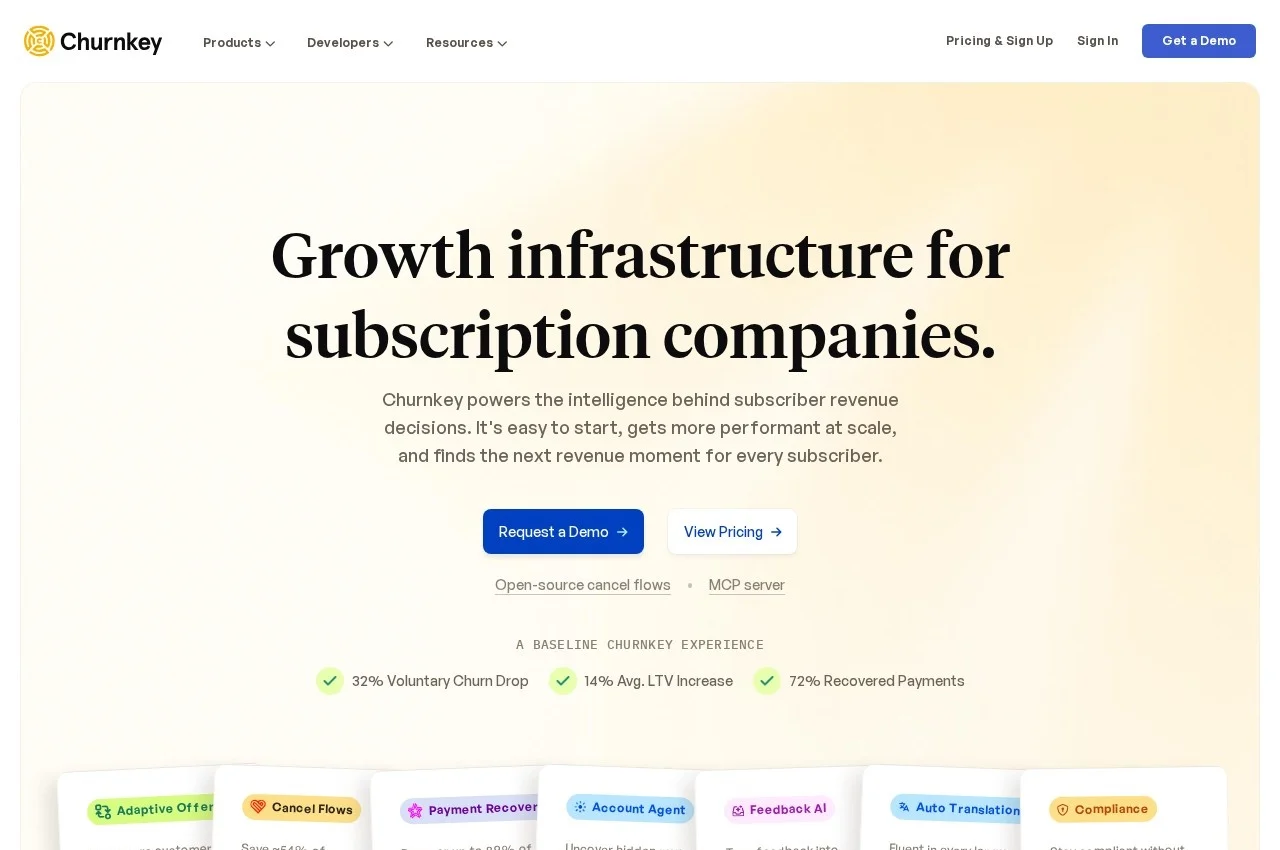
Churnkey attacks retention at the two points where subscription revenue is actually lost: the cancellation flow and the failed payment. Both are moments rather than relationships, which makes them addressable by software in a way that general customer health is not.
In-app cancel flows are the flagship, with the vendor claiming roughly 54 percent of customers saved. The number is high but the mechanism is sound: a customer clicking cancel has not yet left, and what they see next determines whether they do. Offering a pause instead of a cancellation, a discount matched to their stated reason, or a fix for the specific problem they name converts a meaningful share, because many cancellations are about one solvable irritation rather than a considered decision to leave.
Payment recovery is claimed to lift annual recurring revenue by around 10 percent, through omnichannel outreach campaigns and precision retries that time recovery attempts optimally. Retry timing genuinely matters, since a card declined for insufficient funds on the 28th may well succeed on the 2nd, and blind retry schedules waste attempts and trigger bank blocks.
The developer posture is unusually open. Cancel flows can run on Churnkey's hosted infrastructure or through an open-source SDK you run yourself, with source, issues and releases on GitHub. An MCP server brings retention data into AI agents including Claude and Cursor, a Data API provides programmatic access, webhook events fire in real time, and an llms.txt growth catalogue publishes a machine-readable tactic library.
The Growth Tactics Library contains 32 evidence-backed plays for subscription growth, alongside Adaptive Offers, Feedback AI, an Account Agent, churn metrics, customer timelines and a State of Retention benchmark report.
Pricing starts at $250 per month billed yearly for the Starter plan, with tiers recommended by churn volume.
Key Features of Churnkey
- In-app cancellation flows with save offers
- Pause and downgrade alternatives to cancelling
- Reason-matched retention offers
- Payment recovery with omnichannel outreach
- Precision retry timing for failed charges
- Adaptive Offers
- Feedback AI analysing cancellation reasons
- Account Agent for revenue opportunities
- Open-source cancel flow SDK
- MCP server for AI agent access
- Data API and webhook events
- Churn metrics and customer timelines
- 32 evidence-backed growth tactics library
Churnkey Pricing
Starter
$250
For teams just starting to tackle retention. Higher tiers are recommended based on your churn volume.
Churnkey Specifications
- Deployment
- Cloud Based
- On Premise
- Desktop
- Web App
- Built for
- Freelancers
- Small Business
- Medium Business
- Large Enterprise
- Support
- Public API
- Yes
- Free trial
- No
- Free plan
- No
- Runs in browser
- No
- Customisable
- No
- Website
- churnkey.co
Churnkey Screenshots
Churnkey Comparisons



Your experience counts
Rate Churnkey
Used Churnkey? Your honest review helps the next buyer decide. It takes about three minutes.
Thanks, your review is in.
Our editors check every review before it goes live, usually within 2 business days.
Churnkey FAQs
Alternatives to Churnkey
Other Churn Prevention Software recorded on the same fields.