

Dremio
VerifiedLakehouse query platform in cloud, self-managed and free community editions, from $0.20 consumption
 See all screenshots
 - Deployment Cloud Based, On Premise
- Starting price Free
- Free trial Available
- Best for Medium Business, Large Enterprise
What is Dremio?
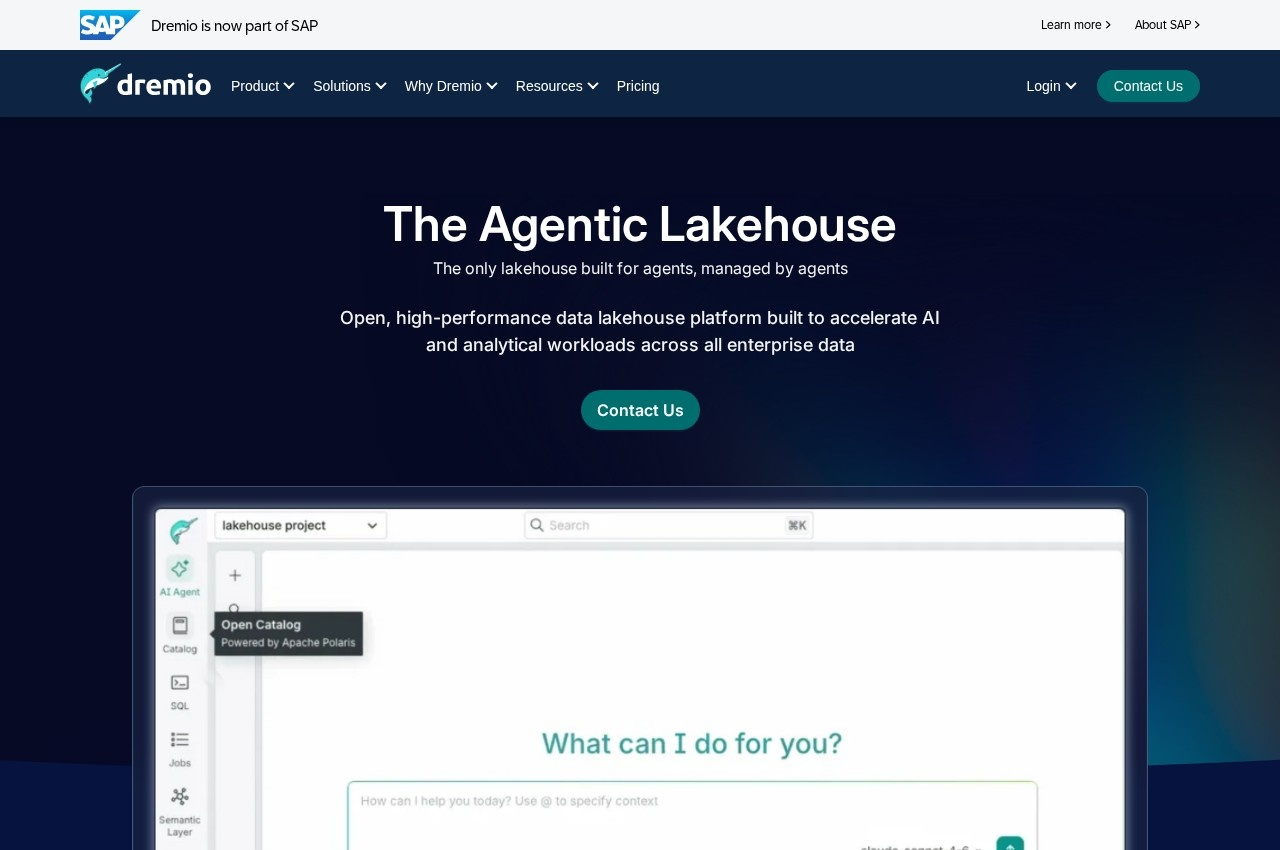
Dremio is a lakehouse platform published in three editions: Dremio Cloud as a fully managed platform for agentic AI, Dremio Enterprise as self-managed software running on Kubernetes on-premise or in cloud, and Dremio Community Edition as a free query engine for local machines or servers, with an AI agent, a semantic layer, an intelligent query engine and an open catalogue.
The semantic layer is the capability that distinguishes this from a query engine alone, and it addresses the gap that opens once a lakehouse actually works.
That gap is a familiar one. Once data is queryable directly in object storage, analysts can reach it, but what they find is raw: physical table names, technical column names, and no indication of which of four similar tables is the one people actually use. Being able to query everything is not the same as being able to understand it, and the usual result is that a small number of people who know the layout become a bottleneck for everyone else.
A semantic layer presents business-meaningful views over that physical data, so an analyst works with concepts rather than storage layout, and definitions live in one governed place rather than being re-derived in every query.
Publishing a free community edition for local machines is genuinely useful rather than a marketing gesture, because it lets an engineer evaluate the engine against their own data on their own laptop before any commercial conversation, which in this category tells you far more than a demonstration.
The three-edition structure covers the real deployment constraint. Cloud suits organisations without infrastructure preference, Enterprise on Kubernetes suits those who must keep data in their own environment, and both run the same engine.
Pricing is published as a consumption model with a $0.20 rate for the managed agentic lakehouse on AWS, with Azure noted as coming soon, and a $400 figure published within the range.
Key Features of Dremio
- Lakehouse query engine
- Semantic layer over physical data
- Open catalogue
- AI agent for analysis
- Dremio Cloud fully managed
- Dremio Enterprise self-managed on Kubernetes
- Free Community Edition
- Query federation across sources
- Open table format support
- Consumption-based cloud pricing
Dremio Pricing
Dremio Cloud
$0.20
Fully managed agentic lakehouse on AWS, with Azure noted as coming soon. Consumption-based.
Enterprise
$400
Self-managed software running on Kubernetes on-premise or in cloud, with a published figure in the commercial range.
Dremio Specifications
- Deployment
- Cloud Based
- On Premise
- Desktop
- Web App
- Linux
- Built for
- Medium Business
- Large Enterprise
- Support
- Phone
- Public API
- Yes
- Free trial
- Yes
- Free plan
- No
- Runs in browser
- No
- Customisable
- No
- Website
- dremio.com
Dremio Videos
Dremio Screenshots
Dremio Comparisons



Dremio Reviews
No reviews yet
Used Dremio? Share your experience and help other buyers decide.
Dremio FAQs
Alternatives to Dremio
Other Hadoop-Related Software recorded on the same fields.