


Performance appraisal methods are the structured ways a company measures how well employees work and where they can grow. This guide covers 12 of them, from self-assessment and 1 to 1 meetings to 360º reviews, objectives and BARS, with the strengths and limits of each. No single method is perfect, so the right pick depends on your team size, your roles and what you want the results to drive.
Measuring employee performance is more than a routine HR process. Done well, it shows who needs training, who’s ready for more responsibility and where the company is losing value.
The 12 methods below include four hierarchical variants (90º, 180º, 270º and 360º). Most teams combine two or three of them rather than rely on one.
12 Performance Appraisal Methods for Your Employees
Not sure which method fits? Each section below gives a short definition, the main advantages and the main disadvantages, and a table near the end maps methods to situations.

Software can run most of these methods. Browse the performance appraisal software category to see which tools support the method you choose.
Self-Assessment
Self-assessment is a method in which the employee reviews their own skills, results and competencies. The employee looks back at achievements, challenges and areas for improvement, which builds self-knowledge. On its own it gives a one-sided view, so pair it with manager or peer input. HR can supply a questionnaire that guides employees through key performance indicators. The answers then feed a continuous improvement plan for skills and knowledge.
Advantages of self-assessment:
- Each employee takes responsibility for their development
- Promotes self-criticism and self-knowledge
- Improve job satisfaction
- Allows employees to express their expectations and concerns
- Encourage open communication with managers and HR.
Disadvantages of self-assessment:
- Employees may be overly critical or self-indulgent
- Employees may need help to identify their areas for improvement.
- Personal biases can influence the results.
Peer Review
Peer appraisal is a method in which coworkers assess an individual’s performance. Peers work closely with the employee and often see skill gaps that managers miss.
It only works with clear, objective criteria and a culture of respect and honesty. Done well, it gives useful feedback and encourages collaboration. A platform can collect the feedback and show how far peer opinions, self-evaluations and manager evaluations agree.
Advantages of peer review:
- Provides a broader and more diverse view of employee performance
- It can foster collaboration and teamwork
- Peers can identify strengths and weaknesses that managers might overlook.
Disadvantages of peer review:
- It can cause conflicts between employees
- The results can be affected by personal biases.
- Workers may not feel comfortable evaluating their peers
Hierarchical Evaluation
Hierarchical evaluation is an assessment carried out by an employee’s direct supervisors, and it’s probably the most common method. Its variants differ in who else is asked for input: nobody (90º), the employee (180º), employees and peers (270º), or everyone around the role (360º). Labels vary between companies, so confirm what each one includes before you compare notes.
90º Evaluation
The 90º evaluation is a review in which a direct supervisor assesses a subordinate’s performance. It rests on direct observation of work and can cover quality, efficiency and the ability to meet deadlines.
Advantages of the 90º Evaluation:
- Provides direct insight into an employee’s performance
- It is based on constant and direct observation of work behavior.
- You can identify performance issues and establish improvement plans
- It tends to align better with business objectives
Disadvantages of the 90º Evaluation:
- It can be subjective and influenced by the superior’s personal perceptions.
- It can create a tense work environment if the employee feels continually watched.
- It only occasionally reflects the employee’s needs.
180º Evaluation
The 180º Evaluation includes the direct supervisor’s assessment and the employee’s self-evaluation. This method offers a more comprehensive view of job performance by incorporating the employee’s perspective. These two approaches can promote continuous improvement and boost productivity when applied correctly.
Advantages of 180º Evaluation:
- Provides a more complete view of employee performance
- Promotes self-criticism and personal responsibility in job performance
- It helps identify discrepancies between self-assessment and Evaluation.
Disadvantages of 180º Evaluation:
- It can be a longer and more complex process than the 90º Evaluation, and personal biases can influence the result.
- It can generate conflicts between employees and superiors.
270º Evaluation
270° evaluation combines self-evaluation and assessments from supervisors and peers. This method provides a more comprehensive view of job performance, helping identify discrepancies across perspectives and fostering a more collaborative and productive work environment.
Advantages of 270º Evaluation:
- Provides a very broad view of employee performance
- Promotes collaboration and teamwork
- It helps to identify discrepancies between different perspectives
Disadvantages of 270º Evaluation:
- It can be a long and complex process.
- Personal biases can influence the results
- Requires a mature and respectful work environment to be effective
360º Evaluation
360º Evaluation is a performance review method that involves feedback from supervisors, peers, subordinates, and other stakeholders, like clients or suppliers. This methodology aims to provide a comprehensive and balanced view of job performance.
Advantages of 360º Evaluation:
- It provides a complete view thanks to the different perspectives
- Encourages responsibility and collaboration among all team members
- Identifying skills and areas for improvement is easier
- Promotes internal communication
Disadvantages of 360º Evaluation:
- It can be a long and complex process.
- It can also be overwhelming for all parties.
- Synchronization of the parties involved is needed
- It can generate disparate information that is difficult to interpret.
Performance Evaluation by Objectives
Objective-based Evaluation is a method in which results are measured based on objectives predefined for each employee.
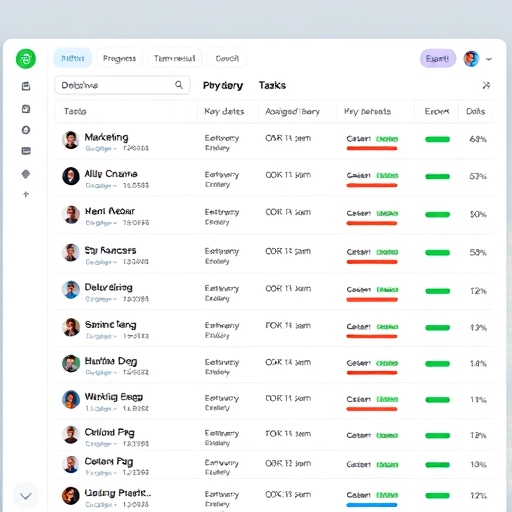
These objectives must be specific, measurable, attainable, relevant, and time-bound (SMART). In this way, an action plan can be established to achieve each objective and to measure progress.
Using objective-based appraisal software, employees and managers can identify opportunities for improvement, set goals, perform follow-up, and finally, conduct an appraisal. When repeated consistently, this cycle enables continuous improvement in productivity and job performance.
Advantages of Evaluation by Objectives:
- Provides a quantitative measure of performance
- Encourage responsibility and motivation by setting clear goals
- Allows continuous monitoring of progress
Disadvantages of Evaluation by Objectives:
- It can promote a culture that is results-oriented rather than skills-oriented.
- Goals can become too rigid, limiting adaptability.
- If objectives are not well defined, they can create confusion or frustration.
Competency-based Performance Evaluation
One of the evaluation methods that has grown the most in recent decades is competency-based Evaluation, which focuses on assessing employees’ skills, knowledge, and attitudes about the competencies considered key for their jobs.
This provides valuable insight into how employees perform and what areas they need to train to increase their professional value.
Technical skills, such as knowledge of specific software, and soft skills, such as leadership or communication, can be assessed.
Advantages of competency-based assessment:
- It allows you to identify an employee’s skills and knowledge, as well as areas that need improvement.
- Promotes the development and continuous improvement of skills
- Provides a more complete view of an employee’s performance
- It is easier to align employee aspirations with those of the company
Disadvantages of competency-based assessment:
- It is an evaluation method that requires more detailed work.
- It can be hard to implement if the competencies aren’t clearly defined.
- It can lead to frustration if employees do not understand how competencies are assessed.
1 to 1 Evaluation
Another type of performance evaluation that companies can use is the one-to-one Evaluation. This method is based on regular meetings between the employee and their direct superior to discuss and evaluate the employee’s performance. In these meetings, the objective is to reach agreement on areas for improvement and to propose a roadmap to achieve the objectives.
These meetings are usually informal and rely on open and direct communication to improve performance. They can be combined with other evaluation methods, such as self-evaluation, to provide a more complete picture of employee performance. It is ideal for small businesses.
Advantages of 1-to-1 assessment:
- Promotes direct and open communication between the employee and their superior
- Allows you to adjust objectives and strategies in real-time
- Improves the relationship and trust between the employee and the superior
Disadvantages of 1-to-1 evaluation:
- It can be difficult to implement if there is no good relationship between the employee and his/her superior.
- Requires a regular time commitment
- It can create conflict if meetings are perceived as constant evaluations.
Evaluation by Periods
Evaluation by periods is a method that reviews performance at set intervals, usually quarterly or annually. It allows a systematic, regular review of the objectives and goals achieved in a given period. The period can be monthly, every 90 days, quarterly, biannual or annual.
The right interval depends on your objectives and your pace of work. Communicate objectives at the start of each period and give regular feedback along the way. Combine it with other techniques, such as self-assessment or evaluation by objectives.
Advantages of Evaluation by Periods:
- Allows for systematic and regular monitoring of performance
- Encourages planning and time management
- Facilitates adaptation to changes in company objectives
Disadvantages of Evaluation by Periods:
- It may need to be more flexible and reflect actual performance over time.
- You can promote a culture focused on short-term results
- Short periods can generate pressure and stress for employees
- Too long periods can lead to performance problems due to deficiencies not being addressed in time.
Evaluation by Test
Test-based assessment is a method that relies on administering tests or examinations to evaluate employee performance and skills. These tests can be written, oral, or practical and usually focus on assessing specific skills and competencies.
This assessment method is frequently used in training development and selection processes, but is less common in regular performance appraisals. However, it can be useful for assessing a training program’s effectiveness or identifying specific development needs.
Advantages of test-based assessment:
- It allows to measure the skills and competencies of an employee objectively
- It can be useful to identify areas of development
- It is effective in evaluating the effectiveness of training programs
- Allows for evaluating the process and the result
Disadvantages of test-based assessment:
- It can generate stress and anxiety in employees
- It does not always reflect actual performance in the workplace
- The evaluator must have extensive knowledge of the subject to be graded.
- There may be biases in the development and correction of tests
Evaluation Based on Employee Satisfaction
Another method of performance evaluation is employee satisfaction evaluation. This technique prioritizes employee satisfaction with their development beyond their performance or objectives. The proposal is based on the fact that employees who are satisfied with their development will be happier and, therefore, more productive and useful to the company.
Employees and managers agree on goals and objectives, which are monitored regularly. In addition, personalized development plans are established to meet employees’ aspirations and needs, thereby promoting their commitment and performance. In addition, work environment surveys can measure their satisfaction with their development.
Advantages of employee satisfaction-based evaluation:
- Promotes commitment and job satisfaction
- It allows to identify areas of improvement in the management of human resources
- Foster a positive and productive work environment
- It can be subjective and influenced by emotional factors
- It does not directly measure job performance
- Employee goals may differ significantly from what the company needs.
Critical Incident Evaluation
One of the most unknown evaluation methods is the critical incident evaluation. This approach identifies and analyzes specific events or behaviors significantly impacting job performance. These incidents can be both positive and negative and are used to identify strengths and areas for improvement.
Whenever a critical incident occurs, it is recorded and analyzed to learn from it and, if necessary, take corrective action. Employees and superiors can regularly discuss these incidents, seek solutions, and establish action plans. This method fosters an environment of continuous improvement and learning from both successes and mistakes.
Advantages of critical incident evaluation:
- Allows you to identify specific behaviors or events that impact performance
- Promotes an environment of continuous improvement and learning
- Help employees understand how their actions affect their performance and that of the company
Disadvantages of Critical Incident Evaluation:
- It can be subjective and influenced by personal perceptions.
- Isolated incidents may not reflect the employee’s overall performance.
- It can create a tense work environment if employees feel like they are continually being evaluated.
Behavior-Based Assessment (BARS)
Behaviorally Anchored Rating Scales (BARS) are based on direct observation of employee behavior at work. The key behaviors a role needs are defined in advance, each with example descriptions at different performance levels, and the employee’s actual behavior is compared against them.
This technique suits roles where behavioral skills are critical. Setup is laborious, but the results are specific and useful for development.
Advantages of Behavior-Based Assessment:
- Allows an objective assessment based on observable behaviors
- Promotes the development of behavioral skills and abilities
- Provide specific and relevant feedback to the employee
Disadvantages of Behavior-Based Assessment:
- Implementation can be complex, as it requires detailed observation
- It requires a clear and agreed-upon definition of the most appropriate behaviors.
- It can generate pressure and stress, leading to execution errors.
- Evaluator judgment may be affected by unconscious biases
- It can be not easy to implement in roles where the work is not directly observable
- You can create an environment of constant surveillance
Performance Evaluation by Costs
Finally, another way to analyze employee performance is through cost-based performance appraisal. This method is based on measuring the economic efficiency of the employee, that is the relationship between the costs generated by the employee (salary, training, resources used, etc.) and the benefits they bring to the company (sales generated, objectives achieved, etc.).
This assessment can be useful for roles where productivity can be measured in financial terms, though not all of an employee’s contributions can be measured that way.
Advantages of cost-based performance evaluation:
- Allows for measuring the economic efficiency of the employee
- It helps to identify areas for improvement in terms of costs and benefits
- It can be useful for roles where productivity can be measured in economic terms.
Disadvantages of cost-based performance evaluation:
- Not all of an employee’s contributions can be measured in economic terms
- It can create pressure and foster a results-oriented culture.
- The costs and benefits associated with an employee can be difficult to calculate accurately.
- It can generate employee dissatisfaction
- In the long term, it can limit workforce growth and company growth.
Performance appraisal software can show the weak and strong points in each employee’s skills, which makes skill gaps easier to spot and development easier to focus. Many tools also support career plans and ongoing tracking of professional development.
Some products add talent matrices (such as a 9-box grid) that compare employee potential and performance, and reports that pull results from several methods into one view. Features differ by product, so check each listing before you shortlist. For a wider look at the tools around appraisals, see our guide to HR software types.
Which performance appraisal method fits your situation?
Pick the method by team size, role type and the decision the results will feed. A small team with open communication gets most from regular 1 to 1 meetings. A larger company that makes promotion or pay decisions needs a documented method such as objectives, competencies or a multi-source review.
| Situation | Method that fits | Watch out for |
|---|---|---|
| Small team, good manager relationships | 1 to 1 evaluation | Time commitment and meetings that feel like constant judgment |
| Employees should own their development | Self-assessment | Over-critical or too lenient scoring, so pair it with a manager review |
| Measurable targets per role | Evaluation by objectives | Rigid goals and a focus on results over skills |
| Skills gaps and training plans | Competency-based evaluation | Competencies must be defined and explained first |
| Leadership roles, cross-team work | 360º evaluation | Long process and feedback that’s hard to interpret |
| Roles with observable behavior, such as service or sales | BARS or critical incident evaluation | Observer bias and a feeling of surveillance |
| Checking training results | Evaluation by test | Stress, and tests that don’t mirror real work |
| Roles with direct financial output | Evaluation by costs | Contributions that don’t show up in money terms |
Avoid relying on a single method for pay or promotion decisions. Each one carries bias, so combine two or three that cover each other’s blind spots.
Frequently asked questions
What are the main performance appraisal methods?
This guide covers 12: self-assessment, peer review, hierarchical evaluation (90º, 180º, 270º and 360º), evaluation by objectives, competency-based evaluation, 1 to 1 evaluation, evaluation by periods, evaluation by test, employee satisfaction evaluation, critical incident evaluation, BARS and evaluation by costs. Most companies combine several rather than use one.
What’s the difference between 90º, 180º, 270º and 360º evaluation?
As this page uses the terms, 90º is a supervisor-only review, 180º adds the employee’s self-evaluation, 270º adds peers, and 360º adds subordinates and outside stakeholders such as clients or suppliers. The labels aren’t standardized everywhere, so check what your own process includes.
Which performance appraisal method is best for a small business?
Regular 1 to 1 evaluations usually fit a small business best, because they’re informal, need no special tooling and let managers adjust goals in real time. Add a short self-assessment so the employee’s view is on record. Move to objectives or competency-based reviews when the team grows.
How often should performance appraisals happen?
It depends on your pace of work. Evaluation by periods can run monthly, every 90 days, quarterly, biannually or annually. Short cycles catch problems early but can add pressure, while long ones let deficiencies go unaddressed, so many teams pair a yearly review with regular 1 to 1 check-ins.
Can software run these appraisal methods?
Yes, many tools support methods such as objectives, 360º feedback and competency reviews, though features differ by product. Compare tools in the performance appraisal software category and check each vendor’s own documentation for the methods it supports.
Add SocialAtoZ as a preferred source
See us more often in your Google results.