

SAP Extended Warehouse Management: What It Does and Who It Fits
VerifiedWarehouse management software from SAP for complex, high-volume warehouse and distribution operations
Is this your product? Rent a top-5 spot in Supply Chain Management software from $219 a month.
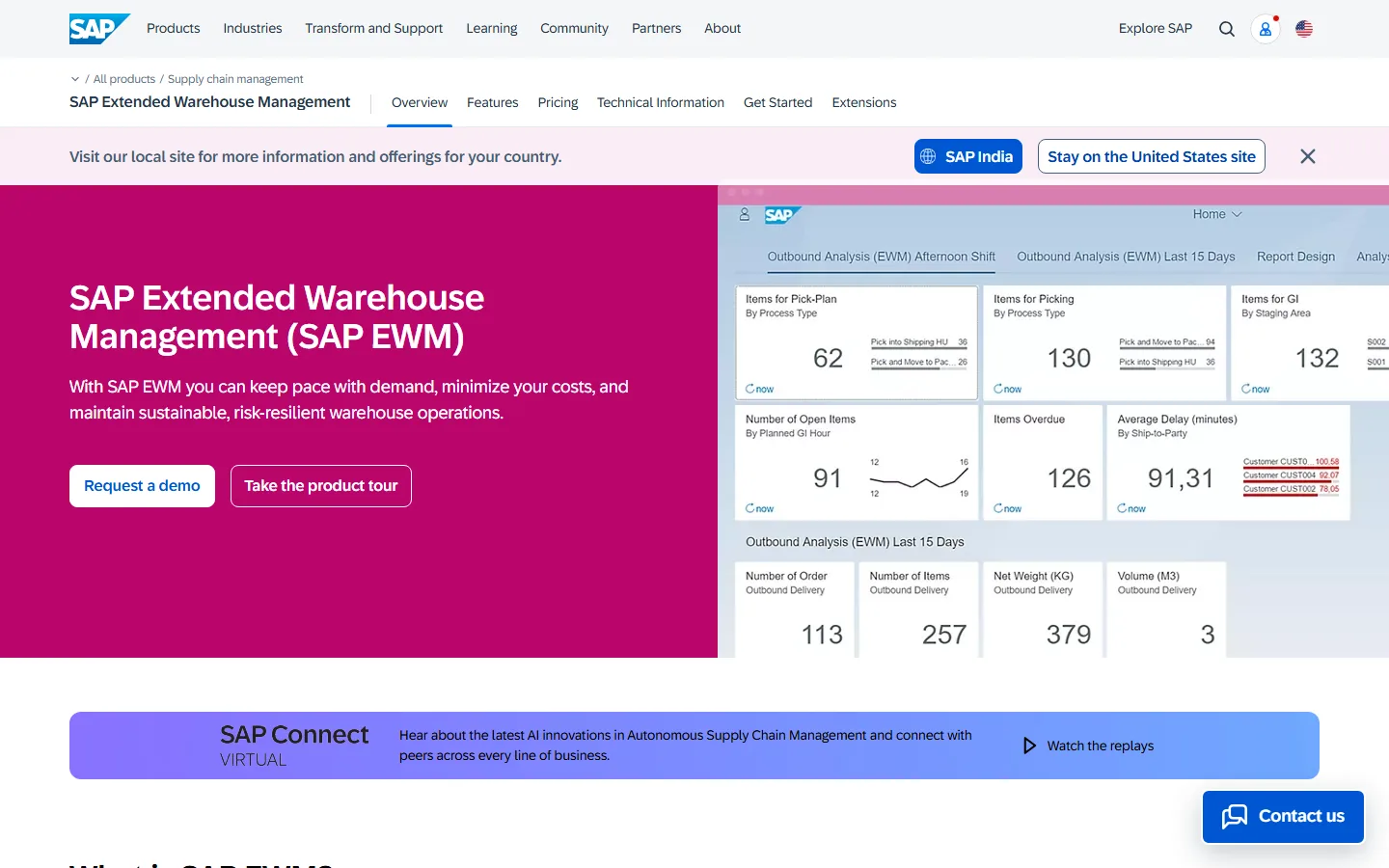 See all screenshots
- Deployment Cloud Based, On Premises, Hybrid
- Starting price Not published
- Free trial Not offered
- Best for Enterprises
What is SAP Extended Warehouse Management: What It Does and Who It Fits?
SAP Extended Warehouse Management (SAP EWM) is a warehouse management system that controls stock and tasks at the storage bin level, from receiving through putaway, picking and shipping. It connects to SAP ERP or SAP S/4HANA for orders and inventory. It suits large, complex operations more than simple stockrooms.
How Does SAP EWM Run a Warehouse?
SAP EWM runs a warehouse by turning each delivery and order into warehouse tasks that staff or equipment carry out, with every move recorded against a specific bin. The ERP owns the order. EWM owns what happens on the floor.
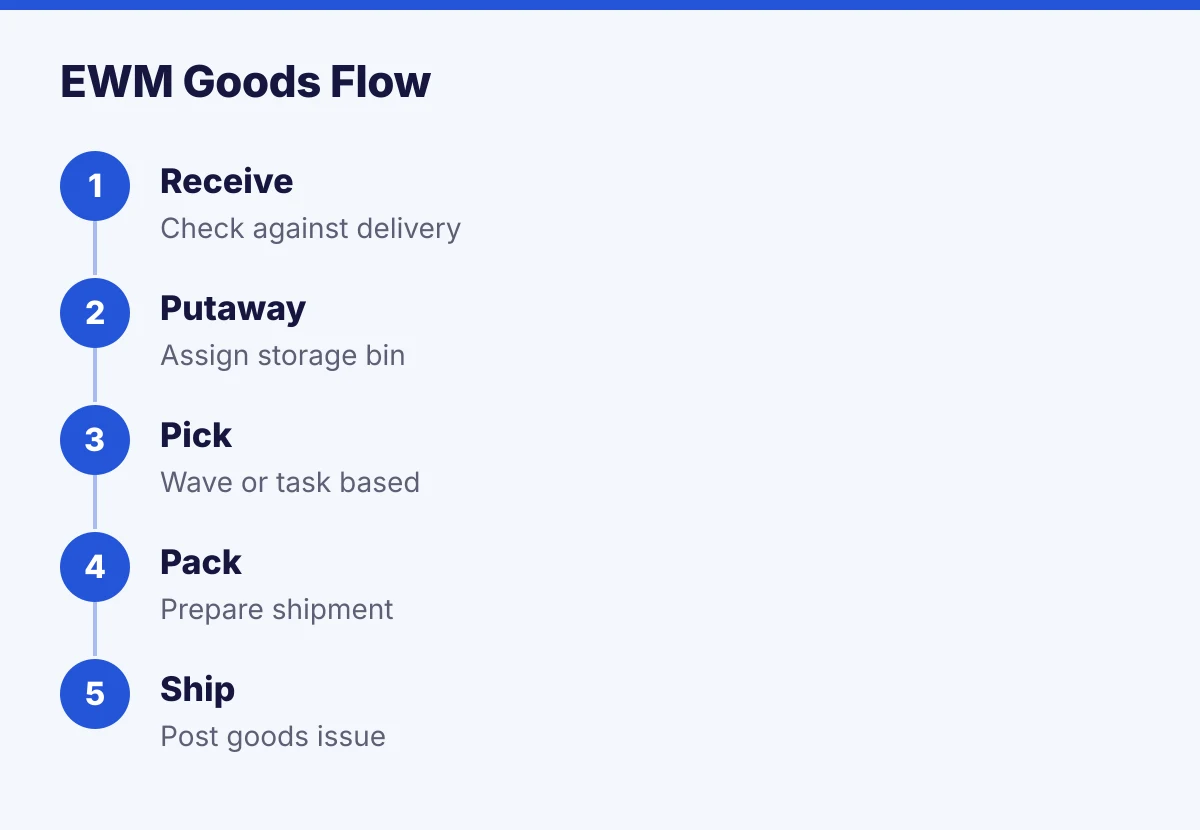
Inbound work starts with an expected delivery from the ERP. Goods are received, checked and sent to a bin chosen by putaway rules.
Outbound work reverses it. EWM groups orders into waves or task queues, directs pickers by RF device, supports packing, and posts the goods issue back to the ERP.
Two layers sit on top. A warehouse monitor shows open tasks and stock status. Resource management assigns work to people and equipment. EWM also offers interfaces for material flow systems such as conveyors and automated storage.
Who Should Shortlist SAP EWM?
SAP EWM fits enterprises that already run SAP and have warehouses where bin-level control, high volumes or automation justify a heavy system. The closer your ERP is to SAP, the stronger the case.
Shortlist it when:
- You run SAP ERP or SAP S/4HANA and want one vendor across orders and warehouse.
- Several sites or distribution centers need consistent processes.
- You use conveyors, shuttles or other automated equipment that needs system control.
- Your processes need detail, such as quality checks, kitting or cross-docking.
If you're also planning demand and supply, look at SAP Integrated Business Planning. For the data layer behind warehouse reporting, SAP HANA is the database SAP's newer products run on.
Who Should Skip It?
SAP EWM is the wrong tool for small warehouses, teams without SAP skills, and companies not on SAP. Implementation takes configuration, testing and trained staff, and that cost only pays back with real complexity.
Skip it when:
- One site with a few thousand bin locations and simple picking runs fine on a lighter warehouse system.
- Your ERP isn't SAP. A specialist warehouse platform will connect more easily.
- You don't have an SAP partner or internal team to configure and maintain it.
Companies still using the older warehouse module inside SAP ERP should confirm SAP's current support timeline with SAP before deciding to stay or move.
How Is SAP EWM Deployed and Priced?
SAP offers EWM in more than one deployment form, including embedded in SAP S/4HANA and as a separate system. Check SAP's official documentation for the current editions and cloud options. The choice affects upgrades, hardware and how tightly it ties to the ERP.
Pricing isn't published on SAP's product page. Expect a quote driven by edition, deployment and scope, not a listed per-user rate. Ask whether licenses are by user, volume or bundle, and what implementation partners typically add.
What to Check Before Shortlisting
Before you commit, put these questions to SAP or a partner:
- Which deployment edition matches your ERP version, and what's the upgrade path?
- Does it support your exact automation equipment?
- Which RF devices and mobile setups are certified?
- What does implementation involve, and what's the partner's rate and timeline?
- How does it connect with your transport planning and procurement, for example SAP Ariba for sourcing?
Request a demo using your own process, not a generic script. A pick wave with your real order profile will show more than any slide deck.
Key Features of SAP Extended Warehouse Management: What It Does and Who It Fits
SAP EWM's features center on controlling stock and tasks at the storage bin level.
- Bin-level inventory and storage control
- Inbound processing: receiving, quality checks, putaway
- Wave and task-based picking, packing and outbound delivery
- Warehouse monitor and resource management
- Interfaces for material flow and automation equipment
- Radio-frequency (RF) mobile device transactions
SAP Extended Warehouse Management: What It Does and Who It Fits Pricing
SAP doesn't publish a price for EWM, so any figure you see elsewhere isn't from the vendor.
SAP EWM
Not published
SAP doesn’t publish a price for this product on its product page. Quote based.
SAP Extended Warehouse Management: What It Does and Who It Fits Specifications
Deployment, devices and integrations decide whether EWM fits your landscape.
- Deployment
- Cloud Based
- On Premises
- Hybrid
- Billing cycle
- Yearly
- Desktop
- Web App
- Windows
- Mobile
- iOS
- Android
- Languages
- English
- Built for
- Enterprises
- Support
- Phone
- Training
- Tickets
- Integrations
- SAP S/4HANA, SAP ERP
- Public API
- Yes
- Free trial
- No
- Free plan
- No
- Runs in browser
- No
- Customisable
- Yes
- Website
- sap.com
SAP Extended Warehouse Management: What It Does and Who It Fits Screenshots
Your experience counts
Rate SAP Extended Warehouse Management: What It Does and Who It Fits
Used SAP Extended Warehouse Management: What It Does and Who It Fits? Your honest review helps the next buyer decide. It takes about three minutes.
Thanks, your review is in.
Our editors check every review before it goes live, usually within 2 business days.
SAP Extended Warehouse Management: What It Does and Who It Fits FAQs
Alternatives to SAP Extended Warehouse Management: What It Does and Who It Fits
Other Supply Chain Management software recorded on the same fields.