

How to implement and take advantage of a Chatbot in Human Resources? Due to the expansion of generative AI, driven by ChatGPT, the use of chatbots in Human Resources is also growing. Its ease of use and ability to provide useful, high-quality information allow organizations to improve efficiency in critical areas such as employee care, task automation, and HR team productivity.
On the other hand, despite it being easier than ever, only 12% of employers are satisfied with their employee information system. In addition, nearly 99% agree that HR information should be easier to access. AI chatbots for HR can be the answer to all these questions.
What is an HR Chatbot?
An HR chatbot is an AI tool designed to automate and facilitate HR tasks. These chatbots can answer FAQs, help with onboarding new employees, and even assist with recruiting.
These AI-based systems trained on large amounts of data can provide real-time answers to employee, manager, or HR staff queries. They can also be integrated into HR software to expand their capabilities.
In addition, they enable the automation of various HR tasks and the performance of predictive analytics on issues such as employee turnover and skill gaps. This helps HR managers make data-driven decisions and improve operational efficiency.
These types of AI chatbots work in a very similar way to ChatGPT. They are conversational models that understand natural language, generate coherent and useful responses to user questions, and unify knowledge in one place. These HR chatbots can understand the context of employee queries to provide accurate answers and offer real-time assistance, improving the employee experience and streamlining company processes.
What Use Cases Do HR Chatbots Offer?
The areas in which an HR chatbot can offer immediate benefits vary. These are divided into 5 main areas.
Recruitment
AI-powered chatbots can be very useful during recruitment and selection. They can be used during initial CV screening to automate the review of received CVs and select those that meet the job requirements. They can also be used to ask questions and pre-screen candidates.
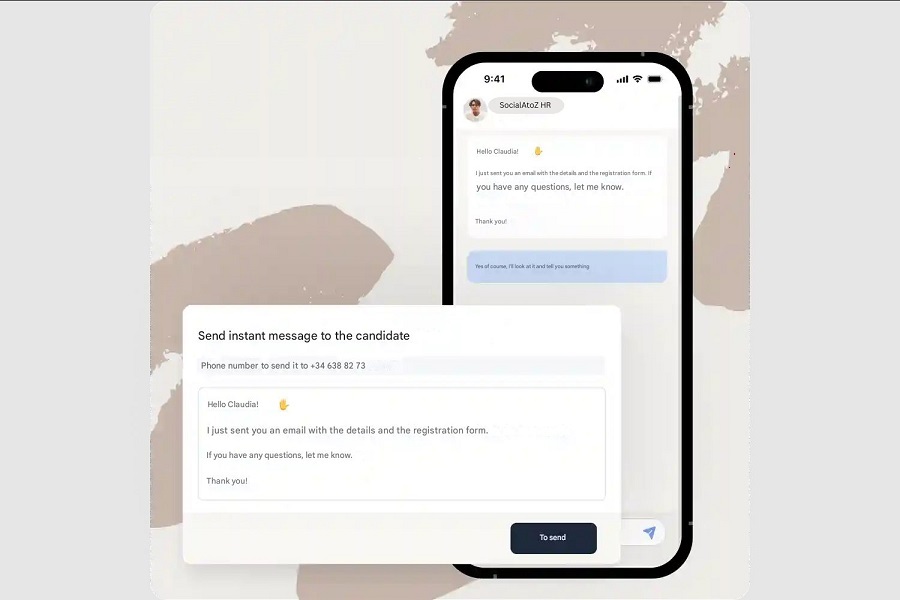
These technologies let us automate interview scheduling and improve the candidate experience by giving instant feedback and keeping candidates updated throughout the process.
Onboarding
HR chatbots can also be a great ally in improving and automating the onboarding process, which is crucial for increasing employee retention, boosting initial productivity, and improving the well-being of new employees.
A welcome bot can provide new employees with immediate access to the necessary information. Our employee onboarding software and module automation enable this automated messaging to be an alternative to a chatbot.
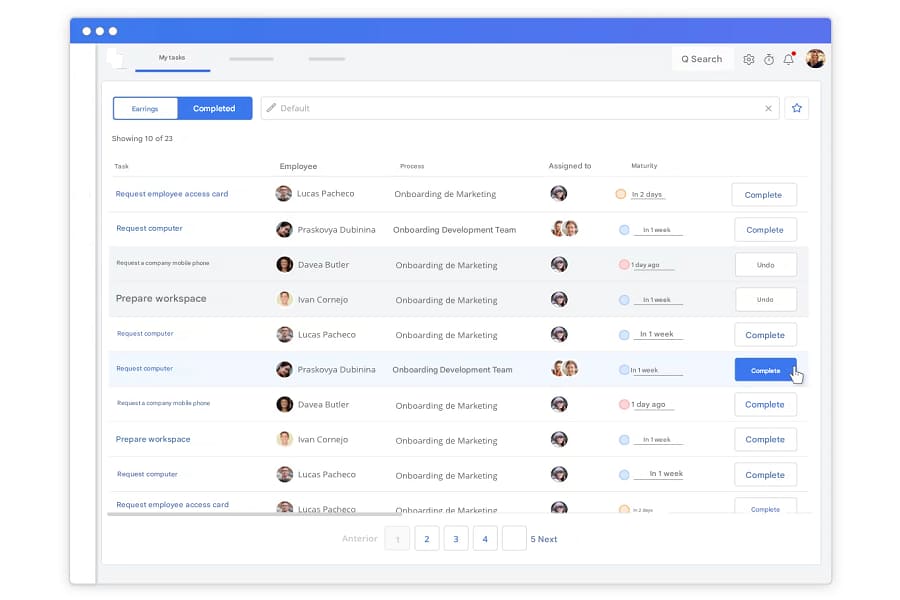
From company policies and operating procedures to facility locations and employee benefits, new employees can quickly become familiar with their new work environment and resolve any questions independently.
HR Processes
HR tasks are often repetitive and time-consuming. HR chatbots can make things easier by automating tasks such as scheduling meetings, managing vacation requests, tracking work hours, and answering employee questions. This saves time and helps HR staff to focus on more important and strategic tasks.
In our case, we already have workflows that can replace this HR chatbot functionality and automate the generation of notifications and messages, using flows that help optimize all types of processes.
Chatbots can also streamline other tasks, such as employee benefits management, expense reporting, and goal and performance tracking. In addition, they can provide more agile and simple support for information or automate internal communications with both candidates and employees.
Performance Evaluation
Another area where AI and chatbots can offer many advantages is employee performance evaluation. The recruitment chatbot collects data to create detailed reports and personalized tips that improve productivity and performance. By asking a few quick questions, HR can gather all the information needed for a useful performance review.
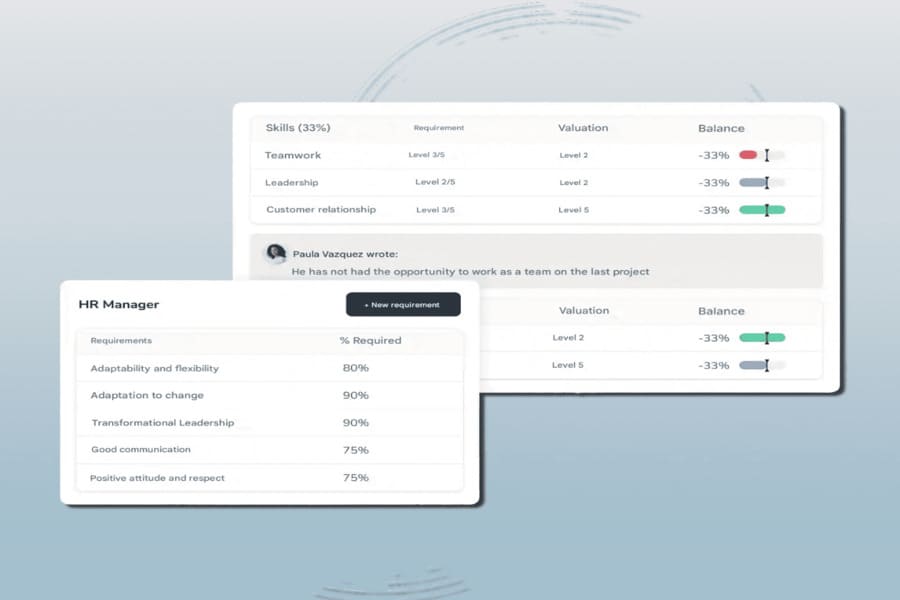
Chatbots also make giving and receiving feedback easier, allowing employees to respond to evaluations more smoothly. They can support training and development by suggesting courses or programs that align with each employee’s needs and goals, helping each team member grow in the way that best fits them.
Employee Satisfaction
A chatbot can also be a useful tool for increasing employee satisfaction. Employees can quickly and efficiently ask the chatbot questions, resolve doubts about company policies or internal procedures, request days off, etc.
It can serve as a reference point that employees can consult whenever they need it, and if they cannot find the information they are looking for, the chatbot can redirect them to the appropriate HR staff. They can also be of great help when it comes to receiving employee feedback, whether by collecting it or sending out work environment surveys.
Advantages of HR Chatbot
Implementing an HR chatbot can greatly benefit organizations. If done well, it can become a competitive advantage.
24/7 Availability
An HR chatbot is available 24/7. This means employees can easily get their questions answered at any time, which is especially useful for companies with staff in different time zones or outside regular business hours.
Quality Information
HR chatbots can provide clear, accurate answers to employees. They use the company’s data to provide employees with the latest, most useful information, helping them make better decisions and feel more satisfied.
Personalized Attention
Every employee can get support that meets their individual needs. Chatbots can tailor their responses to each question, providing a more personalized and satisfying experience for everyone. This can be very useful for companies with very diverse profiles or in different geographic locations.
Easy to Use
Because AI chatbots for HR use natural language, they are intuitive and easy for employees to learn. They do not require any prior training or technical knowledge and allow for fluid and natural interaction. Both employees and managers will be able to use it and benefit from its capabilities almost immediately.
Time-saving
HR chatbots can automate routine, repetitive tasks, freeing up time for HR staff to focus on higher-value work. This translates into increased efficiency and productivity for the department as a whole, as well as higher employee satisfaction.
Predictive Analysis
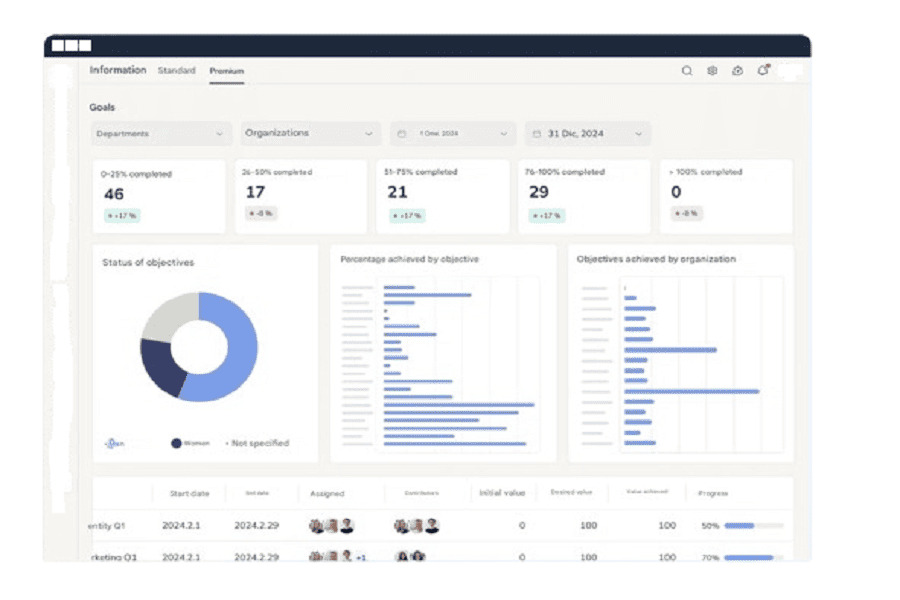
HR chatbots can analyze data to predict how employees might behave and what trends may occur. This information can be helpful for planning and making decisions. For instance, chatbots can help forecast employee turnover, identify potential performance issues, or determine what training employees might need.
Informed Decision Making
Chatbots are just another way to collect, analyze, and interpret data. This information is crucial for HR managers, offering real-time insights into workforce dynamics. It helps them make sound decisions based on data, boosting efficiency and minimizing errors.
Economic
Even though HR chatbots are advanced technology, they’re actually easier and cheaper to use than you might expect. A wide variety of solutions are currently adapted to different budgets and needs. Their implementation can offer a good return on investment.
Implementation of Chatbot in Human Resources
Previously, to have a custom HR chatbot, it was necessary to develop a proprietary model, which was very expensive in every sense. Today, there are pre-trained, ready-to-implement HR chatbot solutions, thereby significantly reducing complexity and cost. The use of technology has become democratized.
Organizations can now select one of the solutions available on the market, customize it to their context, and implement it quickly and easily. To do so, it is necessary to take into account several points:
- Objectives: Before setting up a chatbot, it’s important to have clear goals in mind. Knowing what you want to achieve will help you set it up properly.
- Needs: What tasks can we automate, and what information do employees need? By figuring this out, we can sharpen our strategy and ensure we meet everyone’s needs and expectations.
- Integration: We need to ensure the chatbot integrates well with our HR software and communication tools. This will help create a smooth experience for everyone.
- Testing: Before launching the chatbot, it’s important to test it to make sure it works properly and achieves its goals. We need to fine-tune its behavior to ensure it’s ready for use.
- Training: Although HR chatbots are intuitive and easy to use, it can be helpful to provide training or guidance to employees so they become familiar with the new tool and feel comfortable using it. You should also offer support and communicate its benefits.
- Organizational culture: The organization needs to foster a culture of digitalization and automation. Employees should be willing to embrace and use artificial intelligence and chatbots at work. This may mean changing their way of thinking and getting past any hesitations about adopting new technology.
- Continuous improvement: After the chatbot is set up, it’s important to keep gathering feedback and making changes to improve its performance and accuracy. Using chatbots in HR is an ongoing effort aimed at steady improvement.
Add SocialAtoZ as a preferred source
See us more often in your Google results.