

CustomerGauge
VerifiedAccount-centric NPS for B2B, tying account health and revenue risk to feedback rather than to contacts
 See all screenshots
 - Deployment Cloud Based
- Starting price Quoted on request
- Free trial Not offered
- Best for Medium Business, Large Enterprise
What is CustomerGauge?
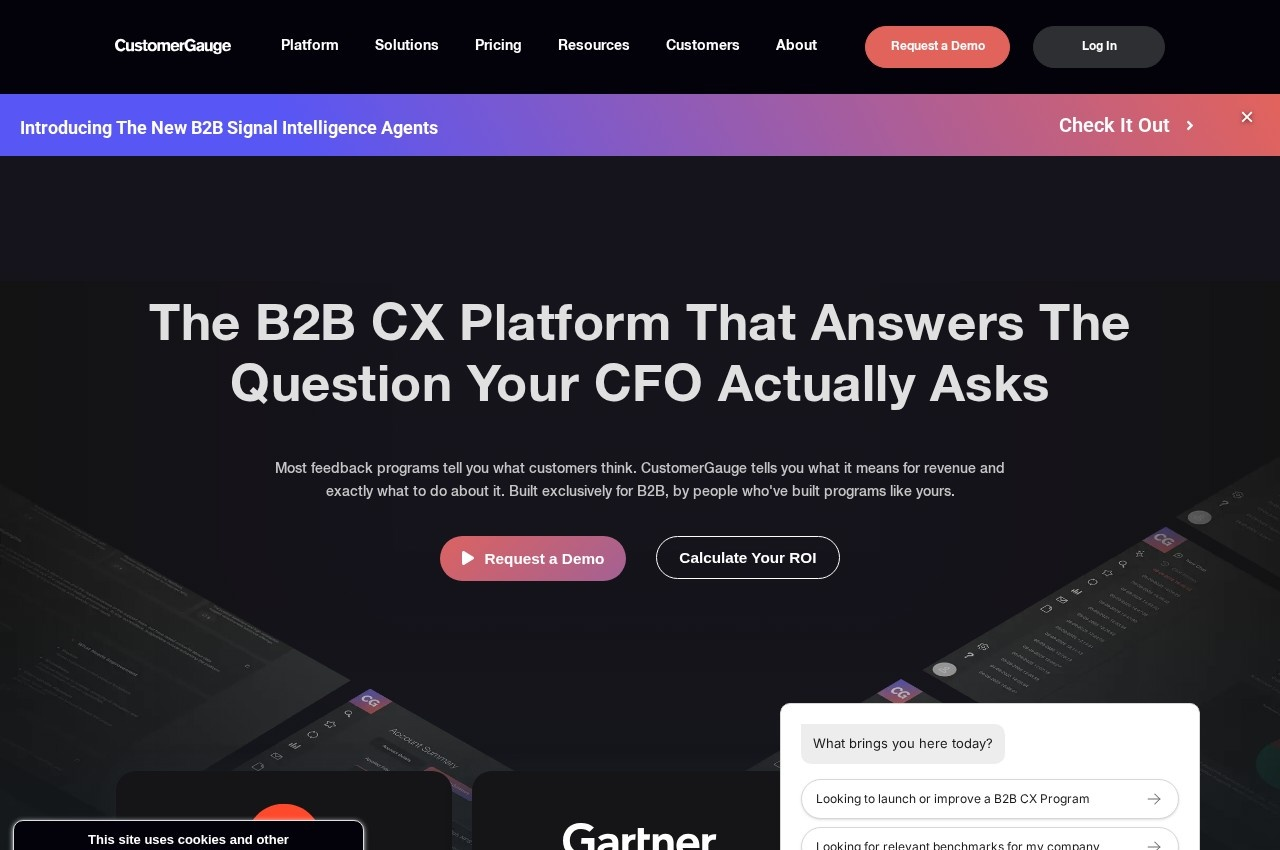
CustomerGauge is a business-to-business experience platform built around Account-Centric NPS and Revenue-Based NPS, connecting account health and financial outcomes to feedback, with dashboards and analytics, feedback routing and AX Agents that turn surveys and signals into action.
Account-centric measurement is the substantive idea and it addresses a real defect in how Net Promoter Score is usually applied to business customers.
Standard NPS surveys individuals and averages their responses. In a consumer business that is sound, because the individual is the customer. In business-to-business it can be badly misleading. A single corporate account might involve fifteen people across procurement, operations, finance and executive sponsorship, and their views frequently differ sharply. The daily user may be frustrated while the executive who signs the contract is satisfied, or exactly the reverse, which is the more dangerous case.
Averaging those responses into one company score destroys the information that mattered. What a business needs to know is whether a specific account worth a specific amount is at risk, and which stakeholders within it are unhappy. Surveying one contact and treating that as the account's opinion is how companies are surprised by renewals they thought were safe.
Connecting the score to revenue completes the argument. A three point drop across small accounts and the same drop concentrated in the largest ones are entirely different events, and only the second requires an immediate response. Weighting by revenue is what makes the metric usable for prioritising limited attention.
Feedback routing to the right teams follows from the same logic, since account risk needs to reach the person who owns the relationship rather than a central inbox.
Pricing is not published, which is normal for platforms sold on account volume.
Key Features of CustomerGauge
- Account-Centric NPS across multiple stakeholders
- Revenue-Based NPS weighting
- Account health scoring
- Revenue risk identification
- Dashboards and financial impact analytics
- Feedback routing to account owners
- AX Agents for automated action
- Multi-stakeholder survey design
- Churn and renewal risk signals
- Integration with revenue data
CustomerGauge Pricing
Quoted
Quoted on request
No pricing is published. Normally quoted on account and response volume, with integration scope affecting cost.
CustomerGauge Specifications
- Deployment
- Cloud Based
- Desktop
- Web App
- Built for
- Medium Business
- Large Enterprise
- Support
- Phone
- Public API
- Yes
- Free trial
- No
- Free plan
- No
- Runs in browser
- No
- Customisable
- No
- Website
- customergauge.com
CustomerGauge Screenshots
CustomerGauge Comparisons



CustomerGauge Reviews
No reviews yet
Used CustomerGauge? Share your experience and help other buyers decide.
CustomerGauge FAQs
Alternatives to CustomerGauge
Other NPS Software recorded on the same fields.