
AI dubbing tools don’t sell minutes the same way, so their prices are hard to compare side by side.
Some sell minutes. Others sell credits that convert into minutes at their own published rate.
A few count dubbing against the same pool as every other feature they offer.
So we converted each plan to one number. On 25 September 2026 we opened the pricing pages of five AI dubbing tools, saved them, and divided each plan’s price by the dubbed minutes it includes.
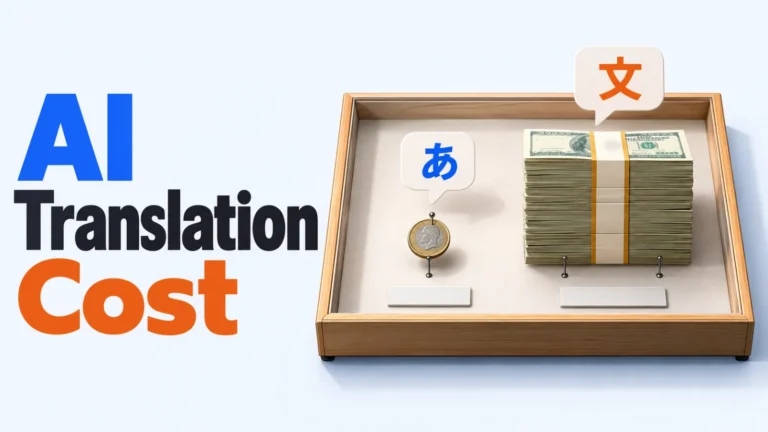
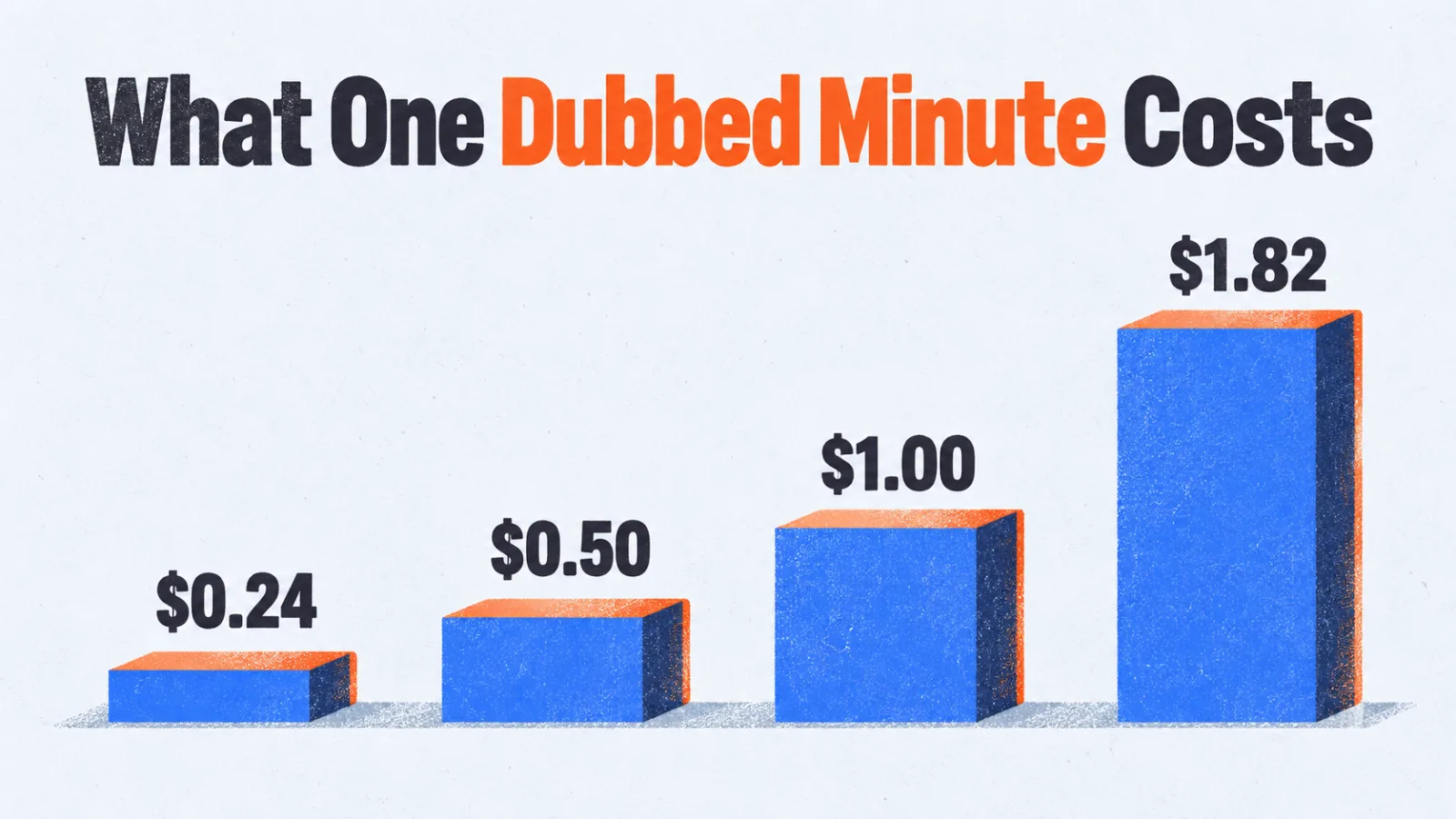
A dubbed minute cost between 24 cents and 1.82 dollars. The bigger surprise was how much one setting moves the price inside a single tool.
Key Takeaways
- Across five tools, one dubbed minute ran from about 24 cents to 1.82 dollars at list prices.
- Within one tool, removing a watermark or switching to the editing studio multiplied the rate by five.
- Voice cloning roughly tripled the per-minute rate on the plan where it’s priced separately.
- Lip sync, where it’s sold as an add-on, cost more per minute than the dubbing underneath it.
- Whether unused minutes survive the month differs by tool and by billing period.
How We Priced a Minute
Every figure below comes from the vendor’s own pricing page, linked beside it, as it read on 25 September 2026.
For each plan we took the list price and the dubbing minutes it includes, and divided one by the other. Where a plan gives credits instead of minutes, we used the vendor’s own published conversion.
That gives the best case: every included minute used. Unused minutes raise the real rate.
Prices are US dollars before tax. One vendor showed rupees at our location, so we used the dollar prices it states in its own FAQ.
What a Dubbed Minute Costs
These are each tool’s plans that include dubbing, cheapest rate per tool first.
| Tool and plan | Price | Dubbing included | Per minute |
|---|---|---|---|
| Maestra Business Plus, yearly | $359 a month | 1,500 minutes | about $0.24 |
| Maestra Premium, yearly | $79 a month | 300 minutes | about $0.26 |
| Kapwing Business, monthly | $64 per member | up to 200 minutes | about $0.32 |
| Kapwing Pro, monthly | $24 per member | up to 50 minutes | about $0.48 |
| ElevenLabs Pro, automatic dubbing | $99 a month | 600,000 credits, 200 minutes | about $0.50 |
| ElevenLabs Creator, automatic dubbing | $22 a month | 121,000 credits, 40 minutes | about $0.55 |
| Synthesia Starter | $29 a month | up to 48 minutes | about $0.60 |
| Synthesia Creator | $89 a month | up to 140 minutes | about $0.64 |
| Rask AI Creator Pro, monthly | $99 a month | 100 minutes | about $0.99 |
| Rask AI Creator, monthly | $39 a month | 25 minutes | about $1.56 |
| ElevenLabs Creator, Dubbing Studio | $22 a month | 121,000 credits, 12 minutes | about $1.82 |
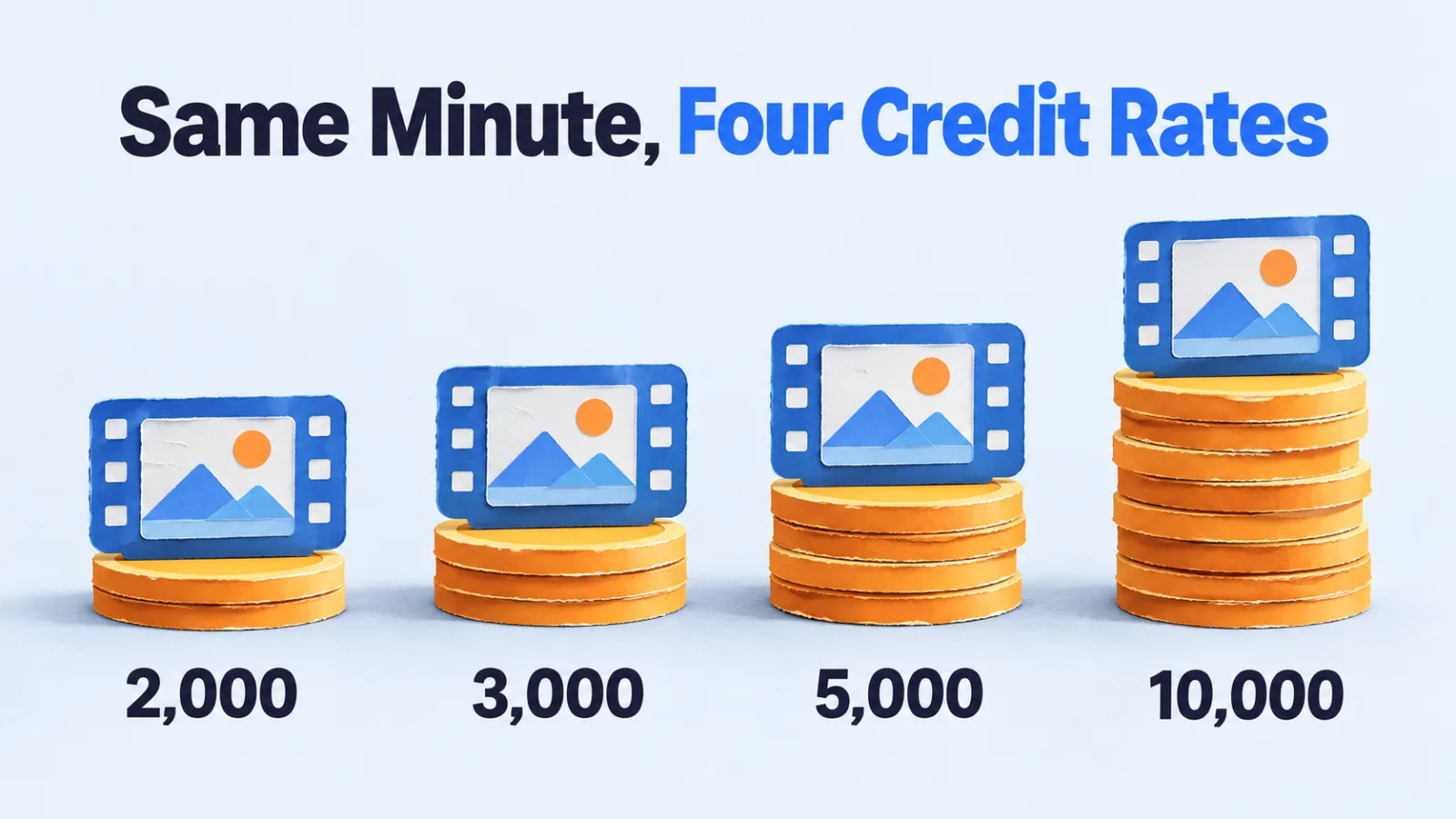
The ElevenLabs rows use the credit rates it publishes: 3,000 credits per minute for automatic dubbing without a watermark, and 10,000 in its Dubbing Studio without one.
One Tool, Five Prices
The setting you pick can matter more than the tool you pick.
ElevenLabs publishes four credit rates for one minute of dubbing. Automatic dubbing costs 2,000 credits with a watermark and 3,000 without. Its Dubbing Studio, where you edit the result, costs 5,000 with a watermark and 10,000 without.
On the same 22-dollar plan, that’s about 36 cents a minute at one end and 1.82 dollars at the other. Same subscription, same voices, five times the price, depending on whether you need to edit the output and publish it clean.
That’s why a comparison table built on one headline rate per tool misleads. Price the workflow you’ll use, not the cheapest mode on the page.
Voice Cloning Triples the Rate
Keeping the original speaker’s voice in the new language is often priced from a smaller allowance.
Maestra‘s Premium plan includes 300 minutes of voiceover into another language, or 100 minutes with pro voices and voice cloning. That’s about 26 cents a minute with a stock voice and about 79 cents with a cloned one.
For a training video, a stock voice is usually fine. For a creator whose voice is the brand, cloning is the point, and it belongs in the budget from the start.
Lip Sync Costs More Than the Dub
Where lip sync is sold separately, it’s the most expensive line.
Maestra unlocks lip sync on its Business plan as an add-on at 2 dollars a minute. The dubbing minute under it costs about 27 cents on that plan.
Lip sync reshapes the speaker’s mouth to match the new language, which means generating video, not only audio. It matters for talking-head content where viewers watch the face. For a screen recording with a voice over it, you can skip it.
Credits Are Shared With Everything
Three of the five tools count dubbing against a pool that other features draw from too.
ElevenLabs says all its products draw from one shared monthly credit pool, so text to speech and sound effects leave fewer credits for dubbing. Synthesia‘s credits cover avatar video and dubbing from the same allowance. Kapwing‘s credits are split between subtitles and dubbing, which is why its limits read “up to”.
If dubbing is one of three or four things you’ll use the tool for, the minutes in the table are a ceiling rather than a promise.
Unused Minutes Can Disappear
What happens to minutes you don’t use varies more than the prices do.
ElevenLabs rolls unused credits over for up to two months, so a balance can reach three times the monthly quota. Rask AI lists “No minutes lost at month end” as a feature of its yearly plans only.
An uneven workload changes the math. A team that dubs a batch every quarter pays for three months of minutes to use one month’s worth, unless the plan carries them forward.
Annual Billing Cuts the Rate
Most of these tools discount annual billing, and the saving flows straight into the per-minute rate.
Kapwing Pro is 24 dollars a month on monthly billing and 16 on annual. On its 50 included dubbing minutes, that’s about 48 cents a minute falling to about 32.
Commit annually only once you know your volume. The cheapest rate on a plan you outgrow, or barely use, is not the cheapest option.
How Languages Add Up
A dubbed minute usually means one minute of video in one target language.
Plan for each language to draw its own minutes unless the pricing page says otherwise. A 10-minute video in three languages is then 30 dubbed minutes, not 10.
That’s where the plan tiers start to matter. Thirty minutes a month fits inside the entry plan on three of the five tools. Three hundred is more than any published plan includes on three of them, which means a conversation with sales.
What Human Dubbing Is Priced On
Human voice work is priced on a different basis entirely.
Voices.com, a marketplace for voice actors, says non-broadcast work such as training videos is generally priced per word or per finished minute. That’s for each actor, on top of translation, direction and studio time.
That structure makes human dubbing grow with every speaker and every language. The AI plans above are priced by minutes of video instead, which is the main reason their rates look so different.
Picking the Plan by Volume
- Under 30 minutes a month, an entry plan on any of these tools will do, so choose on voice quality.
- Between 30 and 300 minutes, mid-tier plans converge between roughly 25 cents and a dollar a minute.
- Above 300 minutes, most of these tools need a custom plan, so ask each vendor for a volume price.
- If lip sync or cloning is required, price those minutes separately, since they cost three to eight times more.
For the voices themselves, our guide to AI voice generators compares the text-to-speech side of these tools. If the video needs a presenter rather than a dubbed speaker, the AI avatar video generators guide covers that route.
Questions to Ask Before Paying
- Ask what one dubbed minute costs with the exact options you need: watermark, cloning, lip sync.
- Ask whether each target language counts as separate minutes.
- Ask what else draws from the same credit pool.
- Ask whether unused minutes roll over on your billing period.
- Ask what an extra minute costs once the plan runs out.
Comparing AI Dubbing Tools
Once you know the minutes you need and the options you can’t do without, comparing the tools themselves gets easier.
The AI dubbing tools category lists them side by side, so you can match voices and languages against the per-minute rates above.
Questions People Ask About AI Dubbing Cost
How much does AI dubbing cost per minute?
Between about 24 cents and 1.82 dollars on the five tools checked in September 2026. The plan, the billing period and the options chosen decide where in that range you land.
Is AI dubbing cheaper than human dubbing?
Usually. Human voice work is priced per word or per finished minute for each actor, plus translation and studio time. AI plans charge by minutes of video instead.
Does voice cloning cost extra in AI dubbing?
Usually. On one plan checked, a cloned-voice minute cost about three times a stock-voice minute. Cloned minutes come from a smaller allowance.
Do unused dubbing minutes roll over?
It depends on the tool. One vendor rolls unused credits over for up to two months, while another says only its yearly plans keep minutes from being lost at month end.
Is lip sync included in AI dubbing prices?
Rarely at the base rate. One vendor sells it as an add-on at 2 dollars a minute, more than its dubbing minute costs on the same plan.
Price the Minute You’ll Use
The headline rate on a pricing page is the cheapest mode, fully used.
Work out your monthly minutes, multiply by your languages, and price those minutes with the options you need. On the five tools checked here, that decision moved the cost of a minute further than switching tools did.
Add SocialAtoZ as a preferred source
See us more often in your Google results.