
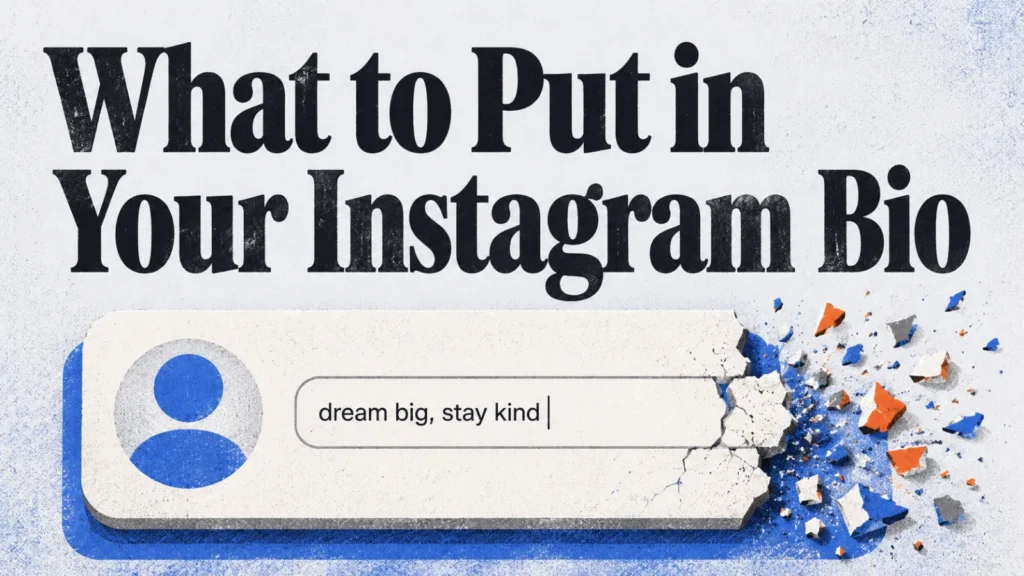
Search this and you’ll be handed two hundred bios to copy.
Which solves nothing, because a bio that was written for somebody else describes somebody else. Paste one in and you’ve filled the space without saying anything.
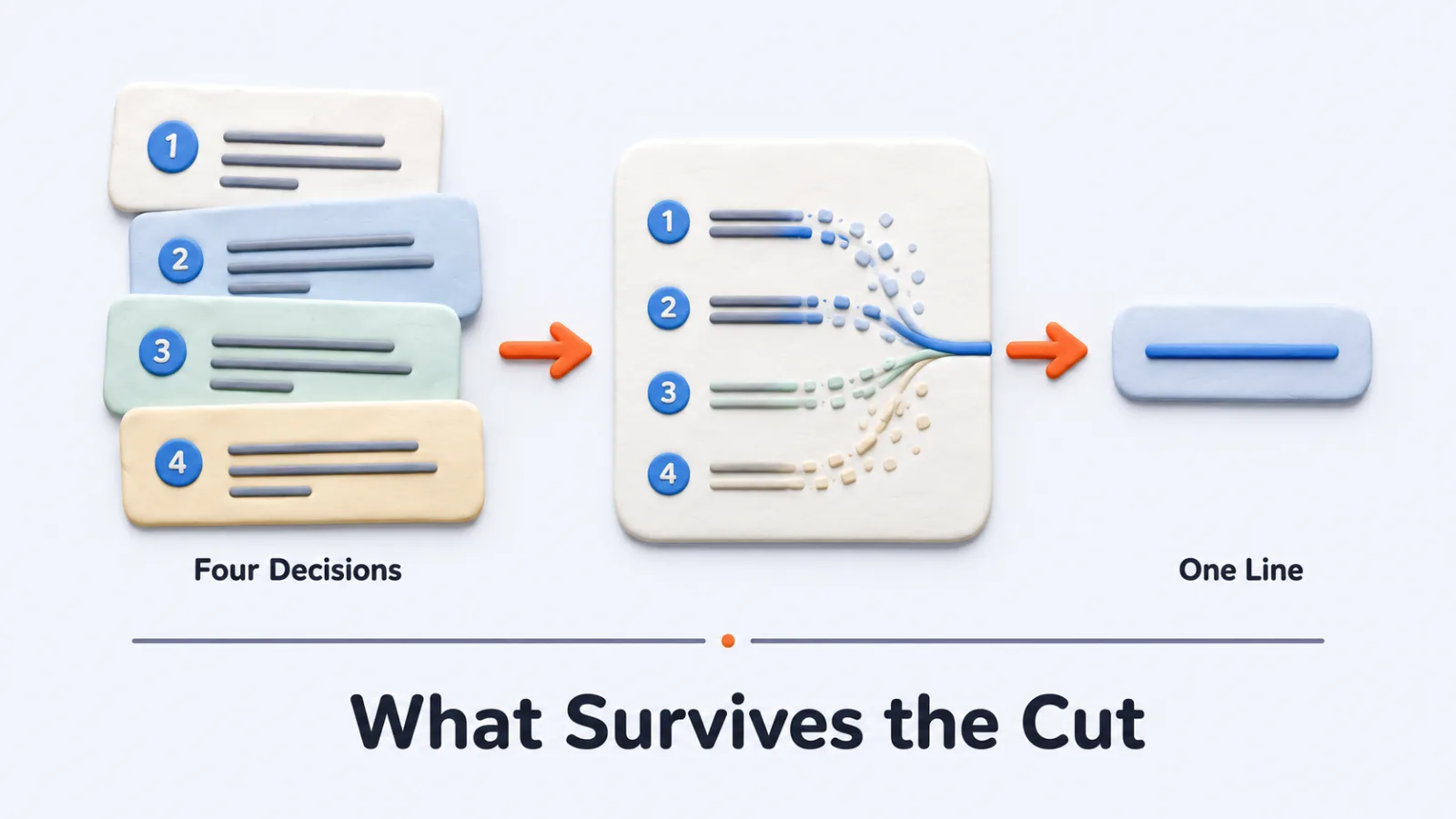
The 150 characters are doing a job, and once you know the job the words come easily. Working out what to put in your Instagram bio is four decisions, not a hunt for a line.
Key Takeaways
- The Name field is what search reads. The bio body is not.
- Only the first line is visible before the bio gets truncated.
- A bio that says who it’s for beats one that sounds clever.
What the Bio Is, and What Sits Beside It
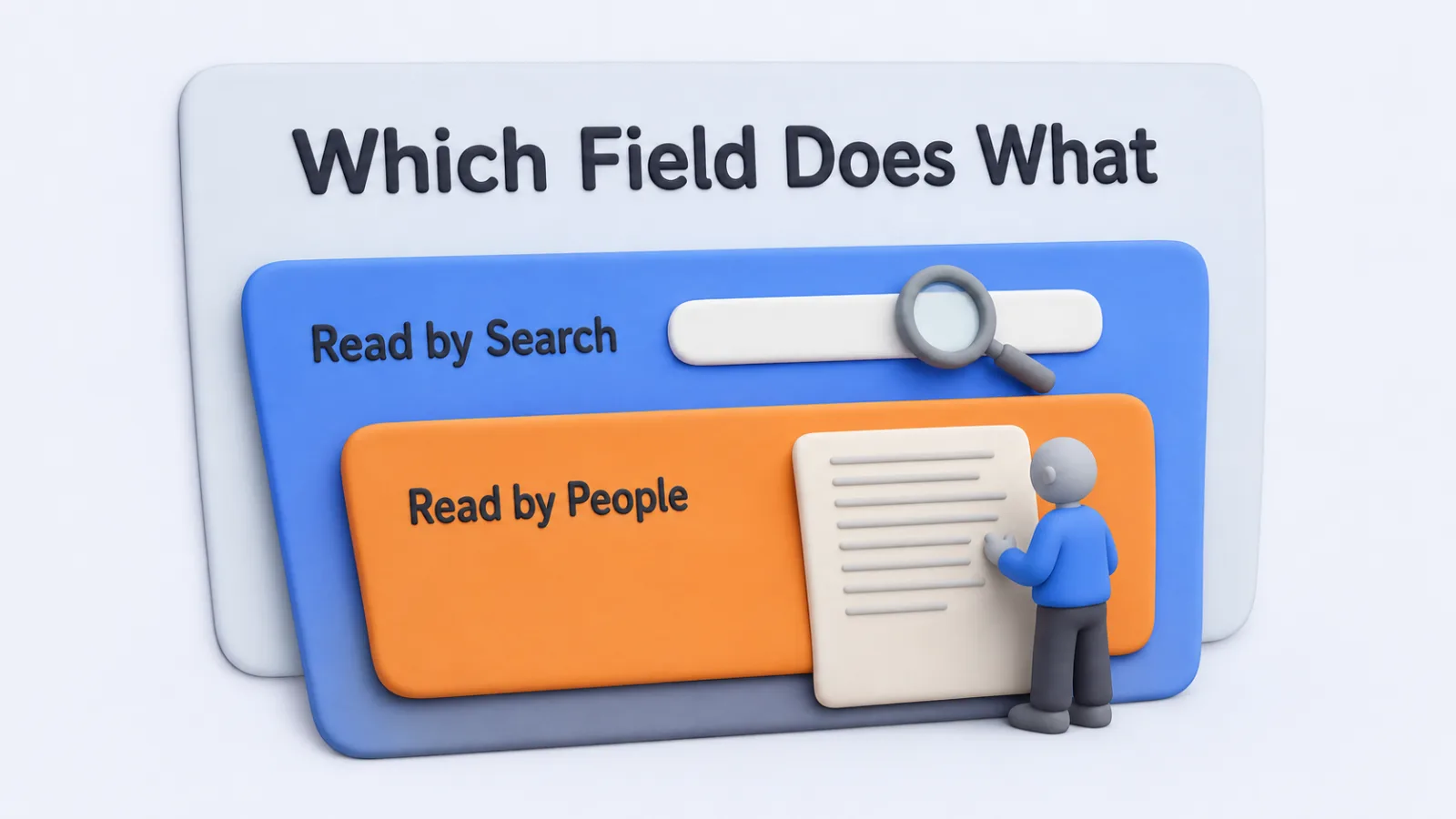
Four separate fields do four separate jobs, and people treat them as one.
| Field | Limit | What it’s for |
|---|---|---|
| Username | 30 characters | Your handle, and it is searchable |
| Name | 30 characters | Display name, also searchable |
| Bio | 150 characters | What you tell a visitor |
| Links | Up to five | The only tappable destination |
Getting these confused is why bios so often read like keyword lists. The searching happens somewhere else.
The Part That’s Searchable Isn’t the Bio
Instagram search matches your username and your Name field. It does not read the bio body the way people assume.
That makes the Name field the most wasted 30 characters on the platform. Most accounts fill it with the same words as the username, which spends the field twice on one thing.
Put what you do in there instead. “Ana Ruiz” becomes “Ana Ruiz | Cake Studio Leeds”, and the account becomes findable by people who never knew the name.
Finding the words worth putting there is a research job rather than a guess. It’s the same listening work described in social media listening strategies: use the terms your audience types, not your internal ones.
Four Decisions, Not a Line to Copy
Every bio that works answers the same four questions in some order.
One: Who It’s For
Naming the audience does more than describing yourself.
“Photographer” tells a visitor what you are. “Wedding photography for couples who hate posing” tells them whether to keep reading, and the second one loses nobody worth keeping.
Two: What You Make, Specifically
Concrete beats aspirational, every time.
“Helping brands tell their story” describes a hundred thousand accounts. “Brand illustration for food packaging” describes one, and it’s the one somebody searching can recognize.
Three: Why Follow Rather Than Visit
A follow is a bet that more is coming, so say what recurs.
“New recipe every Tuesday” and “Weekly breakdowns of one ad that worked” both answer it. Without that, a visitor has no reason to choose following over leaving.
Four: One Thing to Do
One, not four.
Book, shop, read, subscribe, message. A bio with three actions gets none of them, because the reader resolves the ambiguity by scrolling on.
The First Line Is the Only Line
Bios truncate, and most people never tap “more”.
Whatever sits in the first line is what your bio says, and everything after it is a bonus for the few who expand. Front-load accordingly.
Read yours on a phone rather than a desktop before deciding it works. The break falls in a different place than the edit box suggests, and the line you were proud of is often the one that gets cut.
The Same Four Decisions, Five Ways
Here’s the structure applied rather than a bank to paste from.
A Local Service
“Emergency plumbing, Bristol. Same-day callouts, no weekend surcharge. Book below.”
Audience and place first because that’s the search, the differentiator second because that’s the objection, one action third.
A Creator
“Short guitar lessons for people who quit once already. New one every Sunday.”
The audience is specific enough to be self-selecting, and the recurring promise gives the follow its reason.
An Online Shop
“Handmade ceramics, made in small batches. Restocks the first of the month. Shop below.”
What it is, why it’s scarce, when to come back. Scarcity and cadence do more work here than adjectives would.
A Freelancer
“I write documentation for developer tools. Currently booking from March. Rates below.”
Availability belongs in a bio more often than people put it there, because it answers the first question a prospect has.
A Personal Account
“Trail running, slow cooking, one dog. Mostly here for the comments.”
Not every account is selling something. Naming the subjects still tells a visitor whether they belong, which is all a personal bio needs to do.
One Bio, Rewritten
Here’s the method applied to a bio of the kind these lists produce.
The starting point: “Living my best life · Coffee addict · Dog mum · Blessed · DM for collab.”
A thousand accounts could share those words, and a stranger learns nothing from them they could act on.
Working the Four Questions
Who is it for? The account turns out to sell hand-poured candles to people furnishing a first flat. None of that was anywhere on the profile.
What does it make? Candles, in small batches, in scents named after places. Concrete, and absent from the original.
Why follow? New scents drop seasonally, four times a year. That’s the recurring promise the original never made.
What should someone do? Buy. There is a shop, and the old bio pointed at collaborations instead, which is a request rather than an offer.
The rewrite: “Small-batch candles named after places. Four seasonal drops a year. Shop the new one below.” Ninety-four characters, and every one of them does something.
A Restaurant
“Neapolitan pizza, Kemptown Brighton. Walk-ins only, closed Mondays. Menu below.”
Hours and booking policy belong here because they are the two questions that otherwise arrive as messages you have to answer individually.
A Coach or Consultant
“I help engineers become first-time managers. Six-week programme, starts quarterly.”
The transformation is named rather than the method, and the cadence tells somebody who missed this one that another is coming.
A Nonprofit
“We rehome ex-racing greyhounds across Yorkshire. 40 rehomed this year. Apply below.”
A number does work that adjectives cannot, and it changes every year, which is a reason to revisit the bio rather than an argument against including it.
What to Leave Out
Four things take up space and return nothing.
- A quote by somebody famous, which describes them rather than you.
- Emoji strings that have to be decoded before they mean anything.
- “DM for collab” with no indication of what you do.
- Your own name repeated from the field directly above it.
Every one of those is a line that a stranger cannot act on. That’s the test worth applying to each character you keep.
The 150 Characters Are Fewer Than They Look
Three things eat the allowance before your words do.
Emojis frequently cost more than one character each, because most are assembled from two or more code points. A skin-tone variant or a flag can cost four, which is why a bio that looked like it fitted suddenly will not save.
Line breaks cost a character each, and a bio laid out over four lines has spent four on formatting. That’s usually worth it for readability, but it should be a decision rather than a surprise.
Spaces count too, which sounds obvious until you’re twelve characters over and hunting for something to cut. Cut a whole idea rather than shaving articles; the shaved version reads like a telegram.
The Links, and How They Work
You can add up to five, and only the first shows without a tap.
That changes the old advice about link-in-bio pages. When you have two or three destinations, they can go in directly, and the extra hop through a landing page costs you the people who don’t take it.
Keep a landing page when you genuinely have more than five, or when you need to change destinations faster than you want to edit a profile.
If the Account Is for a Business
A business or creator account adds fields the personal one doesn’t have.
A category label sits under your name without spending bio characters, and contact buttons handle the email address and phone number people otherwise paste into the bio itself. Switching account type is covered in using Instagram for business.
Between the category label and the buttons, most business accounts free up 40 characters they were spending on contact details.
The Bio Isn’t the Whole Impression
A visitor reads the profile as one object, and the bio is a third of it.
Your profile photo, your category label, your highlight covers and the first six grid squares all arrive at the same moment. A precise bio above a grid that contradicts it leaves the visitor believing the grid.
Highlights carry the load a bio cannot. Pricing, FAQs, before-and-afters and delivery areas each belong in a highlight rather than compressed into 150 characters.
Your Bio Is Also a Google Result
Instagram profiles get indexed by search engines, and the bio is the description that shows.
Search your own name or business and the Instagram result will frequently appear, carrying your bio underneath it as the snippet. For plenty of small businesses that result ranks above their own website, because the profile has more inbound links than the site does.
That gives the 150 characters a second job. On Instagram they persuade somebody already looking at you; on Google they are a search snippet competing with other results for the click.
It’s another argument for leading with what you do rather than a quote. A snippet reading “Living my best life” gives a searcher no reason to choose it over the four results around it.
Testing Whether Yours Works
Show it to somebody who doesn’t know what you do, for three seconds, then take it away.
Ask them two questions: what does this account do, and who is it for. If they can answer both, the bio works. If they recite a phrase back at you without knowing what you sell, it doesn’t.
The failure mode this catches is the one you cannot see yourself. You read your own bio with everything you already know loaded, and a stranger reads eleven words cold.
Three Moments Worth Rewriting For
Three moments justify rewriting a working bio.
A campaign or a launch is the obvious one, and the bio should return afterwards rather than quietly describing a finished promotion for the next eight months.
A change in what you sell is the one people miss. The offer moves, the bio stays, and the account spends a year attracting the wrong enquiries.
A change in who you want is the subtlest. Moving from consumer to business work, or from local to national, changes the audience line first and everything else follows it.
What a Bio Cannot Do
It cannot rescue a profile that fails on everything else.
A precise bio above an abandoned grid reads as a claim the account is not backing up, and the visitor believes the grid. The bio is a label rather than an argument.
It also cannot compensate for a mismatch between what you post and who you asked for. If the bio promises weekly breakdowns and the grid is holiday photographs, the honest fix is to the posting rather than to the wording.
Keeping It Current
A bio is the one piece of copy nobody revisits.
The offer changes, the availability changes, the link goes stale, and the bio still describes last year. Put a reminder against it quarterly, the same way you’d check any other landing page.
Across three or four accounts that becomes a real task. That’s where social media management tools earn their place: profile changes from one screen rather than app by app.
Questions People Ask About Instagram Bios
How long can an Instagram bio be?
The bio itself holds 150 characters, and the Name field above it holds 30 more. Those are separate allowances, so the Name field is 30 characters most people leave on the table.
Do keywords in your bio help people find you?
Far less than keywords in the Name field, which is the part Instagram search reads alongside your username. Stuffing terms into the bio body mostly costs you the space you needed to sound like a person.
Can you put more than one link in an Instagram bio?
Yes, up to five, added through Edit Profile, and only the first shows until somebody taps to expand. Order them so the one you most want used sits first.
Should you use emojis in a bio?
Sparingly, and only where one replaces a word rather than decorating it. An emoji that has to be interpreted costs the reader more than the character it saved you.
What is a good Instagram bio for a small business?
A good one names who you serve, what you sell and where you are, in that order. Local businesses win more from a place name than from a clever line, because that is what someone is searching for.
Write the Four Lines First
Before you open the app, write four plain sentences: who it’s for, what you make, what recurs, and the one thing to do.
Then cut them to 150 characters. The cutting is the easy part, and it’s where the personality arrives, because what survives compression tends to be what you meant.
That’s a bio nobody else could paste in, which is the only kind worth having.
Add SocialAtoZ as a preferred source
See us more often in your Google results.