
Ionic
VerifiedOpen-source SDK for building cross-platform mobile, web, and desktop apps
 See all screenshots
 - Deployment Any
- Starting price Free
- Free trial Not offered
- Best for Freelancers, Startups, SMEs
What is Ionic?
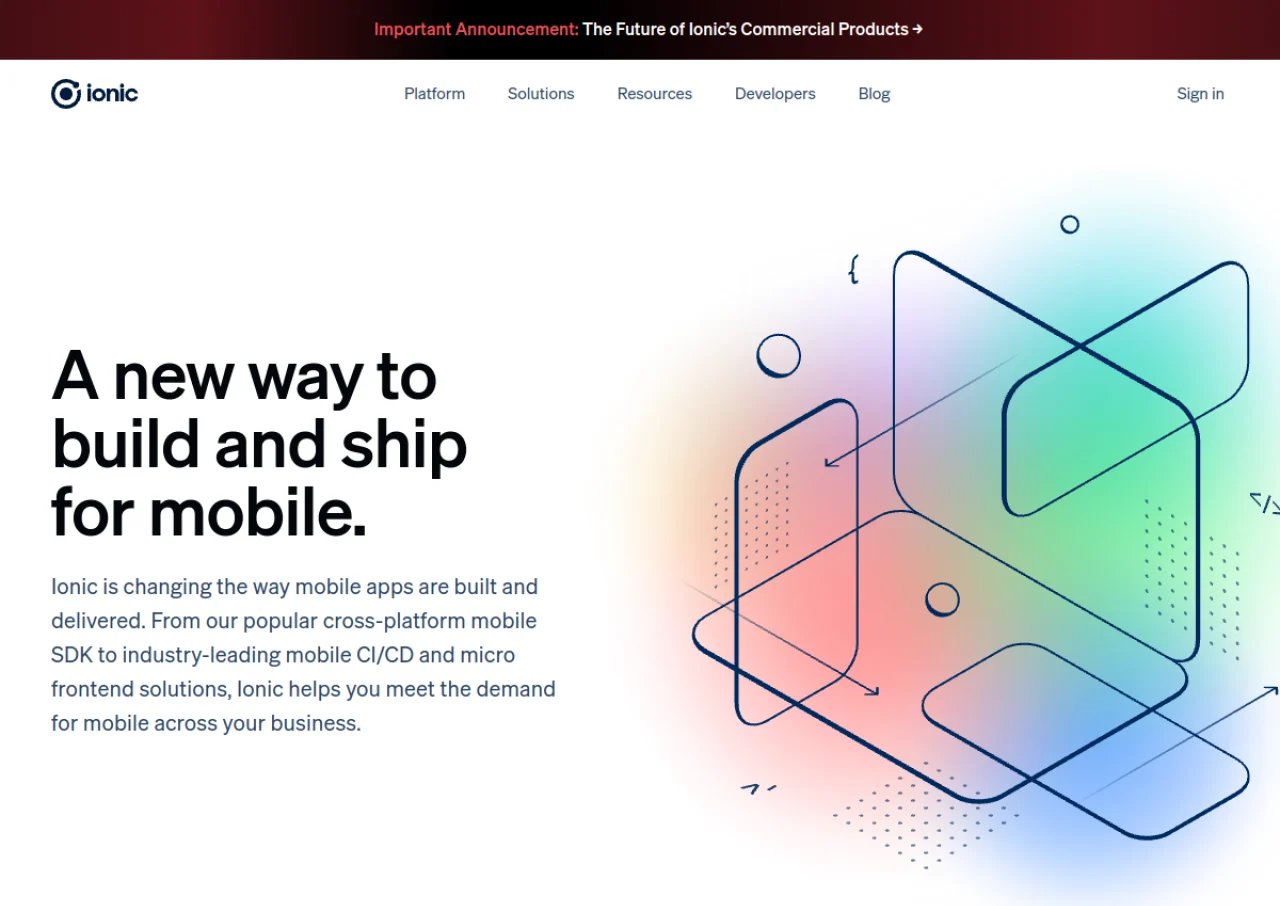
Ionic is an open source SDK for building cross platform mobile, web, and desktop apps using standard web technologies such as HTML, CSS, and JavaScript, paired with Capacitor for native device access. It works with Angular, React, or Vue, and ships with a library of pre-built, native-feeling UI components along with plugins for the camera, geolocation, push notifications, and other device features.
The core Ionic Framework, Capacitor, and Stencil compiler are free to use. Ionic also sells enterprise add-ons like Identity Vault and Auth Connect, though its cloud build and deploy service, Appflow, has been announced for discontinuation by the end of 2027, so teams should plan for alternatives.
Key Features of Ionic
Ionic lists 8 documented features, including Single codebase for iOS, Android, and web via Capacitor, Works with Angular, React, Vue, or vanilla JavaScript and Native device plugins for camera, geolocation, and push notifications. The list below covers what the product does rather than how it is marketed.
- Single codebase for iOS, Android, and web via Capacitor
- Works with Angular, React, Vue, or vanilla JavaScript
- Native device plugins for camera, geolocation, and push notifications
- Pre-built, native-feeling UI component library
- Hardware-accelerated transitions and touch gestures
- Live reload for fast iterative development
- Stencil web component compiler
- Open source core framework with optional enterprise add-ons
Ionic Pricing
Ionic lists 2 plans. One is free; the rest are quoted on request.
Ionic Framework
Free
Unlimited
Open source core SDK, Capacitor, Stencil, and CLI tools
Enterprise
Custom
Commercial add-ons such as Identity Vault, Auth Connect, and Portals; Appflow is being discontinued by the end of 2027
Ionic Specifications
Ionic is available on web app and has iOS and Android apps. It offers an API and has a free plan.
- Deployment
- Any
- Billing cycle
- Monthly
- Desktop
- Web App
- Mobile
- iOS
- Android
- Languages
- English
- Built for
- Freelancers
- Startups
- SMEs
- Agencies
- Enterprises
- Support
- Tickets
- Training
- Integrations
- Angular, React, Vue, Capacitor native plugins, Cordova plugins, Firebase, REST APIs
- Public API
- Yes
- Free trial
- No
- Free plan
- Yes
- Runs in browser
- Yes
- Customisable
- Yes
- Website
- ionic.io
Ionic Videos
Ionic Screenshots
Ionic Comparisons


Used Ionic? Write the first review.
Ionic FAQs
Alternatives to Ionic
Other App Development software recorded on the same fields.