

Flowcode
VerifiedQR codes with FlowURLs and FlowHubs, tying offline scans to first-party data from $25
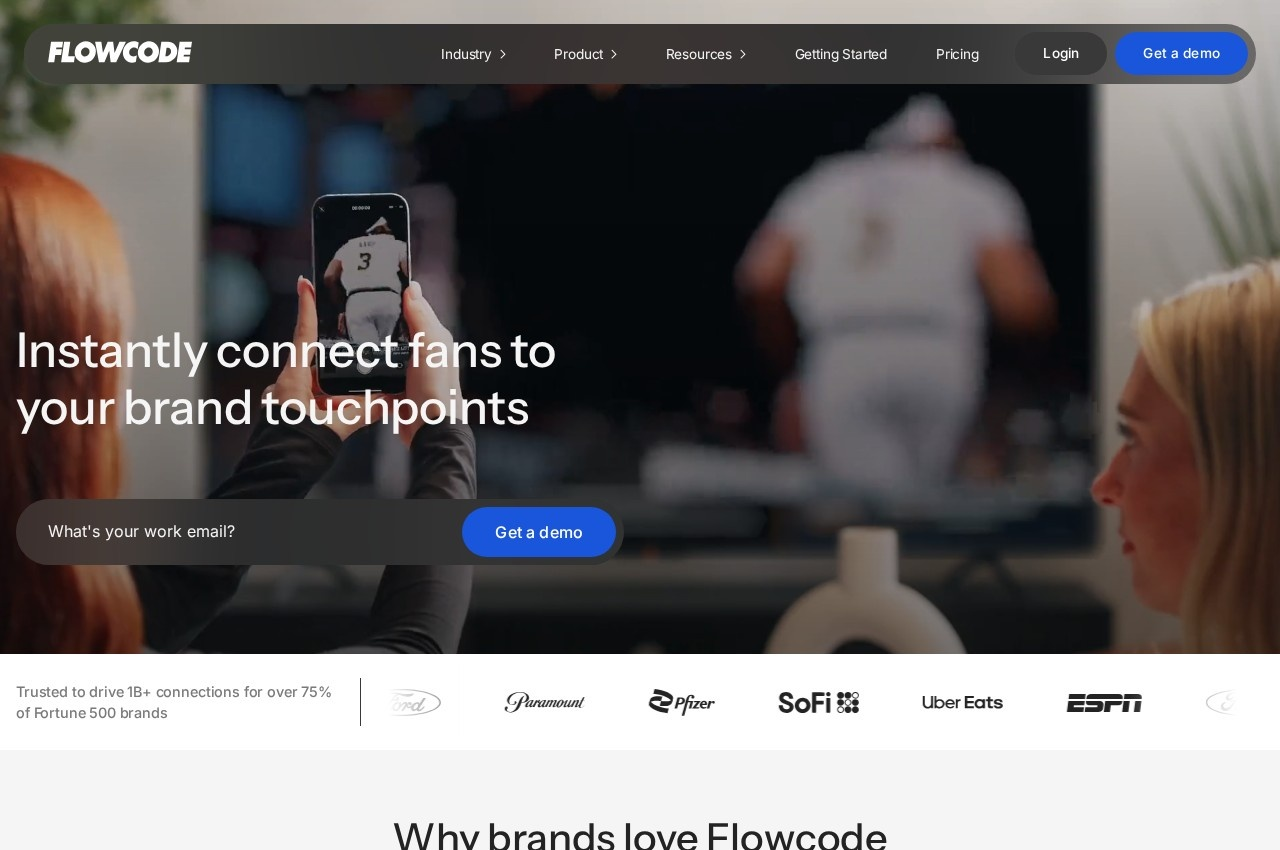 See all screenshots
 - Deployment Cloud Based
- Starting price Free
- Free trial Available
- Best for Small Business, Medium Business, Large Enterprise
What is Flowcode?
Flowcode publishes a connected offline-to-online platform combining Flowcodes as branded QR codes, FlowURLs as short links and FlowHubs as landing destinations, with scan analytics and collaboration seats, positioned around going live in days with a guided onboarding process.
Codes, short links and hosted destinations are all forms of the same thing here: an address the vendor controls and can therefore measure and repoint. That is what allows a physical scan and a digital click to be compared as one dataset rather than two.
The dependency is correspondingly broader. Printed Flowcodes, FlowURLs in circulation and FlowHubs all resolve through the platform, so the measurement advantage and the platform commitment arrive together.
Treating codes, links and destinations as one system rather than three tools is the meaningful design choice, and the reason is measurement continuity.
Marketing runs across physical and digital placements simultaneously, and those are normally measured in separate systems that cannot be compared. A poster produces scans counted one way, a social post produces clicks counted another, and nobody can say which contributed more to the same campaign. Running both through one platform makes offline and online placements directly comparable, which is the question the budget actually turns on.
First-party data is the strategic argument underneath it. As third-party tracking has been progressively restricted across browsers and devices, direct measurement channels an organisation owns have become more valuable. A scan is an unambiguous, consented interaction with a physical thing somebody chose to point their camera at, and it belongs to whoever runs the code rather than to a platform.
Collaboration seats reflect that codes get created across teams, and uncontrolled creation is how organisations end up with codes nobody can edit because the person who made them has left.
Pricing is published with a free tier at $0, an entry paid tier at $25 covering analytics for up to 500 scans and ad-free codes, and a $250 tier covering up to 6,000 scans with three collaboration seats. The figures are split across page elements, so confirm current rates with the vendor.
Key Features of Flowcode
- Branded Flowcode QR codes
- FlowURL short links
- FlowHub landing destinations
- Scan analytics with volume tiers
- Offline and online comparison in one system
- First-party data capture
- Collaboration seats
- Ad-free codes on paid tiers
- Guided onboarding
- Free tier available
Flowcode Pricing
Flowcode Specifications
- Deployment
- Cloud Based
- Desktop
- Web App
- Built for
- Small Business
- Medium Business
- Large Enterprise
- Support
- Phone
- Public API
- Yes
- Free trial
- Yes
- Free plan
- No
- Runs in browser
- No
- Customisable
- No
- Website
- flowcode.com
Flowcode Screenshots
Flowcode Comparisons



Flowcode Reviews
No reviews yet
Used Flowcode? Share your experience and help other buyers decide.
Flowcode FAQs
Alternatives to Flowcode
Other QR Code Generator Software recorded on the same fields.