

balenaCloud
VerifiedContainer-based fleet management for IoT Linux devices, first ten devices free
- Deployment Cloud Based, On Premise
- Starting price Free
- Free trial Available
- Best for Freelancers, Small Business, Medium Business
What is balenaCloud?
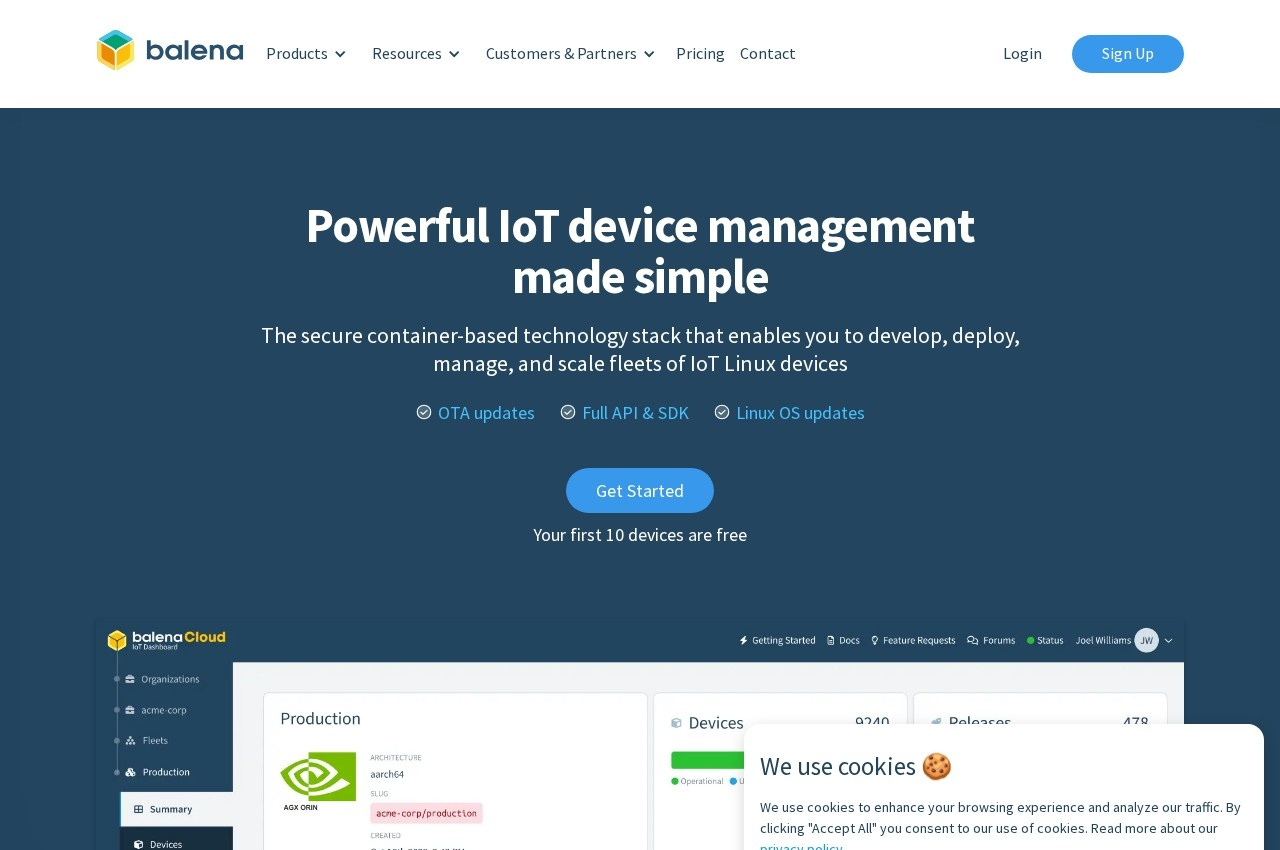
balenaCloud is a hosted platform for developing, deploying, managing and scaling fleets of IoT Linux devices, built on a container-based technology stack. Using containers for embedded devices is the defining decision: it means the deployment model developers already know from server work applies to hardware in the field, and an update is a new container image rather than a bespoke firmware process.
The supporting products are genuinely useful in their own right and several are free. balenaOS is the operating system, built specifically to run Docker containers on embedded devices. balenaEngine is a container engine for IoT based on Moby technology from Docker, tuned for constrained hardware where a standard engine is too heavy. balenaEtcher is the widely used tool for flashing SD cards and USB drives, familiar to many people who have never used the commercial platform. openBalena is free and open source software for managing IoT devices, which provides a self-hosted route.
Operationally the platform covers over-the-air updates, a full API and SDK, and Linux OS updates, the last being the part most often neglected in IoT deployments. Devices in the field running an unpatched OS are a security liability, and a platform that updates the operating system as well as the application closes that gap. balenaHub, documentation, masterclasses, forums and compatible hardware listings support adoption. Industries addressed are industrial IoT, energy, robotics and drones.
Pricing is published and device-based, and the first ten devices are always free, which is enough for a genuine prototype rather than a demonstration. Paid tiers include a device allowance with a per-additional-device rate that falls as the tier rises.
Key Features of balenaCloud
- Container-based deployment to embedded Linux devices
- Over-the-air application updates
- Linux OS updates as well as application updates
- Full API and SDK
- balenaOS built for running containers on embedded hardware
- balenaEngine container engine tuned for IoT
- balenaEtcher for flashing SD cards and USB drives
- openBalena free open source self-hosted option
- balenaHub for shared applications
- Fleet scaling and management
- Compatible hardware listings
- Documentation, masterclasses and forums
- First ten devices always free
- Industry focus on industrial IoT, energy, robotics and drones
balenaCloud Pricing
Prototype
$159
30 devices included, 1 user, standard support with best effort response. Additional devices 3 dollars each per month.
Pilot
$329
60 devices included, 3 users, priority support. Additional devices 2 dollars each per month. Volume discount credits available.
balenaCloud Specifications
- Cloud Based
- On Premise
- Web App
- Linux
- Freelancers
- Small Business
- Medium Business
- Large Enterprise
balenaCloud Screenshots
Overall balenaCloud Reviews
No reviews yet
Used balenaCloud? Share your experience and help other buyers decide.
balenaCloud FAQs
Alternatives to balenaCloud
Other IoT Device Management Software products listed on SocialAtoZ.