

Apple ARKit
VerifiedThe AR framework underneath every augmented reality app on iPhone and iPad
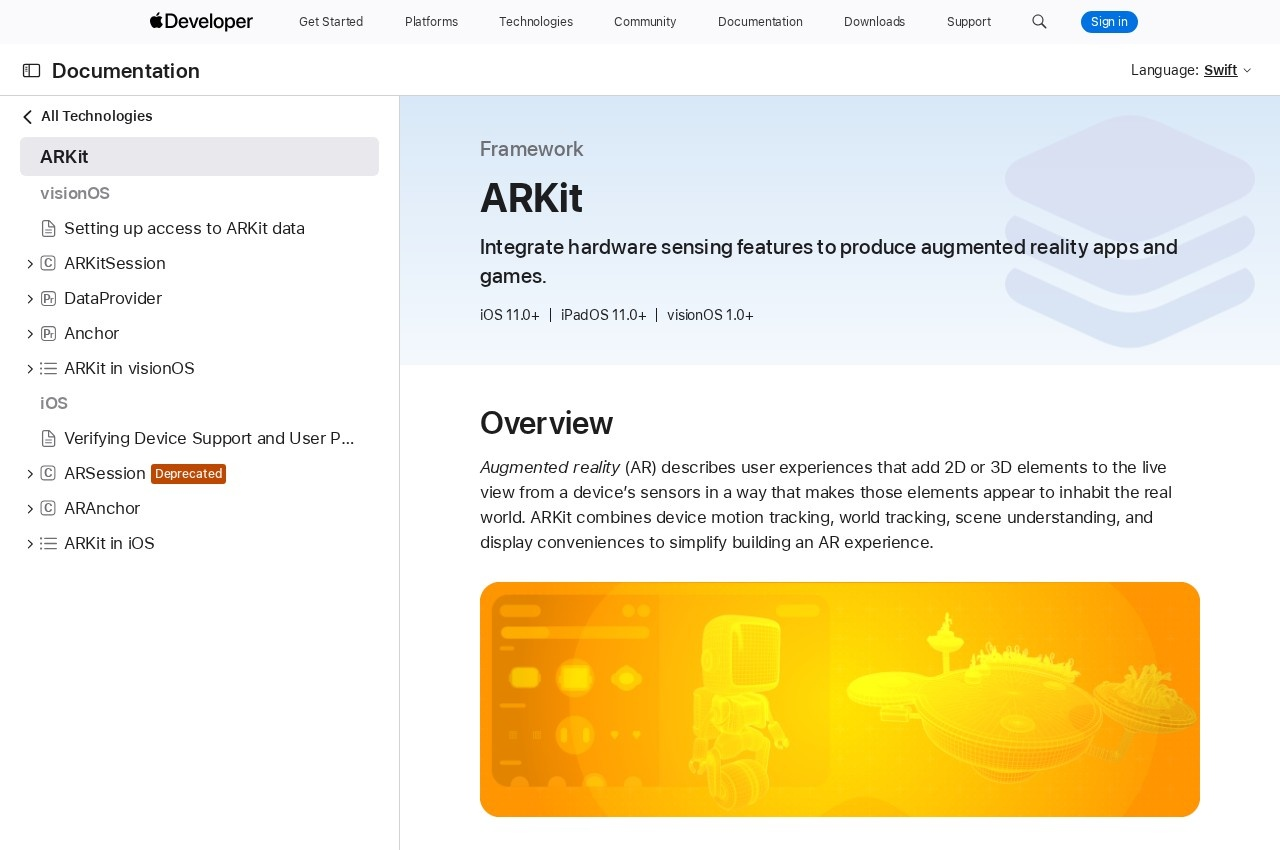 See all screenshots
 - Deployment On Premise
- Starting price Not published
- Free trial Available
- Best for Freelancers, Small Business, Medium Business
What is Apple ARKit?
ARKit is Apple's augmented reality framework for iOS and iPadOS, sitting alongside RealityKit for rendering and customisation, AR Quick Look for placing 3D objects in the real world, and Reality Composer for authoring, with Object Capture producing AR ready 3D models through photogrammetry.
Being part of the operating system rather than a product bought separately is the defining fact about ARKit and it shapes the whole category. Apple describes iOS and iPadOS as the biggest AR platforms in the world, and the reason is not that the framework is better than the alternatives but that every recent iPhone already has it, so an AR feature reaches hundreds of millions of devices with no runtime to bundle and nothing for the user to install.
The split between ARKit and RealityKit is worth understanding before choosing. ARKit handles the understanding of the physical world, while RealityKit handles what is drawn on top of it, exposing custom rendering, Metal shaders and post processing for teams that need control over the pipeline. A developer building a measurement tool needs the first and barely touches the second.
AR Quick Look is the most underrated piece here because it removes the app entirely: a 3D model can be placed in a room straight from Safari or Messages, which is why furniture and footwear retailers adopted it long before they built anything native. Object Capture matters for the same reason, since the bottleneck in retail AR has always been producing thousands of accurate 3D models rather than displaying them.
Key Features of Apple ARKit
- Motion tracking and world understanding
- Plane and surface detection
- Depth estimation between surfaces
- Light estimation and colour correction
- Anchors for persistent object placement
- RealityKit rendering with Metal shaders
- Custom rendering and post processing
- Object Capture photogrammetry
- AR Quick Look for app free placement
- Reality Composer authoring
- iPhone and iPad deployment
- Xcode and Swift tooling
Apple ARKit Pricing
Included in the iOS SDK
Not published
ARKit ships as part of the iOS and iPadOS SDK rather than being licensed separately. No rate is published on the captured Apple Developer pages.
Apple ARKit Specifications
- Deployment
- On Premise
- Desktop
- Mac
- Mobile
- iOS
- Built for
- Freelancers
- Small Business
- Medium Business
- Large Enterprise
- Support
- Knowledge Base
- Public API
- Yes
- Free trial
- Yes
- Free plan
- No
- Runs in browser
- No
- Customisable
- No
- Website
- developer.apple.com
Apple ARKit Screenshots
Apple ARKit Comparisons


Apple ARKit Reviews
No reviews yet
Used Apple ARKit? Share your experience and help other buyers decide.
Apple ARKit FAQs
Alternatives to Apple ARKit
Other Augmented Reality Development Platforms recorded on the same fields.