
Open source IPAM with automated network discovery and DHCP lease synchronisation
Best IP Address Management (IPAM) Software
IP address management (IPAM) software is a specialized tool designed to help organizations efficiently manage and monitor their IP address space. These software solutions provide features and functionalities tailored to assist network administrators in allocating, tracking, and organizing IP addresses across their networks.
More about IP Address Management (IPAM) Software
Key capabilities include:
- IP Address Allocation
- IP Address Tracking
- Subnet Management
- DHCP/DNS Integration
- Reporting and Auditing
- Role-Based Access Control
IP address management software enables organizations to streamline their IP address allocation processes, reduce errors, and ensure efficient utilization of IP address resources. By providing tools for IP address allocation, tracking, subnet management, and integration with DHCP and DNS services, these solutions help organizations maintain network stability and security.
To qualify for the IP Address Management Software category, a product must:
- Provide features and functionalities tailored to help organizations efficiently manage their IP address space.
- Offer tools for IP address allocation, tracking, subnet management, and integration with DHCP and DNS services.
- Support reporting and auditing capabilities to ensure compliance with network policies and regulations.
The core value proposition is empowering organizations to effectively manage their IP address space, optimize network performance, and enhance security through efficient IP address management provided by IPAM software.
IP Address Management (IPAM) Software Compared
Compare the 8 most relevant IP Address Management (IPAM) Software options on price, free trial and deployment.
| Product | Starting price | Free trial | Free plan | API | Deployment |
|---|---|---|---|---|---|
 GestioIP Open source IPAM with automated network discovery and DHCP lease… GestioIP Open source IPAM with automated network discovery and DHCP lease… | Free and open source | ✓ | – | ✓ | On Premise |
 SolarWinds IP Address Manager IP address management within the modular SolarWinds Orion portfolio SolarWinds IP Address Manager IP address management within the modular SolarWinds Orion portfolio | From $8 | ✓ | – | ✓ | On Premise, Cloud Based |
 phpIPAM Free open source IP address management with IPv4 and IPv6… phpIPAM Free open source IP address management with IPv4 and IPv6… | Free and open source | ✓ | – | ✓ | On Premise |
 NetBox Source of truth for network infrastructure, modelling intent and comparing… NetBox Source of truth for network infrastructure, modelling intent and comparing… | Quoted on request | ✓ | – | ✓ | On Premise, Cloud Based, Hybrid |
 Men&Mice Micetro DDI orchestration unifying DNS, DHCP and IPAM across on premises,… Men&Mice Micetro DDI orchestration unifying DNS, DHCP and IPAM across on premises,… | Quoted on request | ✓ | – | ✓ | On Premise, Cloud Based, Hybrid |
 ManageEngine OpUtils IP address and switch port management pairing addresses with physical… ManageEngine OpUtils IP address and switch port management pairing addresses with physical… | Confirm with vendor | ✓ | – | ✓ | On Premise, Cloud Based |
 Infoblox IPAM Enterprise DDI from a vendor whose centre of gravity is… Infoblox IPAM Enterprise DDI from a vendor whose centre of gravity is… | Quoted on request | – | – | ✓ | On Premise, Cloud Based, Hybrid |
 EfficientIP SOLIDserver DDI platform with an unusually deep DNS security and traffic… EfficientIP SOLIDserver DDI platform with an unusually deep DNS security and traffic… | Quoted on request | – | – | ✓ | On Premise, Cloud Based, Hybrid |
All Software
8 Best IP Address Management (IPAM) Software Options
Showing 1 - 8 of 8 products
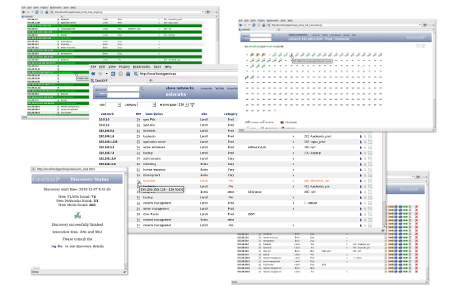
GestioIP is an open source IPAM whose strength is automated discovery, which addresses the fundamental weakness of any address record: it is only as accurate as the last time somebody updated it by hand.
Discovery works through several mechanisms rather than one. Hosts are found via ping, DNS and SNMP, layer three device routing tables are read, VLANs are discovered via SNMP, and DHCP lease information is processed directly. Combining these matters because each misses something on its own: ping misses hosts that do not respond, DNS misses anything unregistered, and SNMP only sees managed equipment.
DHCP synchronisation is supported against ISC DHCPD, ISC KEA, Microsoft DHCP server and a generic leases file format. Reading leases is the most direct route to knowing which addresses are genuinely in use, since the DHCP server is the authority that issued them.
The system also integrates with Microsoft DNS, BIND and other DNS products, and includes VLAN management, management of leased and dial up lines, and autonomous system management. Automated backups of the GestioIP database are provided and a high availability configuration is available.
There is no licence cost, which places GestioIP alongside phpIPAM as a credible option for networks that need real address management without an enterprise procurement. The discovery depth is the main reason to prefer it, since it reduces how much of the record depends on somebody remembering to update it.
Read GestioIP Reviews Explore additional details
Explore various Keka features, compare the pricing plans, and unlock the potential of seamless operations by selecting the right software for your business.
Features
View all GestioIP Features- Automated host discovery via ping, DNS and SNMP
- Layer three routing table import
- VLAN discovery via SNMP
- DHCP lease synchronisation
- ISC DHCPD, KEA and Microsoft DHCP support
- Microsoft DNS and BIND integration
- VLAN management
- Leased and dial up line management
- Automated database backups
- High availability option
Pricing
GestioIP Caters to
- StartUps
- SMEs
- Agencies
- Enterprises
IP address management within the modular SolarWinds Orion portfolio
SolarWinds IP Address Manager provides IPAM within the wider SolarWinds portfolio, which is built as a set of modules sharing a common platform rather than as one monolithic product.
That modularity is the practical argument for it. A network team already running SolarWinds Network Performance Monitor, NetFlow Traffic Analyzer or Network Configuration Manager adds address management to a console its staff already know, with one set of credentials and one place to look, rather than introducing a separate tool with its own conventions.
The surrounding portfolio is extensive, spanning observability both self hosted and as a service, server and application monitoring, security event management, virtualisation management, access rights management, database performance analysis and incident response. For an organisation consolidating vendors that breadth is the attraction.
Pricing is published across the portfolio starting at 8 dollars per node per month for monitoring and observability, with volume discounts available on request. Other portfolio areas are priced on their own units, including database monitoring from 142 dollars per database per month and IT service management from 39 dollars per technician, so the address management component should be quoted specifically.
Read SolarWinds IP Address Manager Reviews Explore additional details
Explore various Keka features, compare the pricing plans, and unlock the potential of seamless operations by selecting the right software for your business.
- IP address space management
- Subnet discovery and scanning
- DHCP and DNS server monitoring
- IP conflict detection
- Orion platform integration
- Shared console with other modules
- Alerting and reporting
- Role based access
- Self hosted and SaaS options
- Volume discounts
Pricing
SolarWinds IP Address Manager Caters to
- StartUps
- SMEs
- Agencies
- Enterprises
Free open source IP address management with IPv4 and IPv6 support
phpIPAM is a free open source IP address management application, and it occupies the practical middle ground between managing addresses in a spreadsheet and buying an enterprise DDI platform.
That gap is real and widely occupied. A great many networks are documented in a shared spreadsheet that is perpetually out of date, because the alternative has historically been an expensive commercial product requiring its own project to deploy. A free tool covering the core function well is often the correct answer.
The functional set covers the essentials properly: VLAN management, VRF management, an IPv4 and IPv6 calculator, IP database search, email notifications and custom field support. IPv6 support matters more than it once did, and the calculator addresses the fact that IPv6 subnetting is genuinely hard to do reliably in one's head.
Custom fields are what let an installation match how a particular organisation actually thinks about its addresses, rather than forcing its records into someone else's schema. The project maintains changelogs, translations and current installation guides, including a complete walkthrough for deploying the latest stable version on Ubuntu Server with nginx. There is no licence cost.
Read phpIPAM Reviews Explore additional details
Explore various Keka features, compare the pricing plans, and unlock the potential of seamless operations by selecting the right software for your business.
Features
View all phpIPAM Features- Free and open source
- IPv4 and IPv6 address management
- VLAN management
- VRF management
- Subnet calculator
- IP database search
- Email notifications
- Custom field support
- Translations
- Published installation guides
Pricing
phpIPAM Caters to
- StartUps
- SMEs
- Agencies
- Enterprises
Source of truth for network infrastructure, modelling intent and comparing it to reality
NetBox is the source of truth model for network and data centre infrastructure, and it occupies a different position from conventional IPAM tools. Rather than discovering what exists, it holds the authoritative record of what is intended to exist.
That distinction drives everything else. A discovery tool tells you the network's current state, including its mistakes; an intent model tells you what the state should be, which is what allows misconfiguration to be identified as a difference rather than accepted as fact. NetBox Labs describes an Infrastructure Graph as an API first, agent native model of every network and infrastructure object.
Operational Intelligence closes the loop by comparing live infrastructure state against that intent in real time, which is the mechanism that turns documentation from something written once and left to rot into something continuously checked.
NetBox AI adds natural language querying, smart automation and AI assisted orchestration, with the agent native framing reflecting that a structured infrastructure model is exactly what an AI agent needs in order to act safely. The platform is engineered for hyperscalers with multi region support, enterprise service level agreements and data centre scale. Pricing is not published.
Read NetBox Reviews Explore additional details
Explore various Keka features, compare the pricing plans, and unlock the potential of seamless operations by selecting the right software for your business.
Features
View all NetBox Features- Source of truth infrastructure model
- IP address management
- Data centre infrastructure modelling
- Infrastructure Graph API
- Intent versus live state comparison
- Operational intelligence
- NetBox AI natural language querying
- AI assisted orchestration
- Multi region hyperscaler support
- Enterprise service level agreements
Pricing
NetBox Caters to
- StartUps
- SMEs
- Agencies
- Enterprises
DDI orchestration unifying DNS, DHCP and IPAM across on premises, cloud and branch
Micetro is a DDI orchestration platform, DDI being the industry term for the combination of DNS, DHCP and IP address management. It now sits within BlueCat Networks following the acquisition of Men&Mice, and continues under the Micetro name.
Orchestration rather than replacement is the product's defining choice. Most organisations already run DNS and DHCP on Microsoft servers, BIND, cloud provider services or some combination accumulated over years. Micetro manages that existing estate through a single web interface rather than requiring it to be migrated onto new infrastructure, which is a materially smaller undertaking.
Coverage spans on premises, cloud and branch networks together. That breadth matters because hybrid deployments are where address management actually breaks down: a subnet allocated in a cloud account by one team can collide with an on premises range nobody thought to check.
Micetro sits alongside BlueCat's wider portfolio, including Integrity as a full stack API first DDI platform and Horizon as a SaaS first intelligent NetOps platform unifying DNS, DHCP, IPAM, security and observability, with extensions for network automation and integration. Pricing is not published.
Read Men&Mice Micetro Reviews Explore additional details
Explore various Keka features, compare the pricing plans, and unlock the potential of seamless operations by selecting the right software for your business.
Features
View all Men&Mice Micetro Features- DNS, DHCP and IPAM orchestration
- Manages existing DNS and DHCP estates
- Single web interface
- On premises coverage
- Cloud network coverage
- Branch network coverage
- Microsoft and BIND integration
- Network automation extensions
- Role based access control
- API access
Pricing
Men&Mice Micetro Caters to
- StartUps
- SMEs
- Agencies
- Enterprises
IP address and switch port management pairing addresses with physical ports
ManageEngine OpUtils combines IP address management with switch port management, and pairing those two is the product's central idea rather than a bundling convenience.
The reason is a question network engineers face constantly: an address is in use, but by what, and plugged in where. Address management alone answers the first half and leaves the engineer walking to the comms room for the second. Mapping addresses to the physical switch ports they connect through closes that gap and turns tracing a device into a query.
DNS management centralises zone and record administration across Microsoft DNS servers, maintaining accurate name resolution, eliminating stale records and proactively detecting lookup failures, with secure communication enabled through WinRM. Stale DNS records are a persistent source of confusing faults, because a name that resolves to an address nothing answers on produces a failure that looks like a network problem rather than a data problem.
Subnet utilisation is presented visually so an approaching exhaustion is visible before it causes allocation failures, and the product discovers across equipment from multiple vendors including Microsoft, Infoblox and Cisco environments. Pricing is not published on the captured page.
Read ManageEngine OpUtils Reviews Explore additional details
Explore various Keka features, compare the pricing plans, and unlock the potential of seamless operations by selecting the right software for your business.
- IP address management
- Switch port mapping
- Address to physical port tracing
- Subnet utilisation visualisation
- DNS zone and record management
- Microsoft DNS server support
- Stale record detection
- Lookup failure monitoring
- WinRM secured communication
- Multi vendor discovery
Pricing
ManageEngine OpUtils Caters to
- StartUps
- SMEs
- Agencies
- Enterprises
Enterprise DDI from a vendor whose centre of gravity is DNS security
Infoblox is among the largest vendors in enterprise DDI, and its current portfolio makes clear that DNS security rather than address administration is where the company now concentrates.
That connection is real rather than marketing. DNS sees every connection an organisation's devices attempt, which makes it simultaneously critical infrastructure and the best available vantage point for detecting compromise. A vendor already operating an organisation's DNS is well placed to inspect it, which is why DDI and DNS security converged.
The security line includes Infoblox Threat Defense for hybrid DNS layer protection deployed anywhere, DNS Infrastructure Protection to block attacks against the DNS servers themselves, and exposure management for detecting risk. Protecting the infrastructure is a distinct problem from using it defensively, since DNS going down takes everything else with it.
Infoblox IQ applies agentic AI workflows grounded in DNS threat intelligence to accelerate analysis in a security operations centre and scale investigation and response. A security ecosystem provides integrations to automate response across other tools. Pricing is not published, which is standard for infrastructure sold to large enterprises.
Read Infoblox IPAM Reviews Explore additional details
Explore various Keka features, compare the pricing plans, and unlock the potential of seamless operations by selecting the right software for your business.
Features
View all Infoblox IPAM Features- Enterprise IP address management
- DHCP management
- Authoritative DNS services
- Infoblox Threat Defense
- DNS infrastructure protection
- Exposure management
- Infoblox IQ agentic AI workflows
- DNS threat intelligence
- Security ecosystem integrations
- Hybrid and multi cloud deployment
Pricing
Infoblox IPAM Caters to
- StartUps
- SMEs
- Agencies
- Enterprises
DDI platform with an unusually deep DNS security and traffic management line
EfficientIP SOLIDserver provides DDI alongside network automation and DNS security, and the depth of its DNS protection range is what distinguishes it from general address management tools.
The security products address distinct attack shapes rather than presenting one undifferentiated defence. DNS Guardian provides adaptive security for service continuity and data protection, DNS Firewall blocks DNS based malware activity, and DNS Blast provides carrier grade protection against DNS denial of service attacks.
Separating those is technically correct. Protecting users from resolving malicious domains and keeping a resolver standing under a volumetric flood are different engineering problems, and a product treating them as one usually does one of them badly. DNS Client Query Filtering adds application access control to limit how far an attack can spread.
Edge DNS GSLB extends into application delivery, optimising performance from the edge through global server load balancing, which uses DNS to direct users to the best available location. The company also publishes DNS threat intelligence for proactive security and organises its material by IT initiative, including zero trust and visibility. Pricing is not published.
Read EfficientIP SOLIDserver Reviews Explore additional details
Explore various Keka features, compare the pricing plans, and unlock the potential of seamless operations by selecting the right software for your business.
- DDI platform covering DNS, DHCP and IPAM
- DNS Guardian adaptive security
- DNS Firewall against malware
- DNS Blast DDoS protection
- DNS client query filtering
- Edge DNS GSLB load balancing
- Network automation
- DNS threat intelligence
- Zero trust alignment
- Application traffic management
Pricing
EfficientIP SOLIDserver Caters to
- StartUps
- SMEs
- Agencies
- Enterprises
IP Address Management (IPAM) Software Buyer's Guide
Most IP Address Management (IPAM) Software options look alike on a feature grid, so the useful comparison is how each handles your actual process. Read on for the capabilities that matter, who tends to buy, how pricing works, and how to test properly.
What is IP Address Management (IPAM) Software?
IP Address Management (IPAM) Software helps teams provision, manage, monitor, and control the cost of cloud infrastructure and the workloads running on it. Most of the benefit comes from holding one current record rather than several partial ones kept by different people. Most products handle the easy cases; the useful test is what happens at the edges of your process.
Key features to look for in IP Address Management (IPAM) Software
The right feature set depends on your situation, but capable IP Address Management (IPAM) Software options generally cover the following.
- Resource provisioning and lifecycle management
- Cost visibility broken down by team, tag, or service
- Autoscaling and rightsizing recommendations
- Policy and guardrail enforcement
- Multi account and multi cloud visibility
- Infrastructure as code support
- Performance and availability monitoring
- Alerting on spend anomalies and failures
Benefits of using IP Address Management (IPAM) Software
The practical benefits of IP Address Management (IPAM) Software suited to your process generally include:
- Lower cloud bills through rightsizing and waste removal
- Clear accountability for which team spends what
- Consistent configuration through policy instead of manual setup
- Faster provisioning without raising a ticket
- Fewer outages from resource limits and misconfiguration
Who uses IP Address Management (IPAM) Software?
IP Address Management (IPAM) Software is used by cloud and platform engineers, DevOps teams, FinOps analysts, and infrastructure architects. Scale matters less than process fit, since a product built around a different workflow will fight you regardless of size.
How to choose the right IP Address Management (IPAM) Software
Worth weighing before you commit to any IP Address Management (IPAM) Software option:
- Which cloud providers and services it genuinely covers
- Whether cost data is near real time or delayed
- How it handles tagging and untagged resources
- Integration with your infrastructure as code workflow
- Whether recommendations can be applied automatically or only reported
Run a short trial on actual work with the actual users. Demos are built to succeed; your own cases are not.
How much does IP Address Management (IPAM) Software cost?
Often priced as a percentage of managed cloud spend, or per resource or per user each month. Some tools are free at low volume and charge once spend passes a threshold. Price it against next year’s volume, and verify which features you need are actually included at that tier.
FAQs of IP Address Management (IPAM) Software
IP Address Management (IPAM) Software covers the operational side of cloud infrastructure work, holding records, scheduling and invoicing together instead of across separate tools.
Generic software leaves you building the cloud infrastructure specifics yourself, whereas IP Address Management (IPAM) Software ships with them at a higher price.
Fit depends on the scale IP Address Management (IPAM) Software was designed for, so check whether the vendor’s typical cloud infrastructure customer resembles your own operation.
Migration support varies across IP Address Management (IPAM) Software, so ask what the vendor imports as standard from your current cloud infrastructure records and what needs manual work.
IP Address Management (IPAM) Software is usually billed per seat or per site each month, and specialist cloud infrastructure tooling generally prices above generic software.
Test IP Address Management (IPAM) Software on genuine cloud infrastructure tasks with the people who will actually use it rather than on a scripted scenario.