

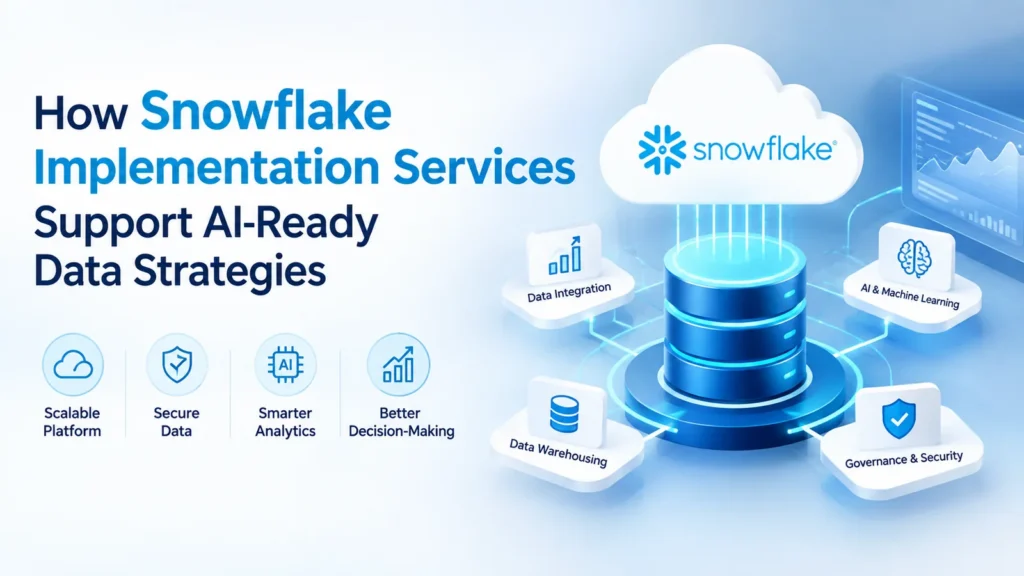
Artificial Intelligence (AI) depends on well-organized and accessible data. Businesses collect data from CRM systems, websites, applications, cloud platforms, customer interactions, and internal operations. That data often stays spread across systems, which makes it hard for teams to prepare information for AI and advanced analytics.
Snowflake implementation services help businesses create a scalable data environment. With the right approach, organizations can bring data together, improve data quality, establish governance, and prepare information for AI workloads.
A well-planned Snowflake implementation can also support data engineering, analytics, machine learning, and business intelligence. It gives data teams a foundation for AI-ready data strategies without depending on disconnected data environments. This article explains how a Snowflake implementation supports AI readiness, improves data management, and helps businesses plan for future requirements.
What Is a Snowflake Implementation?
A Snowflake implementation involves planning, configuring, deploying, and optimizing a Snowflake data environment according to an organization’s business and technical requirements.
The process goes beyond moving data into Snowflake. It includes understanding existing systems, designing the data architecture, connecting data sources, setting up security controls, and preparing data for analytics and AI workloads.
A typical implementation may involve:
- Data architecture planning
- Data migration
- ETL and ELT pipeline development
- Data integration
- Data warehouse configuration
- Security and access management
- Data governance
- Performance optimization
- Testing
- Monitoring
The exact approach depends on the organization’s data volume, existing infrastructure, industry requirements, and future analytics goals.
Why Businesses Need AI-Ready Data Strategies
AI needs data that’s accurate and easy to reach before it can produce useful results, and advanced models alone don’t supply that.
Poor-quality data can lead to inconsistent results. When information is missing, the value of analytics goes down. Data silos can also stop AI systems from reaching business information.
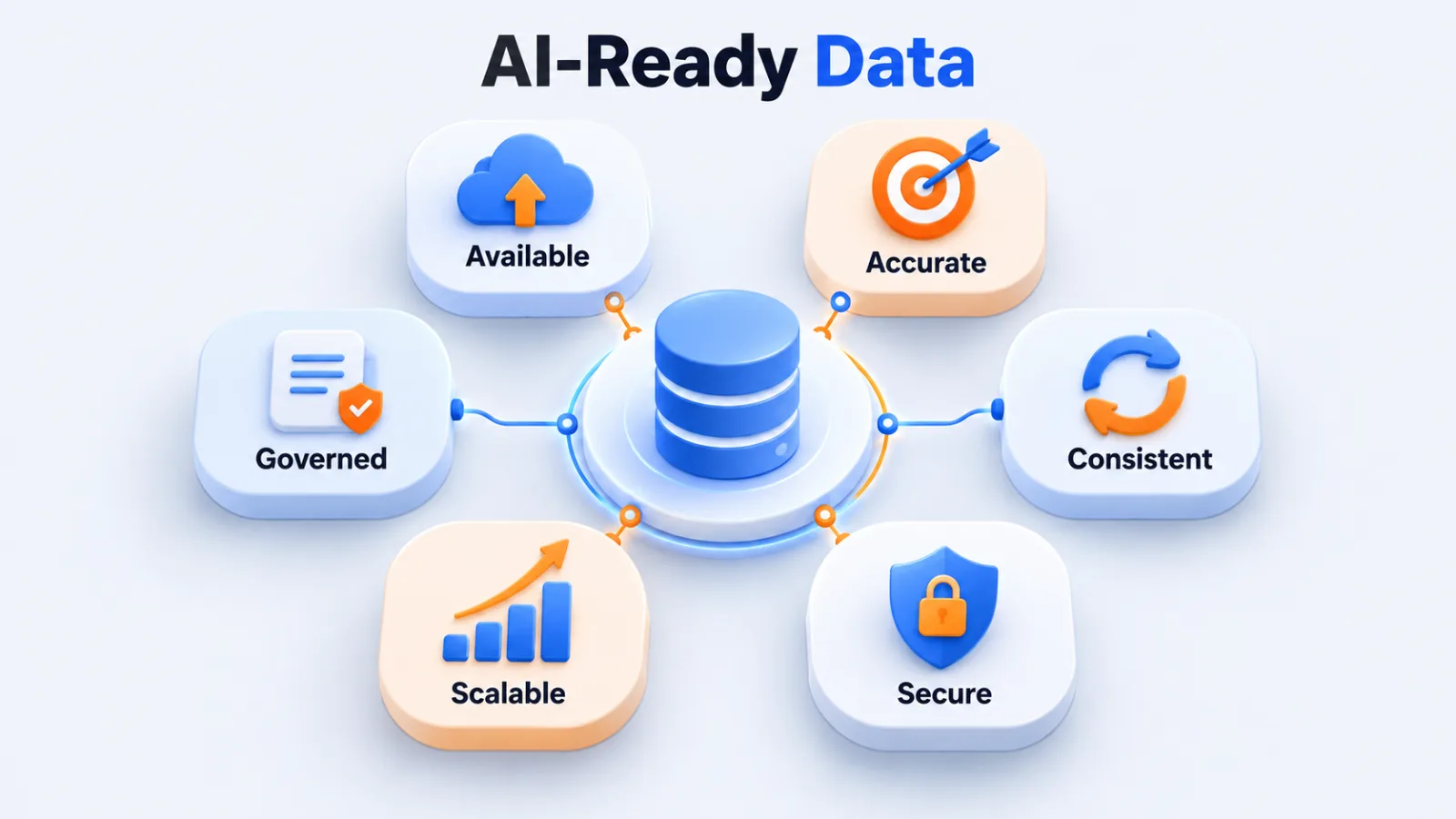
An AI-ready data strategy focuses on making data:
- Available: Authorized users and systems can reach information.
- Accurate: Data is kept under quality controls.
- Consistent: Different systems use standardized information.
- Secure: Sensitive information is protected by access controls.
- Scalable: The data environment can support growing workloads.
- Governed: Organizations know how data is stored, accessed, and used.
A Snowflake implementation for AI data strategies can meet these requirements by creating an environment for collecting, processing, managing, and analyzing business data.
How Snowflake Implementation Supports AI-Ready Data
Six parts of a well-run implementation do most of the work.
1. Creates a Centralized Data Environment
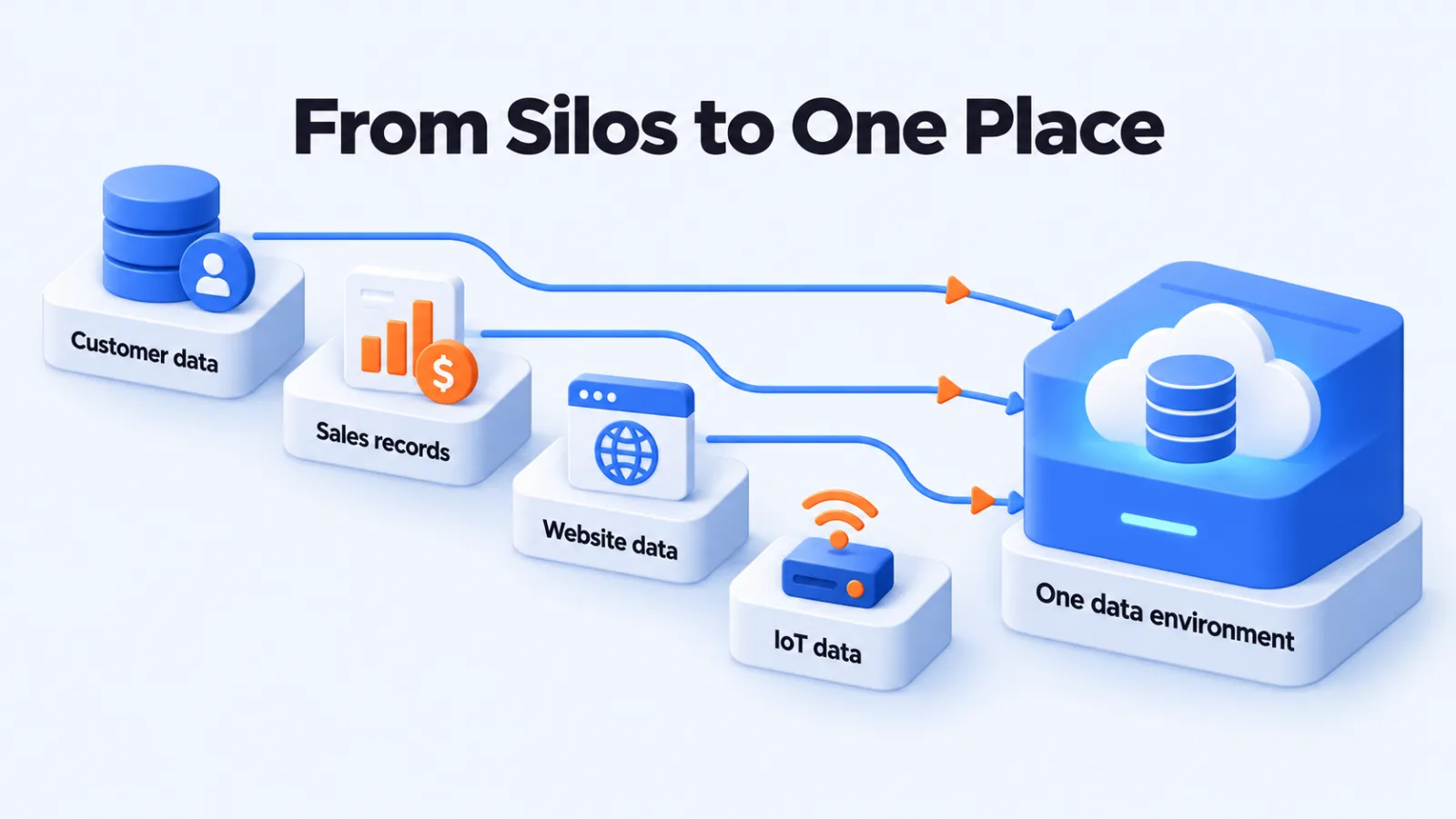
Many businesses keep information in different applications and databases. That creates data silos and makes analysis hard.
Snowflake can give organizations a centralized data environment and let them bring data from many sources into one place. This can include:
- Customer data
- Financial information
- Sales records
- Operational data
- Application data
- Website data
- IoT data
With data in one environment, teams can ready datasets for analytics and AI more quickly.
2. Supports Structured and Semi-Structured Data
AI projects and modern analytics need different kinds of data. Some business systems produce structured records. Other applications and APIs produce data in formats such as JSON.
Snowflake can handle both, which lets organizations combine them in one data environment. That flexibility is useful when a business has to prepare sources for AI. Instead of keeping a separate environment for each type of data, teams can build one connected strategy.
3. Improves Data Integration
AI projects usually need data from several business systems. A customer analytics application, for example, might need data from CRM, sales, website, and support systems.
A Snowflake implementation can add pipelines and integrations that merge these sources. Data teams can use ETL or ELT processes to pull information, change it as needed, and load it into Snowflake. Better integration gives AI and analytics teams a more useful data foundation.
4. Helps Improve Data Quality
AI systems rely heavily on the quality of the data they use. Duplicate records, missing values, outdated information, and inconsistent formats can lower the usefulness of results.
During implementation, organizations can set up data validation and transformation processes. These processes can help manage:
- Duplicate records
- Missing information
- Incorrect formats
- Inconsistent values
- Outdated records
- Other data quality issues
Better data quality creates a stronger foundation for Snowflake AI data solutions and other analytical workloads.
5. Supports Data Governance
As AI use grows, data governance becomes more important. Companies must know which data can be accessed, who’s allowed to access it, and how it must be handled.
A Snowflake environment can be built with security measures and governance controls. Businesses can set access policies based on user roles and business needs. They can also arrange data so that ownership and management become simpler.
Strong data control helps organizations balance the need to access data with the need to keep it secure.
6. Enables Scalable Data Processing
AI tasks can raise data processing needs. As companies add applications, users, and datasets, their data environment must handle larger workloads.
Snowflake offers an architecture that can grow to meet those demands, and a good setup helps companies plan computing resources around their analysis needs. That makes a Snowflake implementation useful for organizations that expect their data needs to grow.
Snowflake Implementation for Modern Data Strategies
Modern data strategies aim for flexibility, scalability, integration, and easier access to information.
Businesses need data environments that can support today’s needs and tomorrow’s technologies. A Snowflake implementation can help organizations shift from fragmented data systems to a more connected architecture.
A modern approach may include:
Cloud Data Integration
Organizations can connect Snowflake with cloud platforms. It works with business applications, databases, and data integration tools.
Data Pipeline Automation
Automated pipelines reduce manual data movement. They also keep data updates regular.
Centralized Governance
Organizations can set rules for accessing and managing business data.
Scalable Infrastructure
Cloud-based resources support changing data volumes. They also handle shifting workloads.
Analytics Integration
Snowflake can link to business intelligence tools. It also supports tools for different kinds of users.
This approach creates a data foundation that can evolve as business requirements change.
Key Steps in Snowflake Implementation
A successful implementation requires planning, so businesses shouldn’t move data before they’ve defined their objectives and architecture.
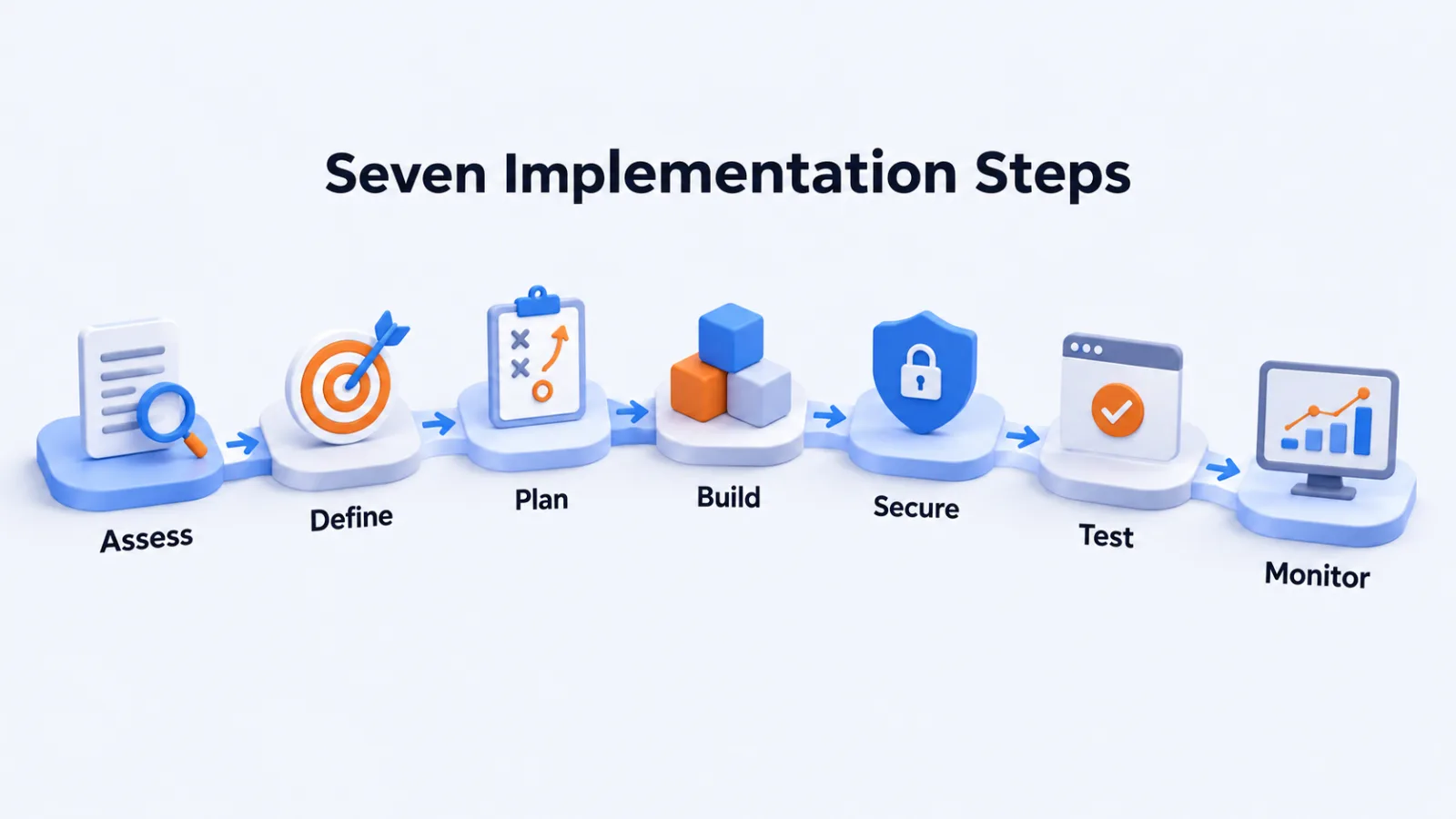
Step 1: Assess Existing Data Systems
The first step is understanding databases, applications, data sources, and business requirements.
Step 2: Define the Data Architecture
Organizations should determine how data will be collected, stored, transformed, accessed, and governed.
Step 3: Plan Data Migration
Companies must decide which datasets will move to Snowflake and how the move will be handled.
Step 4: Build Data Pipelines
ETL or ELT pipelines can be created to move data and transform it as needed.
Step 5: Establish Security and Control
Access controls, data policies, and governance practices should be in place before large-scale usage begins.
Step 6: Test the Environment
Testing helps identify data quality, performance, integration, and security issues before production use.
Step 7: Monitor and Use
After deployment, teams should monitor workloads, data pipelines, performance, and resource usage.
Benefits of Snowflake AI Data Solutions
Businesses exploring Snowflake AI data solutions can gain several advantages from a carefully built data setup.
- Better data accessibility: Teams that work with AI and analytics can get the data they need from one place.
- Improved data quality: Consistent processes for transforming and checking data make it more trustworthy.
- Greater scalability: The setup can handle growing data volumes and different kinds of analysis tasks.
- Stronger collaboration: Data engineers, analysts, and business teams can share the same data resources.
- Better governance: Companies can put rules in place for how data is accessed and handled.
- Faster AI development: When data is already organized and easy to get, teams can spend more time building AI tools and less time preparing data from sources.
Choosing the Right Snowflake Implementation Partner
The success of a Snowflake project depends on more than the platform, because it also depends on the team that implements it.
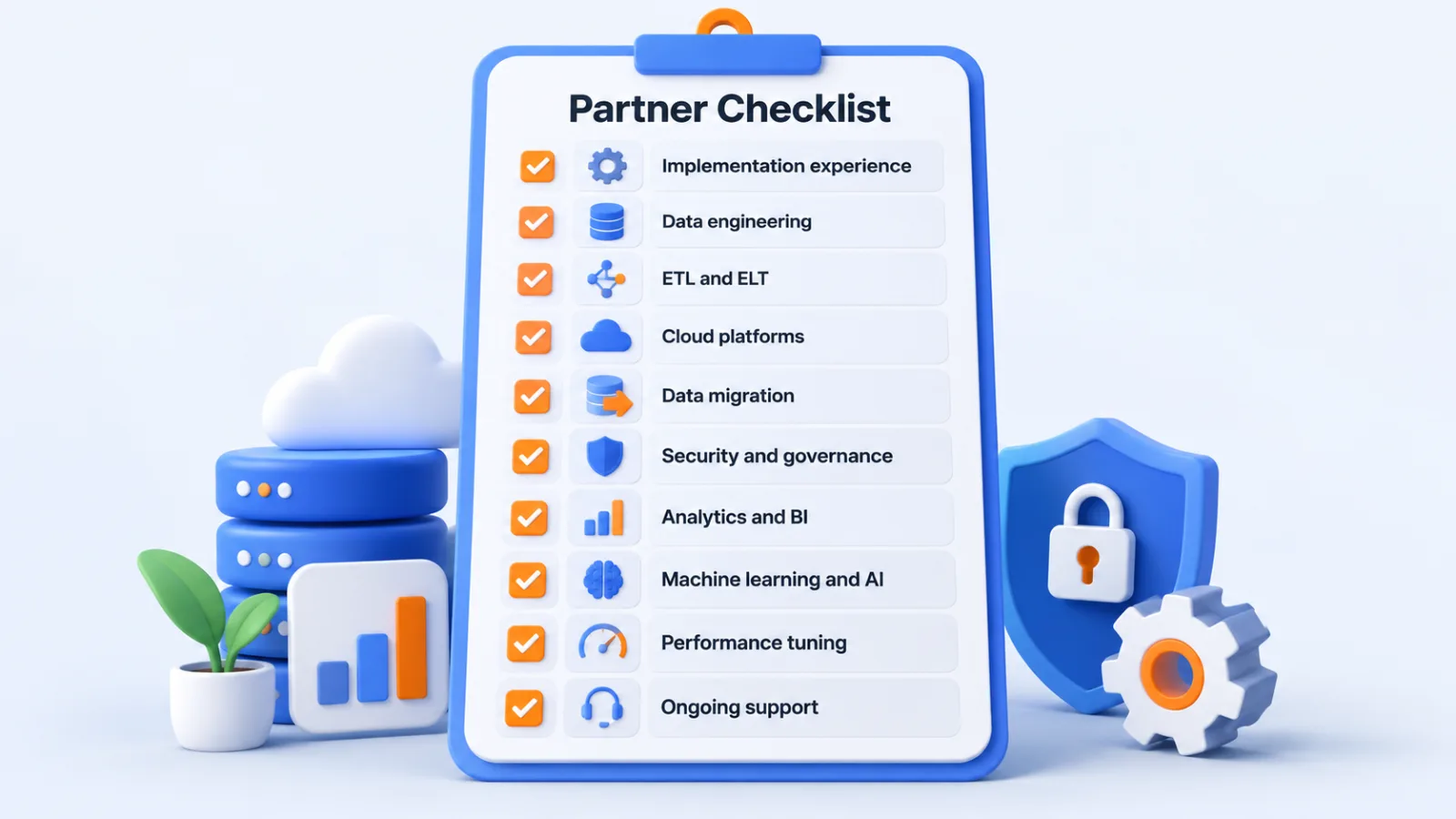
Businesses should evaluate providers by looking at their skills and how well they understand data needs. When evaluating top Snowflake implementation service providers, consider the following:
- Snowflake implementation experience
- Data engineering expertise
- ETL and ELT development capabilities
- Cloud platform knowledge
- Data migration experience
- Security and governance expertise
- Analytics and business intelligence experience
- Machine learning and AI knowledge
- Performance optimization capabilities
- Post-implementation support
The Future of Snowflake Implementation for AI
AI adoption will keep growing, and that will create higher demand for solid data foundations.
Companies will have to link data sources, improve data quality, and make information accessible for AI and analytical tools. That means a Snowflake implementation for AI data strategies will focus on more than regular data warehousing.
Future approaches could include:
- Data pipelines ready for AI
- Integration of machine learning
- Applications that use AI
- Automated processing of data
- Advanced analysis
- Real-time data needs
- Better data governance
Conclusion
A good AI plan begins with data that’s reliable and easy to use.
Snowflake implementation services let businesses build a growing, well-managed data space that can handle analytics, machine learning, and AI tasks. Companies can bring different data sources together, clean the data, enforce rules, and prepare the information for more complex uses. The flexibility also helps them react to shifting demands.
A strong Snowflake implementation provider helps businesses build a data environment that meets today’s analytics demands. It also prepares them for future AI and machine learning projects.
Add SocialAtoZ as a preferred source
See us more often in your Google results.