

Aleph
VerifiedFinance automation with no-code data consolidation and a spreadsheet add-in
 See all screenshots
 - Deployment Cloud Based
- Starting price Quoted on request
- Free trial Not offered
- Best for Small Business, Medium Business, Large Enterprise
What is Aleph?
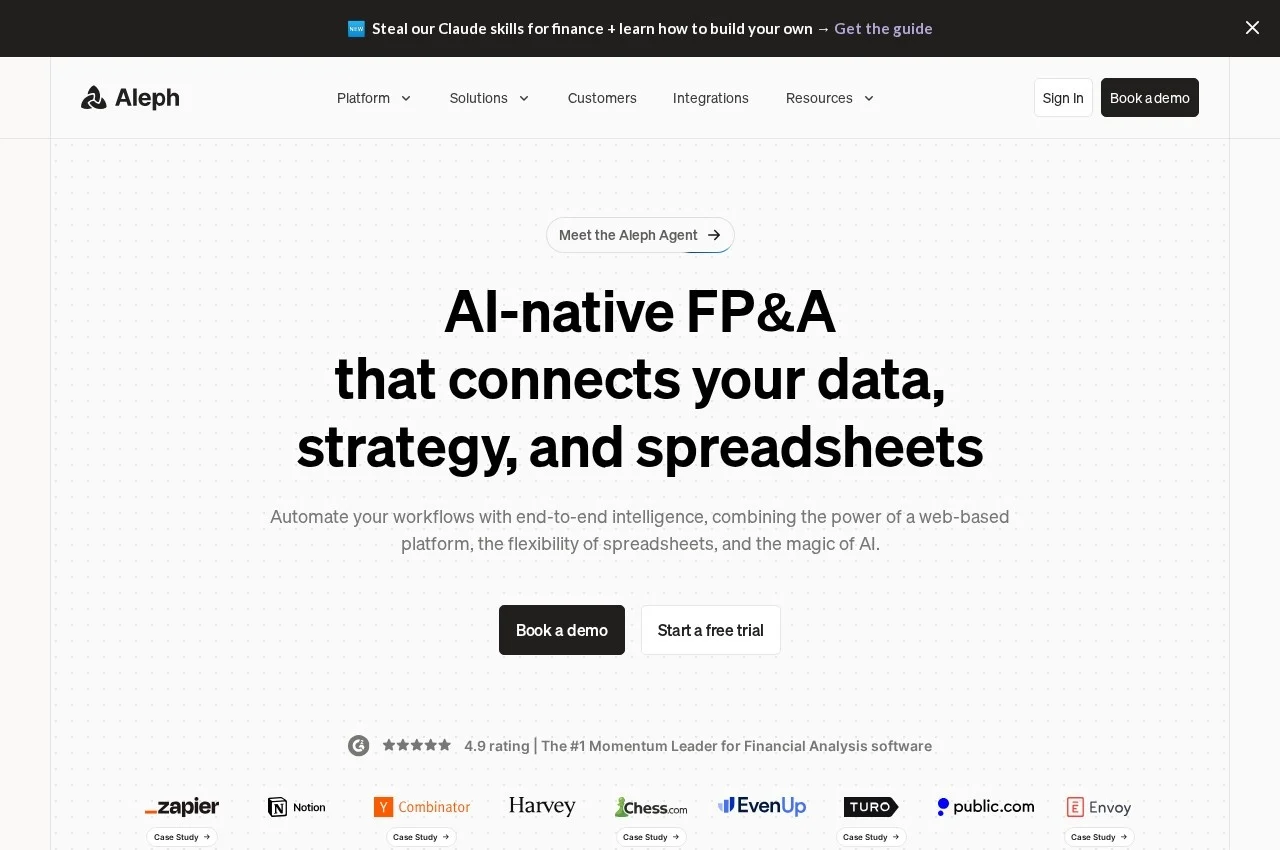
Aleph automates finance busywork to free time for strategic work, with data consolidation connecting and transforming source data through no-code tools and a spreadsheet add-in.
Naming busywork explicitly is more useful than it sounds, because it identifies where finance time actually goes.
A finance analyst's week is not spent analysing. It is spent collecting: downloading reports from the accounting system, exporting from the CRM, requesting figures from operations, pasting them into a model, correcting formats, discovering that one source has changed its column order, and repeating all of it next month.
That work is entirely mechanical, it consumes most of the available hours, and it is invisible to everyone outside finance, who see only that the analysis arrived late.
Automating consolidation means the analyst starts from assembled data rather than spending three days assembling it, which changes what the function can produce rather than merely how quickly.
No-code is the qualifier that determines whether this works. Consolidation can always be automated by writing code, and finance teams generally cannot write it and cannot get engineering time for a monthly reporting problem. A no-code tool puts it in reach of the person who understands the data.
The spreadsheet add-in reflects the same reality as elsewhere in this category: the analyst will work in Excel regardless, so the tool should meet them there rather than requiring them to leave.
The honest limitation is that automated consolidation is only as reliable as the sources feeding it, and a source system that changes its structure will break the pipeline. The difference is that it breaks visibly rather than producing quietly wrong numbers.
Pricing is published on a plans page but no figure was captured, so confirm current rates with the vendor.
Key Features of Aleph
- Automated data consolidation
- No-code source connection
- Data transformation without engineering
- Spreadsheet add-in
- Excel and Google Sheets support
- Multi-source finance data
- Refreshable reporting
- Reduction of manual collection
- Governed data pipeline
- Visible pipeline failure
Aleph Pricing
Quoted
Quoted on request
A plans page is published without a captured figure. Normally priced per user per month.
Aleph Specifications
- Deployment
- Cloud Based
- Desktop
- Web App
- Built for
- Small Business
- Medium Business
- Large Enterprise
- Support
- Public API
- Yes
- Free trial
- No
- Free plan
- No
- Runs in browser
- No
- Customisable
- No
- Website
- getaleph.com
Aleph Screenshots
Aleph Comparisons



Used Aleph? Write the first review.
Aleph FAQs
Alternatives to Aleph
Other Financial Planning and Analysis (FPA) Software recorded on the same fields.