

Two products that do the same job will list themselves under different categories, and both listings will be defensible.
That’s the problem with enterprise software industry classification: three systems run at once, and each answers a different question.
One sorts by what the software does, one by who buys it, and one by how the vendor gets counted in national statistics. Only the first is the one buyers shop on.
Confuse them and you’ll compare a departmental tool against a company-wide platform, because a vendor filed both under the same word.
Quick Summary
- Function sorts software by what it does, and buyers shop on this axis alone.
- Tier sorts by who buys it, and it moves price more than it moves features.
- Government codes sort by what the vendor sells, not by what the buyer needs.
Three Systems Are Running at Once
The three are function, tier and industry code, and different people built them for different reasons.
Function comes from buyers and vendors describing what a product does. Tier comes from sales, where one product is packaged for a small team or for a whole company.
Industry codes come from statisticians, who need every company in the economy to sit in exactly one bucket.
None of the three was designed to help you shortlist.
Function Is the Axis Buyers Shop On
Function classification sorts software by the job it does, and it’s the only one of the three that maps to how people search.
Somebody looking for a way to track deals types the job, not the market segment. That’s why directories, review sites and search engines all organize around function.
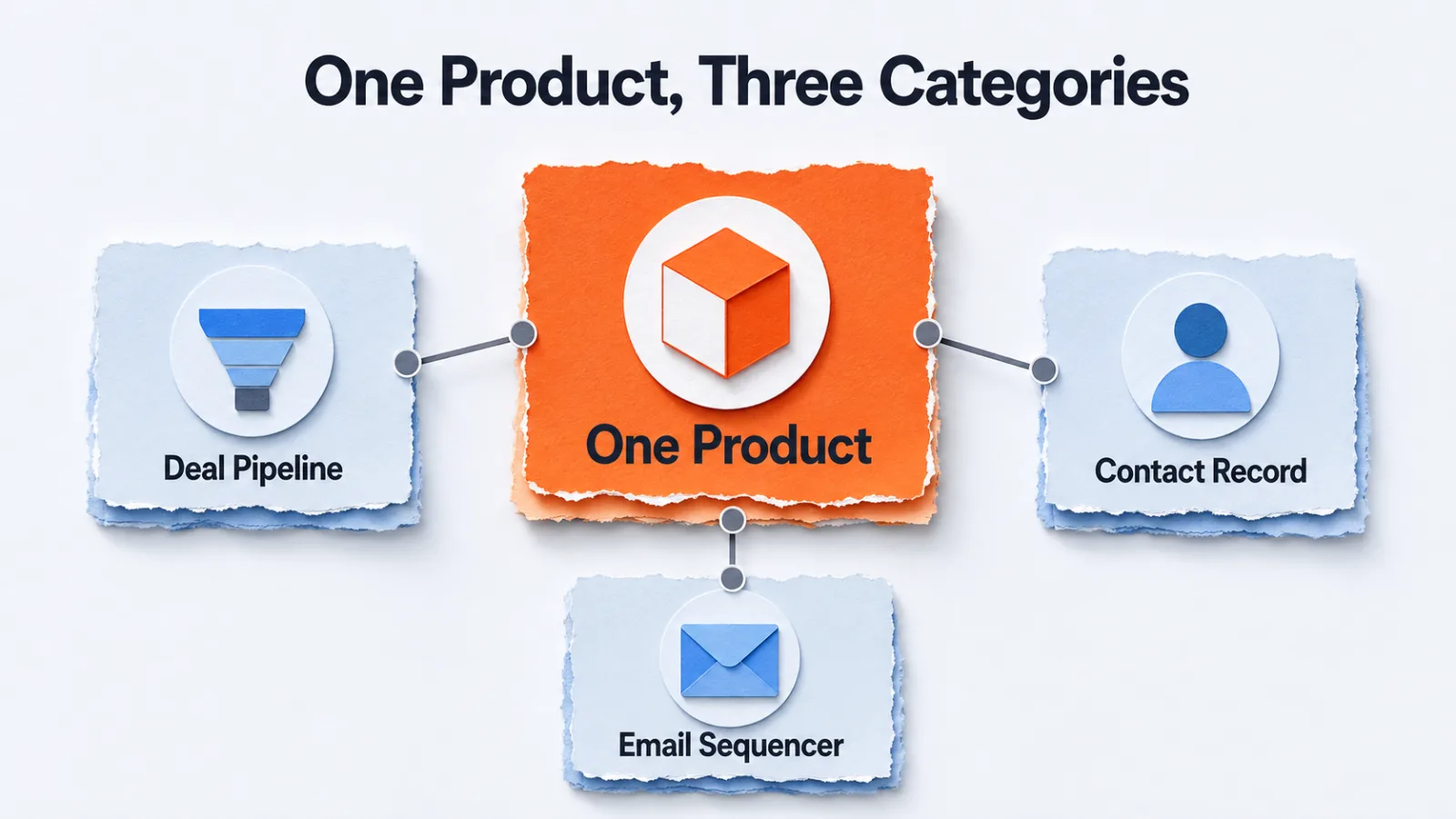
The weakness of function is overlap. One product can serve three jobs honestly, so it appears in three categories, and not one of those listings is wrong.
A deal pipeline, a shared contact record and an email sequencer can all sit inside CRM software. A buyer who needs only the last one still sees all three.
“Enterprise” Names a Tier, Not a Product Class
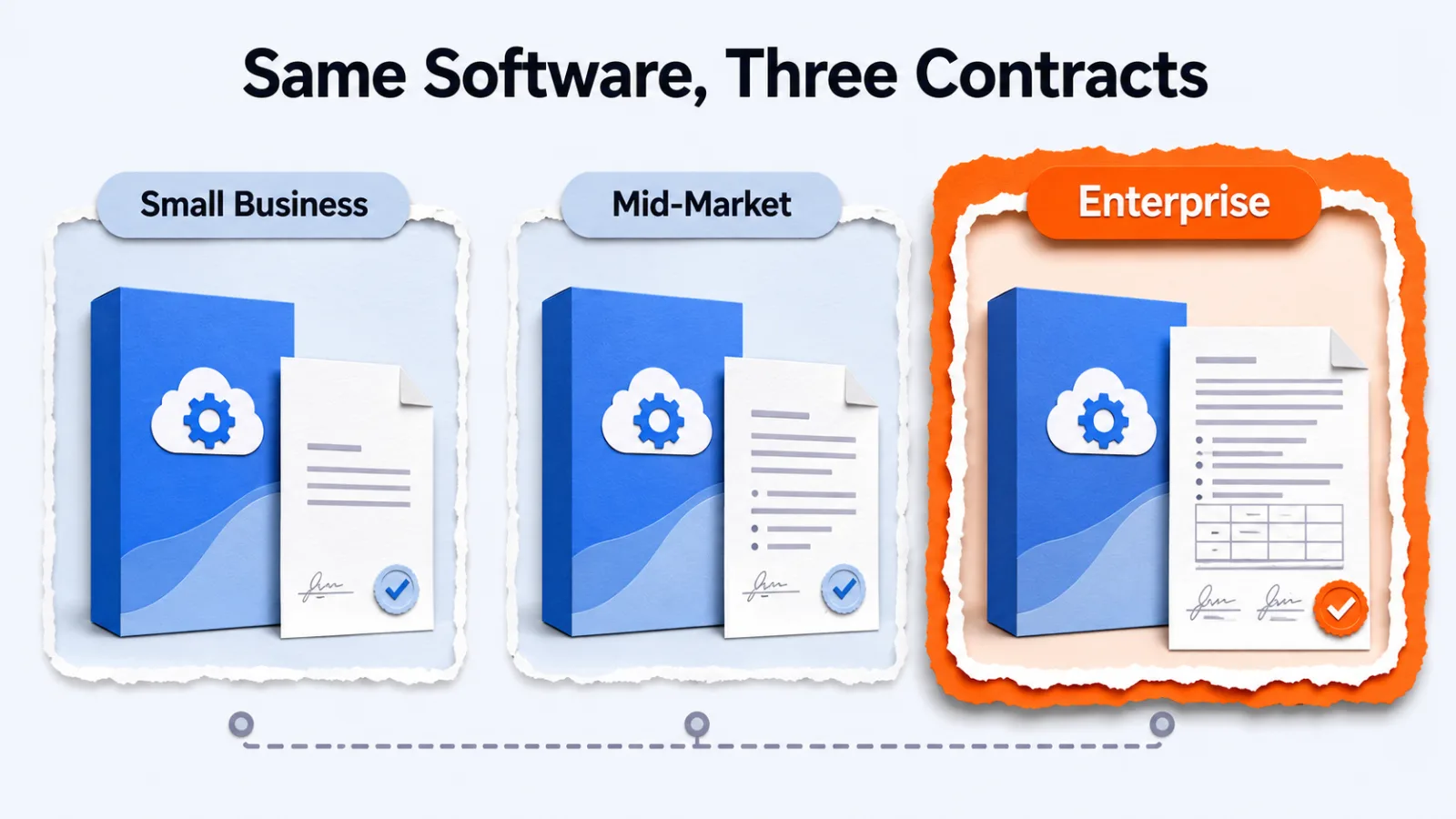
In most vendor pricing, the word enterprise describes a contract rather than a different piece of software.
The tier adds things like single sign-on, audit logs, an uptime commitment and a named support contact. The underlying features are often the ones the cheapest plan already has.
So tier tells you what you’re allowed to demand, not what the product can do. It’s a purchasing distinction that gets mistaken for a technical one.
Licensing sits on the same axis. The types of software licenses a vendor offers decide what happens at renewal, which is where tier differences turn into money.
Industry Codes Count Vendors, Not Products
Industry codes classify the company, and they do it once.
Under the North American Industry Classification System, a firm that mainly publishes software lands in one code, NAICS 511210, whatever its products do.
That’s useful for measuring an economy and useless for buying anything. A payroll product and a video editor can share a code.
Analyst market maps sit between the two. They’re built on function but drawn around revenue, so a category exists when enough money moves through it, not when buyers need one.
The Three Systems Disagree in Predictable Ways
Each one is accurate about its own question and misleading about the other two.
| System | What it answers | Where it misleads |
|---|---|---|
| Function | What the software does | Overlapping categories look like alternatives |
| Tier | Who the contract is written for | A price band reads as a product class |
| Industry code | What the vendor’s company sells | Unrelated products share one label |
Read a category page as function, a price page as tier and a market report as revenue, and none of them will mislead you.
How to Compare Software Across Categories
You compare on the job to be done, never on the label.
Write the Job Down First
Write one sentence naming what has to be true after the software is running.
That sentence is your real category, and it usually crosses two or three of the ones a directory lists.
Then Set the Tier Separately
Decide what the contract needs before you look at what the product does.
Audit logs, a signed uptime number and a named contact are tier questions. Answering them first stops a demo from deciding your budget.
Questions Buyers Ask About Software Categories
What is enterprise software classification?
Enterprise software classification is the practice of sorting products three ways at once. The three are what the software does, who buys it, and how the vendor is counted in national statistics. Buyers shop on the first.
How are software categories decided?
Categories come from three places at once. Vendors choose the labels they list under, directories and review sites define which labels exist, and search behavior decides which ones survive. No central authority approves them.
Is ERP enterprise software?
ERP is enterprise software by function, and it’s sold at every tier. The name describes what the system does, which is run finance, inventory and operations off one record. Small companies buy it too, on smaller contracts.
What is the difference between horizontal and vertical software?
The difference is who the product is built for. Horizontal software does one job for any industry, like accounting or messaging. Vertical software does the jobs of a single industry, like dental practice management or freight dispatch.
Why do vendors list one product in more than one category?
They do it because one product can serve more than one job honestly. A tool that stores contacts and also sends email belongs in both places. Vendors also pick the category with more search traffic, which is why the broadest labels keep getting broader.
Categories Are Getting Narrower, Not Broader
Software categories keep splitting. A label that covered one market now covers six, because products got narrower and buyers started searching for the narrow thing.
So precision about the job matters more than precision about the category.
Write the job tightly enough and the label stops deciding your shortlist. That habit will outlast whatever the categories get called next year.
Add SocialAtoZ as a preferred source
See us more often in your Google results.