

Apache Sling CMS
VerifiedApache framework for RESTful web applications over an extensible content tree
- Deployment On Premise, Cloud Based
- Starting price Free
- Free trial Available
- Best for Small Business, Medium Business, Large Enterprise
What is Apache Sling CMS?
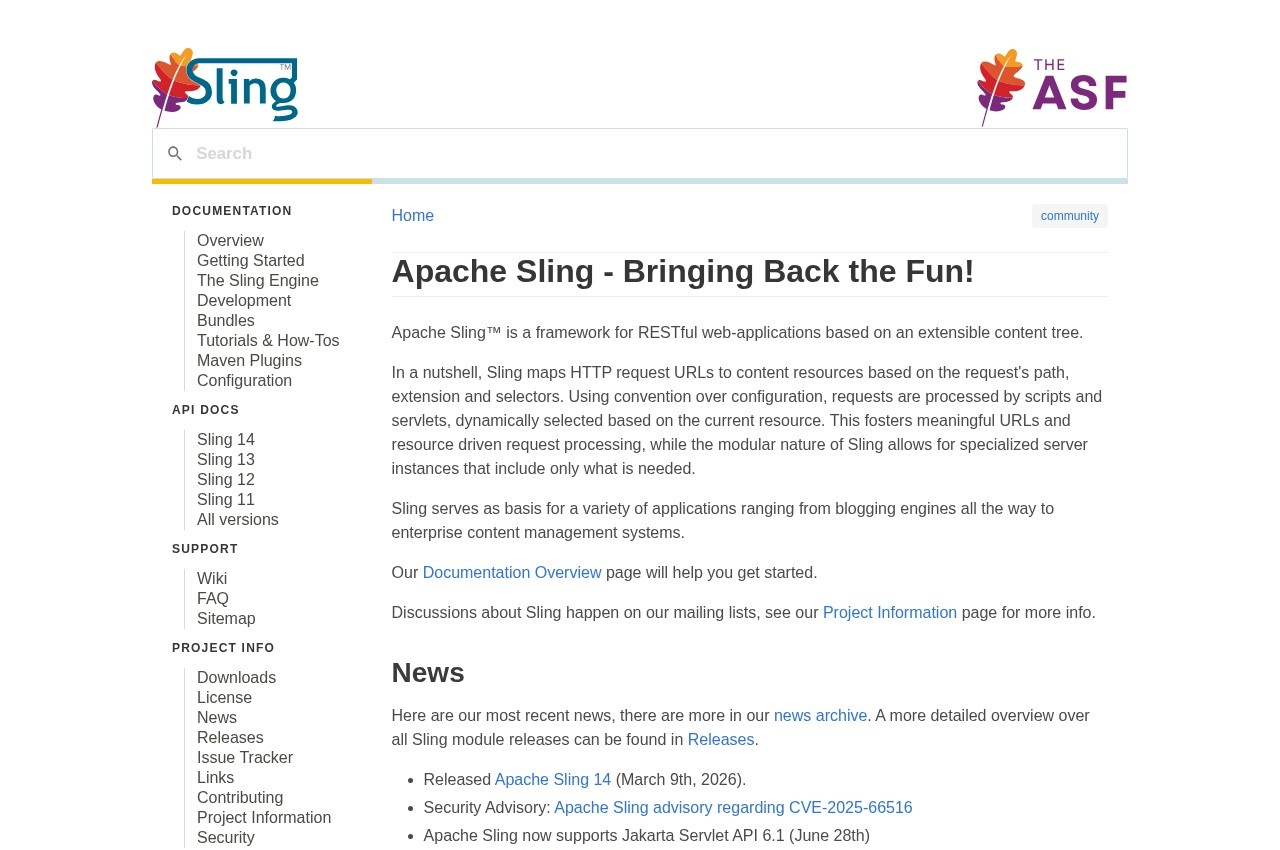
Apache Sling is a framework for RESTful web applications based on an extensible content tree, and it is important to be clear about what that means before evaluating it: Sling is not a packaged content management system with an authoring interface. It is the foundation on which such systems are built, and the project states directly that it serves as the basis for applications ranging from blogging engines through to enterprise content management systems. Choosing it means building, not installing.
The architectural idea is genuinely distinctive. Sling maps HTTP request URLs to content resources based on the request path, extension and selectors, so the content tree determines what handles a request rather than a routing configuration. Following convention over configuration, requests are processed by scripts and servlets that are selected dynamically based on the current resource. The consequences the project claims are meaningful URLs and resource driven request processing, which in practice means URL structure and content structure stay aligned rather than drifting apart as a site grows.
Modularity is the other defining property. Sling's modular nature allows specialised server instances that include only what is needed, so a deployment carries only the bundles required rather than a full platform footprint. This is why it underpins products with very different requirements. As an Apache Software Foundation project it is open source and free, with development in the open. Documentation covers an overview, getting started, the Sling engine, development, bundles, tutorials, how-tos, Maven plugins, configuration and API docs, with versioned documentation maintained back through Sling 11. Discussion happens on mailing lists, and downloads, release notes, an issue tracker and source repositories are published.
Key Features of Apache Sling CMS
- RESTful web application framework
- Extensible content tree as the core abstraction
- URL to content resource mapping by path, extension and selectors
- Convention over configuration request handling
- Dynamic script and servlet selection per resource
- Meaningful URL structures aligned to content structure
- Modular bundles allowing minimal server instances
- Foundation for building custom content management systems
- Apache Software Foundation open source licensing
- Versioned documentation maintained across releases
- Maven plugins for build integration
- Published API documentation
- Public issue tracker and source repositories
Apache Sling CMS Pricing
Apache licence
Free
Open source Apache Software Foundation project. No licence cost. Development, hosting and operations are the real expense.
Apache Sling CMS Specifications
- On Premise
- Cloud Based
- Web App
- Small Business
- Medium Business
- Large Enterprise
Apache Sling CMS Screenshots
Overall Apache Sling CMS Reviews
No reviews yet
Used Apache Sling CMS? Share your experience and help other buyers decide.
Apache Sling CMS FAQs
Alternatives to Apache Sling CMS
Other Java CMS Software products listed on SocialAtoZ.