
Drupal
VerifiedFree, open source content management framework for building complex, scalable websites.
 See all screenshots
 - Deployment Cloud Based, On Premises
- Starting price Free
- Free trial Not offered
- Best for SMEs, Agencies, Enterprises
What is Drupal?
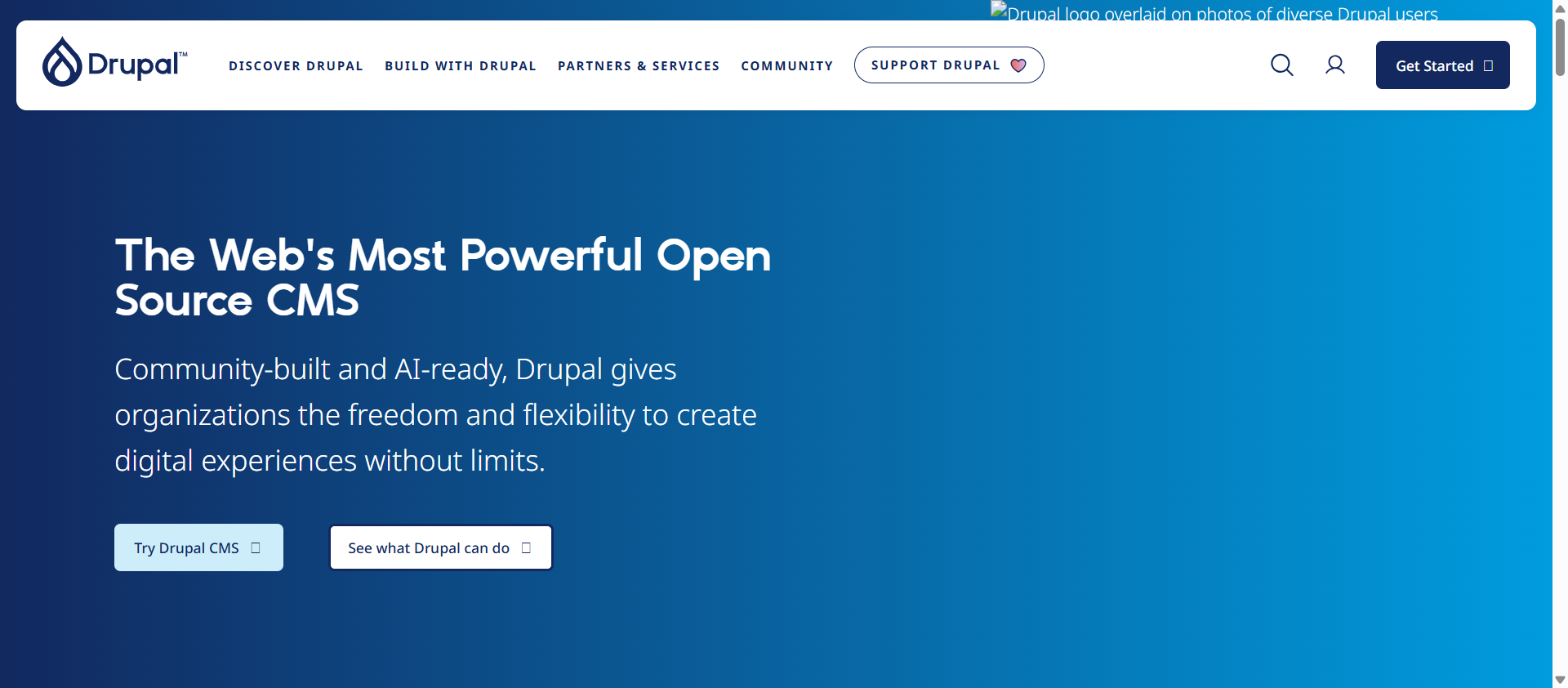
Drupal is a free, open source content management framework used to build websites and digital experiences that range from simple sites to large, complex platforms. The software is maintained by a global community and stewarded by the nonprofit Drupal Association, and it can be downloaded and self hosted on any web server. Drupal supports custom content types, granular user permissions, and built in multilingual tools, and its functionality can be extended with more than 50,000 free contributed modules and 3,000 free themes.
Because Drupal has no license fee, organizations pay only for hosting, development, and optional support from Drupal certified partners. It is widely used by government agencies, universities, and large enterprises that need a secure, scalable platform for high traffic or multilingual websites.
Key Features of Drupal
Drupal lists 10 documented features, including Flexible content modeling with custom content types, fields, and taxonomies, More than 50,000 free contributed modules for extending site functionality and More than 3,000 free themes for customizing site design. The list below covers what the product does rather than how it is marketed.
- Flexible content modeling with custom content types, fields, and taxonomies
- More than 50,000 free contributed modules for extending site functionality
- More than 3,000 free themes for customizing site design
- Built-in multilingual tools with more than 100 languages available
- Granular, role-based permissions system
- Core support for RESTful Web Services and JSON:API for headless and decoupled builds
- Drupal Canvas visual page-building interface in Drupal CMS
- Coordinated security advisory and release process
- Architecture used for high-traffic government, education, and enterprise websites
- Free, open source software licensed under the GPL
Drupal Pricing
Drupal lists one plan, at Free.
Drupal Software
Free
Unlimited, self-hosted
Free GPL-licensed download from Drupal.org. Users pay separately for web hosting and any optional support from Drupal certified partners.
Drupal Specifications
Drupal is available on web app. It offers an API and has a free plan.
- Deployment
- Cloud Based
- On Premises
- Billing cycle
- Onetime
- Desktop
- Web App
- Languages
- English
- Built for
- SMEs
- Agencies
- Enterprises
- Support
- Tickets
- Training
- Integrations
- Salesforce, Google Analytics, Acquia, HubSpot, Zoho CRM, Mailchimp, Slack
- Public API
- Yes
- Free trial
- No
- Free plan
- Yes
- Runs in browser
- Yes
- Customisable
- Yes
- Website
- drupal.org
Drupal Videos
Drupal Screenshots
Drupal Comparisons
Side by side comparisons of Drupal against 3 other Content Management software options listed here.



Drupal Reviews
No reviews yet
Used Drupal? Share your experience and help other buyers decide.