
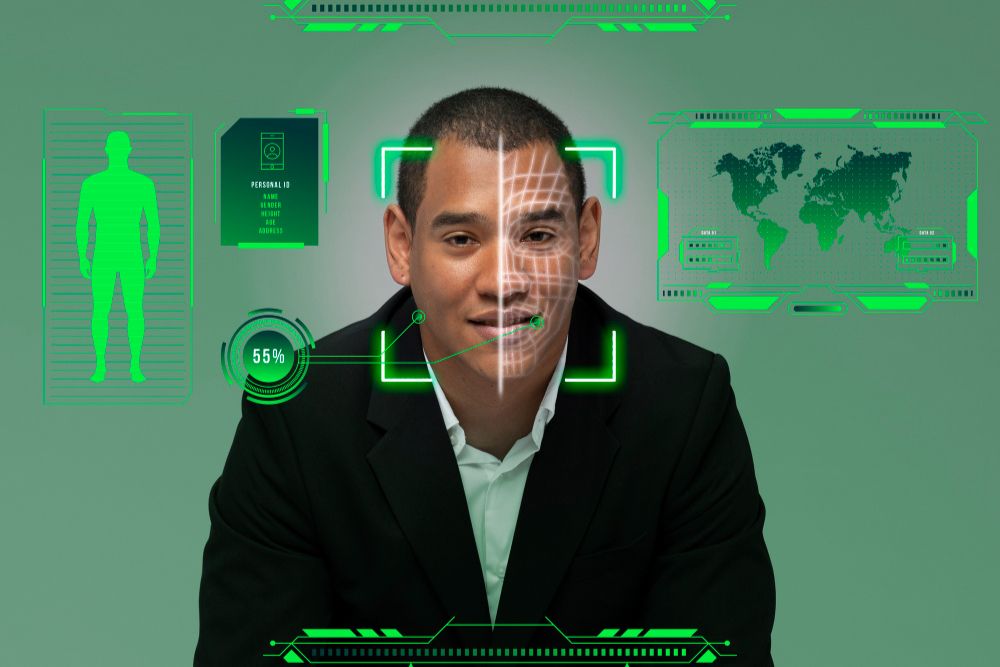
One of the most important aspects of digital trust has been identity verification. With the pace of growth in deepfakes, synthetic identities, and AI-generated fraud, organizations in the fields of fintech, e-commerce, payments, travel, and the gig economy are reconsidering how to verify identities without sacrificing user experience.
The year 2026 is proving to be a year when verification technology is no longer a simple document-matching technology; it will go a notch higher, becoming a continuous identity assurance tool, a risk-based authentication technology, and a biometric security tool.
This article presents an informational overview of the Top 16 Identity Verification Software Providers in 2026, according to coverage (worldwide), technological development, compliance, and reputation in the industry.
Top 16 Best Identity Verification Software Providers
Incode
Incode is an enterprise-grade identity verification platform built for regulated and high-risk environments. The platform delivers advanced biometric liveness detection, deepfake-resistant identity verification, and fraud detection using a privacy-first architecture designed to minimize data exposure. Incode is trusted by banks, regulated businesses, and government-level projects where accuracy, security, and long-term trust matter more than speed alone. Its technology has been independently validated through academic and industry benchmarks.
Why it is unique: Incode powers instant digital trust at enterprise scale – owning its full technology stack, embedding compliance directly into the user experience, and deploying passive deepfake detection and on-device processing through a biometric orchestration layer that unifies verification, authentication, and fraud detection in one engine.
Shufti
Shufti provides a powerful identity verification service, such as international KYC, KYB, biometric authentication, and document verification. It has technology in place that supports a large variety of global ID documents, making the process of verifying users in diverse areas very easy. With flexible and open-minded pricing options, Shufti will continue to be particularly appealing to startups, fintechs, and increasingly scaled online platforms that do not require full enterprise-level verification at high cost.
Why it is unique: The comprehensive global coverage of Shufti allows companies to check customers of almost any market, and cross-border onboarding can be easily and in accordance with it. Also, its APIs and pre-built SDKs are developer-friendly, which simplifies integration and saves time and effort in developing an application, and the verification of apps is seamless for both businesses and end users.
Trulioo
The Trulioo identity verification engages with massive amounts of data globally, from both individuals and businesses. Its platform also has a smooth onboarding process, proof of address, eKYC, and KYB for business organizations.
Why it is unique: extensive countrywide coverage and a good regulatory fit.
Veriff
Veriff is known to be accurate, fast, and highly effective against fraud. The company spends heavily on AI-based biometric and deepfake-resistant verification flows.
Why it is unique: fast decision-making and high resilience to fraud.
Socure
Socure is a digital identity risk-scoring company and a synthetic identity fraud detection company. Its models are highly accurate for identity verification, with low friction and high adoption in the US fintech, credit, and payments sectors.
Why it is unique: state-of-the-art risk analytics and scoring for fraud.
Onfido (Entrust Identity)
Onfido has an expanded trust ecosystem following its acquisition by Entrust, encompassing verification, identity management, and authentication. It relies on document verification, biometrics, and AI-powered orchestration to ensure a secure onboarding process.
Why it is unique: adaptable workflows and a developed enterprise security foundation.
Sumsub
Sumsub provides KYC, KYB, and AML services on an end-to-end basis. It is popular, particularly among fintech, gaming, and crypto sites requiring dynamically verified flows.
Why it is unique: customizable verification trips and high compliance automation.
AU10TIX
AU10TIX is a company specializing in authentication and fraud analytics of ID documents. It has an automation engine that is reported to identify advanced manipulation and ID fraud.
Why it is unique: document forensics and AI-generated fraud mapping.
IDnow
One of the largest identity platforms in Europe, IDnow is compatible with eIDAS, automated checks, video verification, and eID-based identification.
Why it is unique: high adherence to regulatory requirements and hybrid human-AI checking.
GBG
GBG offers address intelligence, identity verification, and fraud management. Its products are also commonly used in banking and financial services to verify individuals and businesses.
Why it is unique: an influential data layer and an extensive set of checking tools.
Mitek Systems
The legacy Acuant technology (under Mitek) provides quick and mobile-based document capture and authentication. The platform is regularly selected when the onboarding process is customer-oriented, and image quality and conversion rates are important.
Why it is unique: a mobile-first platform and powerful OCR.
iDenfy
iDenfy offers easy, quick document and biometric verification at a cost-effective price. SMEs and digital platforms frequently choose it due to the need to have simple, trusted KYC solutions providers.
Why it is unique: This is lightweight and competitively priced.
Persona
Persona has made a name for itself as the identity orchestration leader. Instead of merely validating documents, it enables companies to develop personalized identity workflows using various signals and verification vendors.
LexisNexis Risk Solutions
With a reputation for risk intelligence and identity information, LexisNexis incorporates identity proofing with anti-fraud analytics, sanctions screening, and behavioral indicators.
Why it is unique: effective risk data and identity screening based on compliance.
Yoti
Yoti is a privacy-first digital identity and age verification company. Its reusable digital ID and facial age-estimation technology are picking up with a strong presence in the UK and EU.
Why it is unique: Leadership in terms of age and privacy-focused design.
Industries for Identity Verification
Identity verification has not only advanced beyond traditional KYC but has also become a key aspect across a broad spectrum of industries. By 2026, AI-based fraud, fake IDs, and regulatory requirements are driving an increasing number of industries towards more secure and automated verification systems.
A closer examination of the industries in which verification is becoming an absolute necessity will be provided below:
Financial Services & Banking
A digital lender, bank, credit union, or neobank would rely heavily on identity verification to satisfy AML, KYC, and fraud-prevention requirements.
Use cases include:
- Customer onboarding
- Loan applications
- Card issuance
- High-risk transactions
- Fraud detection through continuous monitoring
The industry demands high precision, high biometric liveness, and alignment with the world standards.
Digital Asset Platforms Cryptocurrency
Most areas regulate crypto exchanges, wallets, and Web3 platforms. User authenticity is ensured, and they are not engaging in criminal activity through crypto.
Use cases include:
- KYC before trading
- Wallet verification
- AML/transaction monitoring
- Screening high-value users
With the increasing adoption of crypto, automated verification will be essential to strike a balance between compliance and user experience.
Fintech & Digital Payments
Identity checks are deployed by payment gateways, BNPL platforms, digital banks, and remittance services to avert fraudulent onboarding and account takeovers.
Use cases include:
- Instant KYC
- Identity risk scoring
- Transaction fraud identification
- Financial service age verification
Fintechs are concerned with a fast customer experience, conversion, and minimizing false declines.
E-commerce and Online Marketplaces
There is an increasing threat of seller fraud, counterfeit purchasers, account hacking, and chargeback in marketplaces.
Use cases include:
- Verification of the identity of sellers.
- Vendor onboarding
- Buyer risk assessment
- Detection of fraudulent listing.
Authentication fosters confidence in peer-to-peer and C2C applications (ride-hailing, rentals, and delivery).
Gig Economy and Workforce Systems
Applications such as food delivery, taxi-hailing, freelance platforms, and logistics rely on worker verification and subsequent onboarding.
Use cases include:
- Driver verification
- Background checks
- Re-verification for safety
- Proof of address
Social networks are increasingly demanding repeated identity verification to prevent impersonation fraud.
Healthcare & Telemedicine
A digital health service should ensure that patients and providers are verified to protect medical data and prevent insurance/identity fraud.
Use cases include:
- Patient onboarding
- Identity verification of the doctor and nurse
- Prescription issuance
- Health verification with regard to age
Healthcare requires strict privacy and compliance with data protection laws.
Education & EdTech
Online educational centers verify learners during the admissions process and during tests. For high-stakes online assessments, Proctortrack combines identity verification with browser lockdown, AI-based behavioral monitoring, and automated or live proctoring to help prevent impersonation and maintain exam integrity.
Use cases include:
- Eliminating exam impersonation.
- Checking of student identity.
- Online proctoring systems.
- Certification validation
- Remote learning requires accuracy of identity.
Travel, Hospitality, and Mobility
Since airline check-in is the case and hotel booking is another, identity checks are used to combat fraud and guarantee passenger safety.
Use cases include:
- Digital boarding passes
- Passport scanning
- Guest check-in
- Car rental verification
- App-based boarding and self-check-in kiosks are based on real-time verification.
Government & Public Services
Government services are becoming digital, and citizens must demonstrate their identity securely.
Use cases include:
- eVoting
- eTax portals
- It’s social welfare distribution.
- Passport and ID issuance
Governments require identity systems that are as scalable and secure as possible, without being abused to misuse government resources.
Online Gaming & Gambling
Gambling platforms require KYC in order to deter access by underage users and financial fraud.
Use cases include:
- Age verification
- Player identity validation
- Fraud detection for payouts
- Multi-accounting prevention
Checks enhance the platform’s compliance and minimize losses from fraud.
Real Estate and Property Rentals
Carrying out property platforms to ensure that tenants and landlords are verified in order to avoid rental scams and identity theft.
Use cases include:
- Tenant background checks
- Verification of identity in lease contracts.
- Seller/agent verification
- Preventing listing fraud
It helps establish trust in online rental activities.
HR & Corporate Recruitment
ID verification is used by the HR team to verify employees during hiring or remote onboarding.
Use cases include:
- Employee identity checks
- Remote hiring verification
- Contractor vetting
- Eligibility check for work.
Remote work is becoming increasingly popular, which requires scalable, secure onboarding tools.
How to Select the Identity Verification Provider
The choice of an appropriate provider can substantially influence user experience, conversion rates, fraud prevention, and compliance. This is a more practical and detailed way in which businesses can make an informed choice:
Figure out your core Use Case
Have you been checking customers, businesses, employees, or vendors?
Common categories include:
- KYC for individuals
- KYB for companies
- Age assurance
- Document authentication
- Biometric verification
- Risk scoring and detection of fraud.
Every use case needs varying technologies and processes.
Check Country & Document Coverage
Always ask:
- What is the number of countries served by the provider?
- Do they include the documents that your users normally submit?
- What match rates are on your target regions?
- Not every vendor operates optimally in every geography.
Test Fraud Detection Strength
This is among the key differentiators in 2026. Look for:
- Deepfake identification
- AI-driven liveness checks
- Behavior and device analytics.
- Identification of artificial identities.
- Tampering and detecting manipulations in documents.
The world of fraud is changing rapidly – make sure a provider publishes research and updates.
Evaluate Standards of Compliance and Security
Depending on industry and region, you may need:
- AML/CTF compliance
- GDPR alignment
- SOC 2 / ISO 27001 certifications
- eIDAS/ETSI (assuming in the EU)
- Data retention controls
- Privacy and consent management
Security is not the only issue in verification, but there is also the issue of legal risk.
Integration and Developer Experience Analysis
Key questions to ask:
- Ease of integration of the APIs?
- Do they provide mobile SDKs?
- Is the documentation clear?
- What is the time to go live?
A more fluent integration will imply faster implementation and reduced engineering effort.
Test the User Experience (UX)
White flows kill conversions. Look for:
- Frictionless mobile experience
- Fast image capture
- Multi-language support
- Restart logic and human instruction
- Live support or chat system
Onboarding will need to be mobile-optimized and responsive in 2026.
Accuracy of Tests, Rapidity, and FRR
Proof of Concept (POC): Before selection of a provider, perform a Proof of Concept (POC):
- Get the real users of other regions to test.
- Pass rates, pass time, and pass “retry” rates.
- Consistency of checking under low-light or motion conditions
A POC shows actual performance- not merely marketing statements of vendors.
Compare Pricing Models
Prices offered by vendors vary:
- Pay-per-verification
- Subscription
- Volume-based discounts
- Hybrid pricing
- Compare cost and performance and address long-term scale.
Examine the Innovation Roadmap of the Vendor
Identity verification is changing rapidly.
Ask vendors about:
- Upcoming features
- AI investment and research
- The reusable identity programs.
- Orchestration tools
- Alliances with risk-data firms.
- You do not want a provider that will lag.
Take into account the Support of Vendors and Enterprise Reliability.
The following points should be considered while considering the support of vendors:
Evaluate:
- Responsiveness with respect to accounts management
- SLA commitment
- Downtime history
- Assessment of the quality of human review groups (where applicable)
The use of reliable support also ensures a smooth check-in and check-out process during peak traffic times.
Conclusion
The leaders of this change are represented by the Top 16 Identity Verification Providers listed in this guide. With their worldwide reach, deepfake-resistant biometrics, orchestration tools, and sophisticated fraud analytics, leaders like Shufti, Trulioo, Veriff, Socure, and Onfido are redefining verification and are crucial partners for companies navigating today’s high-risk digital environment.
Aligning your use case with the vendor’s technology, compliance strengths, document coverage, fraud-detection capabilities, and user experience will help you choose the best provider. In addition to lowering fraud losses, businesses that invest in scalable, AI-powered verification today will increase conversions, foster customer trust, and preserve regulatory preparedness in international markets.
You can also browse the full, continuously updated Identity Verification Software directory to compare these providers side by side on features, pricing and integrations.
Add SocialAtoZ as a preferred source
See us more often in your Google results.