
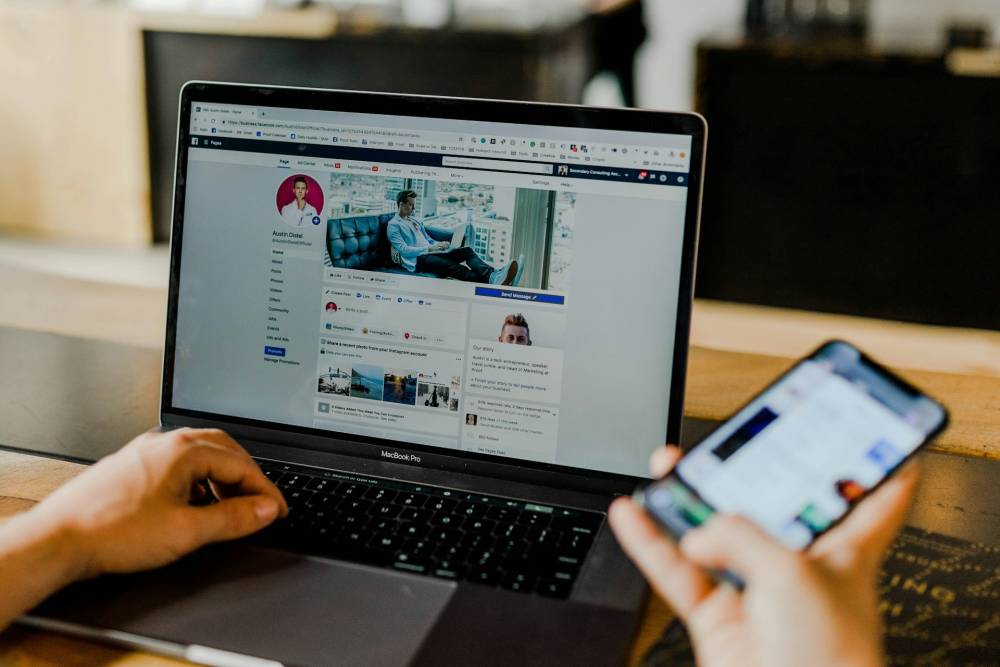
More than 68% of the world’s population is on social media. Clearly, the question is no longer whether your brand should be online. The question is how you can stand out from the crowd and make your voice heard.
Crafting a powerful social media strategy is the first step to achieving this. Even if your brand has always been active, you need to rethink your approach to drive meaningful engagement.
Why? Because what worked this year may not work next year. Social media trends, rules, and algorithms evolve quickly. The only way to stay on top is to evolve with it.
So, what does a winning social media strategy for 2026 look like? Read on as we discuss 4 things you can do to stay ahead and connect with your audience in the year ahead.
4 Things To Do for a Winning Social Media Strategy in 2026
Use AI for Content and Personalization
Ever since ChatGPT launched in November 2022, it has quietly become the ‘unofficial intern’ for many businesses today. Many high-performing brands use it as a virtual assistant to generate ideas, write, create visuals, and even plan their social media calendars.
According to Market Growth Reports, up to 71% of professionals in social media marketing currently use AI tools to do their jobs. Obviously, this number will increase in the years ahead.
But artificial intelligence is a lot more than just creating captions, designing visuals, or writing social media content only. The big win is personalization, and that’s where you should focus the bulk of your AI use next year.
AI can help you analyze users’ data, predict their behavior, and give you insights that’ll help you create the type of content that resonates with them on a deeper level. This means better engagement, more conversions, and stronger brand loyalty. To make this even easier, you can explore Predis.ai’s AI ad generator as part of your workflow.
Encourage User-Generated Content (UGC)
If there’s one social media strategy that has always worked, it’s UGC.
User-generated content (UGC) is any content created by everyday users that features your brand. It’s successful because people no longer just want to follow brands. They want to be a part of them. That’s what UGC delivers. Best of all, it’s free, and one of the strongest forms of social proof you can have.
So, if you want to have the competitive edge in the coming months, let user-generated content (UGC) be a key part of your social media strategy. Experts predict that by 2033, UGC will account for up to 78% of all online content. This is a clear indication of how influential this approach is.
Just look at what Coca-Cola did with its #ShareACoke campaign. It swapped its iconic logo for people’s names and encouraged them to share. The result? One of the most memorable UGC campaigns of all time.
Even if you don’t hit it big like Coca-Cola, UGC is still a great way to get everyday people involved in your business.
Another advantage of encouraging UGC is that it means less work for you and your team.
Constantly creating content can be exhausting. What’s more, too much social media has been linked to mental health issues, including anxiety and stress. As it stands now, there are currently many social media addiction lawsuit cases before the courts by users who allege that social media companies intentionally design their platforms to be addictive.
According to TruLaw, if these class action lawsuits are successful, plaintiffs may be entitled to compensation.
That’s the beauty of UGC. By encouraging your users to create content for your brand, you’re not just boosting engagement; you’re also taking some pressure off yourself and protecting your mental health.
Leverage Immersive Content and Experiential Marketing
Social media will soon be less about scrolling and more about experiences. People no longer just want to see, they want to feel, and this is where immersive content comes in. Think interactive polls, 360-degree videos, and AR. It’s about pulling people into your world.
So, how does this work exactly?
A good example is Nike’s “Air Max 2024” AR sneaker try-on campaign. This campaign used augmented reality to let users try on the shoes digitally before buying. It was fun, interactive, and memorable.
Very soon, this feature, social AR shopping, will become a big part of the social media experience, so you’d better prepare for it.
You can actually start testing the waters now. Get started on a small scale with interactive polls, real-time livestreams, and behind-the-scenes content. Give your audience something to connect with on a deeper level. Not just hashtags and memes.
Invest in Social SEO for Better Visibility
Have you noticed that people are now using social media like search engines?
They’re searching directly on TikTok, Instagram, and even Facebook for everything from dinner date ideas to college scholarships. Strange, but true. According to a study cited by Fortune, 45% of Gen Z are more likely to search using TikTok or Instagram than Google. This is a trend you definitely want to take advantage of.
This is where social SEO comes in. Just like you optimize your website content for search, do the same for your social media.
Use relevant keywords in your social media profiles, captions, and hashtags. Make sure your content, such as product demonstration videos, appears in social media search results by using phrases your audience actually uses.
It won’t happen overnight, but over time, your efforts will help the right people start finding your content through social search.
Wrapping Up
If you look at the four points discussed in this article, you’ll notice one thing in common. Winning in social media in 2026 isn’t about shouting the loudest; it’s about creating experiences that make people stop scrolling and engage.
And you can do that, too. Start by using AI to give your audience a more personalized experience – no more regular generic content. Next, build and nurture a community that’s real and loyal. And while you’re at it, invest in social SEO so that your brand can be visible where your target audience is.
Do these consistently, and you won’t just show up on social media in 2026; you’ll stand out.
Add SocialAtoZ as a preferred source
See us more often in your Google results.